
How Many Drive Bays Does a Family Backup NAS Need?


Most family backup NAS systems need two or four bays; more bays are justified only by measured capacity, retention, expansion, or availability requirements.
The enclosure should follow the protected devices, version history, usable capacity after redundancy, expected growth, and the next expansion event. A two-bay mirror can be a durable family design when its capacity is predictable and another copy exists. Four or more bays add layout and growth options, but they also add cost and operational complexity without replacing backup.
Count Protected Sources Before Counting Drive Bays
A family backup NAS should begin with every phone, laptop, desktop, old external drive, and shared household library it will protect. Record current used space, expected growth, version retention, and whether each source already has another independent copy. Drive bays are the result of this inventory, not the first input.
Backblaze’s NAS buying guide recommends adding protected systems, shared storage, projected growth, and the chosen redundancy layout before selecting bay count. That source-plus-growth sizing method prevents a family from buying four empty slots without knowing the required usable capacity.
Separate working family data from device-backup data. A 2TB laptop does not necessarily consume 2TB of backup capacity today, but versions and deleted-file retention can make its protected footprint larger than the files currently in use. The inventory should measure data, not advertised device size.
Two Bays Fit a Predictable Mirrored Backup Target
A two-bay NAS is a clean starting topology when one mirrored pair provides several years of usable capacity, the family accepts replacing both drives for a major expansion, and an independent off-site or external copy exists. The design is easy to explain and maintain because one drive can fail without immediately stopping access.
TechTarget’s RAID 1 comparison explains that a two-disk mirror keeps two synchronized copies but uses about half the raw capacity for redundancy. That mirror-capacity trade-off defines the two-bay usable-capacity limit.
Choose two bays for modest family documents, phone photos, and several computer backups only after calculating versions and growth. The mirror improves availability after one drive failure; it does not protect against deletion, ransomware, theft, or failure of the entire enclosure.
Four Bays Add Expansion and Layout Choices, Not Automatic Safety
Four bays allow more raw capacity, parity layouts, mirrored pairs, or a future drive added without immediately replacing the existing pair. They are useful when the family expects rapid video growth, several computers, long retention, or additional shared storage. The extra slots do not remove the need for backup.
Tom’s Guide’s 2026 comparison of two- and four-bay NAS systems frames the difference around capacity, RAID choices, growth, and heavier workflows. That two-versus-four-bay decision supports choosing four bays for expansion rather than prestige.
A four-bay unit can begin with fewer installed drives only if the selected storage layout supports the planned expansion path. Document whether capacity grows by adding drives, replacing every member, or creating a new pool. A bay that cannot be used without a disruptive migration is not true headroom.

More Than Four Bays Need a Specific Retention or Availability Reason
Six or more bays can support larger pools, dual-parity options, separate backup tiers, or long video retention. They also increase drive cost, power use, rebuild scope, monitoring, and the number of components that can fail. A family should not buy them solely to avoid estimating growth.
TechRadar’s 2026 NAS guide treats drive bays as one factor alongside workload, network performance, multi-user demand, and expansion. That bay-count-with-workload test helps distinguish a real multi-bay need from speculative future-proofing.
Use more than four bays when several large backup sources, 4K phone video, camera archives, or long version history make two- and four-bay replacement cycles impractical. Write the intended layout and recovery process before buying the enclosure.
Bay Count Must Include the Independent Backup Destination
A larger primary NAS can absorb more family backups while still being one device in one location. If the entire budget goes into primary bays and drives, the family may have no capacity left for an external rotation, second system, or cloud copy. The complete design includes both working and recovery capacity.
Cloudwards distinguishes local storage and online backup by ownership, maintenance, location, and recovery behavior. That primary-versus-recovery capacity boundary prevents bay count from becoming a substitute for copy independence.
Fund the off-site or removable target before moving from two to four or six primary bays. A two-bay mirror plus tested off-site recovery can be safer than a six-bay array containing the only copy. The recovery target may need less capacity if it protects only irreplaceable data, but that scope must be explicit.
Choose Bays Around the Next Expansion Event
The most important future question is not the maximum capacity printed on the enclosure. It is what happens when the projected usable space reaches the warning threshold. A two-bay mirror often expands by replacing both drives; a four-bay system may add members or create another pool, depending on the platform and layout.
WIRED’s NAS setup guide recommends understanding storage, drive configuration, accounts, and backup before daily use. That storage-before-use sequence applies equally to planning the first expansion.
Write the next event in advance: purchase two larger drives, add one drive, migrate to a new pool, or move colder backups elsewhere. Include the temporary capacity required during migration and the rollback path. If expansion needs another full system, include that in the five-year cost comparison.
Use a Bay-Count Decision Table With a Stop Boundary
The final choice should combine usable capacity, retention, growth, rebuild tolerance, and maintenance skill. Two bays are not automatically too small, and six bays are not automatically safer. The correct enclosure is the smallest one whose documented layout reaches the next planned replacement point without endangering recovery.
Puget Systems’ NAS guide recommends evaluating storage capacity, backup, network use, and application needs together. That whole-workload NAS sizing model keeps bay count connected to the family workflow.
| Household backup pattern | Likely bay range | Main condition |
|---|---|---|
| Documents, photos, and a few laptops with predictable growth | 2 bays | One mirrored drive provides enough usable capacity plus a separate backup |
| Several phones, computers, longer versions, or growing video | 4 bays | Expansion and layout flexibility matter within the ownership period |
| Large video archive, many protected devices, long retention | 6+ bays | A written multi-drive layout and recovery budget justify the complexity |
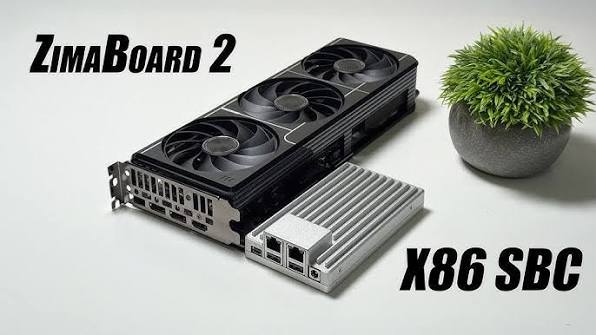
The ZimaSpace NAS guide for several family phone libraries provides the family-growth context. A ZimaBoard 2 Mini Home Server fits a compact compute-first route with direct storage expansion. A ZimaCube 2 AI NAS becomes the clearer platform when multi-drive capacity, heavier concurrency, longer retention, or storage-first recovery are explicit requirements. Stop adding bays when the selected system covers measured growth, the next expansion event, and an independent recovery copy.
Before purchase, sketch the full five-year bay plan rather than only the day-one array. Mark the first installed drives, expected usable capacity, warning threshold, next expansion action, temporary migration space, and the independent backup target. Then calculate the cost of the enclosure and every drive needed to reach that next event. This exposes cases where a cheaper two-bay unit requires an early full-drive replacement or where a four-bay unit offers useful flexibility. The bay count is correct when the family can explain how capacity grows and how data is recovered without depending on unused slots as a vague promise.

Recommended products

NAS & Server Setup
More to Read
A Local RAG Setup for Research Papers, Notes, and Private Documents
Keep original documents authoritative, make indexing repeatable, require citations, and separate replaceable models from private source data.
Why Are Developers Using a Gateway Node for Private DNS, VPN, and Test Apps?
A gateway node gives private apps one controlled name and access path, while compute nodes stay unexposed and replaceable.
How to Build a Reproducible App Stack With Compose Files, Secrets, and Persistent Data Separated
Keep Compose definitions portable, secrets protected, and app data independently backed up so the stack can be rebuilt on a clean host.


