
Why Are New Self-Hosters Starting With App-First Server Interfaces Before Learning the Command Line?


New self-hosters start with app-first server interfaces because dashboards turn scattered Linux, container, storage, and monitoring tasks into one visible operating path.
The attraction is not simply that buttons are easier than commands. A beginner can see installed services, storage use, running states, ports, logs, and updates in the same browser before understanding every component underneath. This changes the learning order: people first complete a useful household workflow, then learn the command line when maintenance, recovery, or customization exposes a boundary the interface cannot safely cross.
What Changed in the First Home Server Experience?
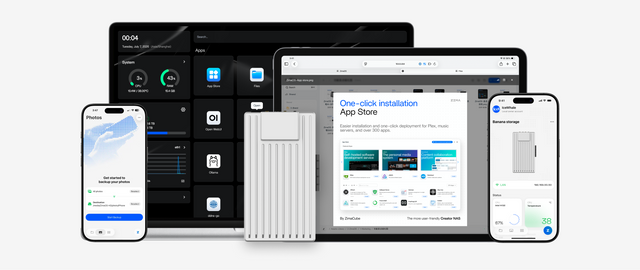
Traditional self-hosting often began with a Linux installation, remote shell access, package commands, configuration files, service managers, and manual networking. The user had to assemble an operating model before seeing the first useful app. App-first systems reverse that sequence by placing an application catalog and system dashboard in front of the underlying host.
A current beginner guide describes modern self-hosting as a workflow where a web dashboard can replace much of the initial command-line interaction. That lower initial interaction barrier helps explain why new users can reach a working photo library, media service, file tool, or network utility before they can explain every package and process involved.
The result is a different entry point, not a different server. Linux, containers, filesystems, users, and networks still exist underneath; the interface decides which parts must be understood now and which can be learned later.
Why Does an App Catalog Feel Safer Than a Terminal?
A terminal begins with an empty prompt and expects the user to know the correct command, syntax, path, privileges, and consequences. An app catalog presents a bounded list of actions. The user can inspect a service card, see required fields, choose a storage path, and return to a known dashboard after installation.
A comparison of beginner dashboards notes that a platform with an integrated app store solves a different problem from a homepage that merely links to services. That install-and-operate distinction matters because the beginner needs a deployment path, not another screen that assumes the applications already exist.
Visible status also reduces uncertainty. A stopped container, nearly full disk, unavailable update, or failed health check becomes an object the user can recognize. The dashboard does not guarantee the correct action, but it gives the problem a location and a name.
What Complexity Does the Interface Actually Compress?
Installing one self-hosted service can involve an image, container, ports, environment variables, storage mounts, credentials, restart behavior, and a local URL. App-first interfaces collect many of those choices into a form or template, then display the resulting service as one manageable object.
A home-server planning article warns that installing containers before defining purpose, storage, backups, networking, and documentation produces confusing folders and fragile services. Its infrastructure-before-container checklist reveals what the dashboard is compressing: it shortens deployment, but it cannot decide where authoritative data belongs or how the service will be recovered.
| Visible app-first action | Underlying server decision | What the beginner eventually needs to understand |
|---|---|---|
| Click Install | Create and start a containerized service | Image source, version, restart policy, and dependencies |
| Choose a folder | Bind persistent data into the application | Host path, permissions, backup scope, and migration |
| Open the app | Publish a network port and route traffic | Local address, exposure, authentication, and conflicts |
| Click Update | Replace application code while retaining state | Compatibility, backup, rollback, and database changes |

Why Does App-First Not Mean Linux-Free?
The interface is an operating layer over Linux rather than a replacement for it. Routine tasks may stay inside the browser, but failed mounts, permission errors, full filesystems, broken updates, missing network routes, and inaccessible logs often require inspection below the dashboard.
A server administration comparison explains that graphical tools are easier for visual monitoring, while command-line tools expose functions needed for specialized workflows and automation. That task-dependent division between GUI and CLI is the useful model for self-hosting: the dashboard handles repeatable daily operations, and the terminal handles exceptions, diagnosis, and precise changes.
The ZimaSpace guide to command-line administration for home server beginners should therefore be treated as the next layer, not an entrance exam. A user can first learn to inspect paths, free space, processes, and logs without replacing every dashboard action with a memorized command.
Where Can the Abstraction Hide Risk?
Templates make installation look uniform even when applications have very different data and failure models. A disposable dashboard, a photo library, a password manager, and a database-backed file platform should not receive the same storage path, update policy, permissions, or backup treatment.
A storage-first application guide emphasizes attaching deliberate datasets before installing apps because changing the layout later creates migration and recovery work. That storage-layout-before-install principle marks the main limit of an app-first interface: a clean install screen can hide the fact that persistent state has been placed on the boot drive, inside an unclear volume, or beside data with a different recovery policy.
Other risks include default credentials, ports exposed more broadly than expected, automatic updates without rollback, shared administrator accounts, and applications that can write across an entire storage pool. The interface is helping only when it makes these boundaries visible or lets the user verify them elsewhere.
Which Command-Line Skills Become Useful First?
Beginners do not need to memorize an entire Linux reference. The first valuable skills are observational: identify the current path, list files, inspect free space, read recent logs, check a service state, confirm a listening port, and stop before using destructive commands copied from an unrelated tutorial.
A command-line overview explains that text-based tools remain useful because they support automation, direct remote administration, and repeatable sequences. Those repeatability and remote-control advantages become relevant only after the beginner has a concrete task, such as confirming why an app cannot see its data or exporting a configuration before an update.
The correct progression is dashboard first, read-only terminal inspection second, documented maintenance commands third, and automation only after the user understands what should happen. This preserves the fast start without turning copied shell commands into the new hidden abstraction.
When Is the Interface Helping Rather Than Holding You Back?
An app-first interface is successful when the user can explain each installed service’s purpose, storage path, local address, account owner, update method, and recovery plan. It is holding the setup back when the dashboard is the only place those facts exist or when the user cannot recover after the interface itself stops loading.
A general command-line guide notes that graphical interfaces make available actions easier to discover, while the command line remains valuable for automation and deeper control. That discoverability-versus-control trade-off explains the healthy end state: daily work stays visual, but critical state is documented outside the interface and can be inspected without it.
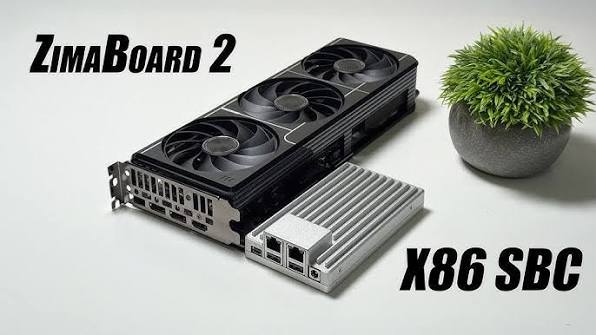
Use the ZimaSpace guide on building a first server around three connected services to keep the app catalog from becoming the plan. A ZimaBoard 2 Mini Home Server suits an app-first beginning when compact x86 compute and direct storage attachment are the main needs. A ZimaCube 2 AI NAS is the stronger starting point when several drives, shared family storage, and storage-first recovery already define the system.
New self-hosters are not rejecting the command line. They are postponing it until a useful server gives each command a purpose, a visible result, and a safer context.

Recommended products

NAS & Server Setup
More to Read
A Local RAG Setup for Research Papers, Notes, and Private Documents
Keep original documents authoritative, make indexing repeatable, require citations, and separate replaceable models from private source data.
Why Are Developers Using a Gateway Node for Private DNS, VPN, and Test Apps?
A gateway node gives private apps one controlled name and access path, while compute nodes stay unexposed and replaceable.
How to Build a Reproducible App Stack With Compose Files, Secrets, and Persistent Data Separated
Keep Compose definitions portable, secrets protected, and app data independently backed up so the stack can be rebuilt on a clean host.


