
Is 16GB RAM Enough for a Home Server Running Ten Containers?


Sixteen gigabytes can run ten home-server containers when the applications are light, their peaks do not overlap badly, and the host retains recovery headroom.
Container count is an unreliable sizing metric because a tiny DNS utility and a photo indexer are both one container. The decision must include the host operating system, filesystem cache, databases, background jobs, memory limits, swap behavior, and the work that happens during updates, backups, imports, and restores. A repeatable peak test is more useful than any universal app count.
Ten Containers Are Not a Memory Requirement
The count of running containers says little about the RAM needed. Ten small network utilities can use less memory than one photo-indexing service, Java application, database, or local AI process. The correct question is how much memory the host, persistent services, caches, and peak jobs consume at the same time.
SelfHostPicks’ 2026 sizing guide argues that Docker itself adds little memory compared with the applications inside the containers. That application-first memory budget explains why a fixed container count cannot prove that 16GB is enough.
Create a service ledger with idle use, peak use, startup spikes, database cache, thumbnail or indexing jobs, and whether each app is essential. Add the host operating system, filesystem cache, monitoring, and an emergency reserve. The total concurrent working set—not the number ten—is the first answer.
Containers Share the Kernel but Their Workloads Still Compete
Containers are lighter than full virtual machines because they share the host operating-system kernel. That efficiency makes ten services plausible on 16GB, but it does not make their application memory free. Processes still allocate heaps, database buffers, caches, and shared memory from the same host.
TechTarget’s container-versus-VM comparison explains that containers share one OS kernel and are smaller logical entities than virtual machines. That shared-kernel efficiency supports higher service density while preserving the need to budget the applications themselves.
Avoid adding a full guest operating system for every small service when isolation does not require it. Conversely, do not assume that moving a memory-heavy service into a container reduces its working set. Containerization changes packaging and isolation more than the application’s fundamental demand.
Reserve Memory for the Host, Cache, and Recovery Actions
A 16GB machine does not offer all 16GB to application containers. The host, networking, filesystem, container engine, logging, monitoring, and disk cache need memory. Backups, compression, imports, updates, and database maintenance can create temporary peaks while ordinary services remain online.
Baeldung’s 2026 guide shows how memory limits, reservations, swap settings, and CPU limits constrain individual containers. That container limit-and-reservation model is useful only after the host reserve has been defined.
For a 16GB host, keep a deliberate unallocated margin rather than assigning limits that sum to nearly all RAM. The exact margin depends on the filesystem, services, and peak jobs, but the system should complete a reboot, backup, update, and one restore action without entering sustained swap or killing an essential service.

Measure Working Set and Peaks Instead of One Idle Snapshot
Idle memory is a weak sizing signal. Photo apps use more memory while indexing, databases grow their caches, media services change behavior during transcoding, and backup tools allocate buffers during large transfers. A one-minute dashboard view can miss the event that makes the server unstable.
Datadog’s Docker monitoring guidance separates RSS, cache, swap, and per-container memory so administrators can identify real working sets and pressure. That RSS-cache-swap measurement model supports a seven-day or thirty-day observation period.
Record normal, peak, and post-peak memory for every service. Include page faults, swap growth, restart counts, and whether response time degrades before an out-of-memory event. The acceptance test is not merely that all ten containers remain listed as running; ordinary users must still complete their workflows.
Set Limits Around Optional Services Before Essential Ones Suffer
Without explicit limits, one import, search index, analytics job, or memory leak can consume enough RAM to disturb backups, DNS, authentication, or file access. Resource limits are most useful when they preserve household-critical services and make optional jobs fail visibly instead of slowing the whole host.
Better Stack’s monitoring guide recommends tracking performance, resource utilization, health checks, and logs as a containerized stack grows. That service-health monitoring boundary connects memory limits with observable service behavior.
Classify services as essential, ordinary, or experimental. Give essential databases and file services stable headroom, bound optional indexers and dashboards, and schedule heavy maintenance away from backup windows. A hard limit should still exceed the service’s measured healthy peak, or the limit itself becomes the cause of failure.
Concurrent Memory and I/O Pressure Decide the Real Ceiling
A stack can fit in RAM and still become slow when several data-intensive containers compete for cache, memory bandwidth, storage I/O, or CPU. Ten lightweight services may be comfortable, while a database, photo indexer, media transcode, backup job, and search engine running together can expose a limit far earlier.
A study of container resource allocation found that multiple data-intensive containers can create cache and memory-bus contention and volatile performance even when individual allocations appear sufficient. That concurrent-resource contention finding is why the stack must be tested under overlapping work.
Run a representative concurrency test: phone uploads, media playback, backup, database activity, and an update or indexing task. Watch memory, swap, latency, disk queueing, and restarts. If the stack passes only when heavy jobs never overlap, document the schedule as part of the architecture.
Use OOM Events and Swap as Stop Signals, Not Normal Operation
Occasional reclaimed cache is normal; repeated out-of-memory kills, exit code 137, sustained swap, and long latency spikes are not. Adding swap can provide recovery time, but it does not convert a consistently oversized working set into a healthy 16GB design.
The New Stack’s container-management example links exit code 137 with an out-of-memory condition or kill signal. That visible OOM failure signal gives a practical stop condition for the 16GB experiment.
When OOM events occur, identify the service, trigger, and missing limit before buying memory. Fix leaks, reduce caches, stagger jobs, or retire unused apps first. Upgrade when the measured healthy workload plus reserve no longer fits without routine swap or service disruption.
Decide Whether 16GB Is Enough Through a Repeatable Test
Sixteen gigabytes is enough when the host reserve remains intact, essential services stay responsive, peak jobs complete, swap remains limited, and no container is repeatedly killed. It is not enough when normal household concurrency requires constant scheduling tricks or prevents recovery operations from running safely.
Budget Homelab’s 2026 hardware guide treats 16GB as a practical starting tier for a modest container stack while recommending measurement and later expansion for heavier workloads. That measured starter-tier approach matches a test-before-upgrade decision.
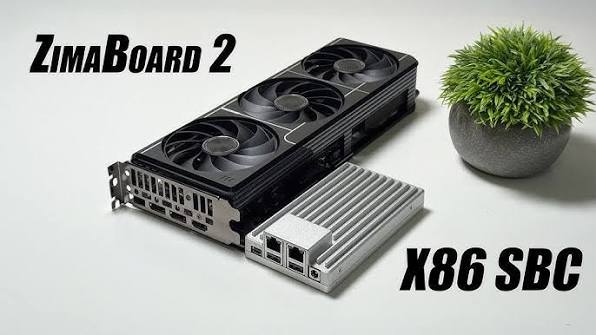
The ZimaSpace 16GB local-AI memory boundary covers the much heavier AI case. A ZimaBoard 2 Mini Home Server fits a compact compute-first route with direct storage expansion. A ZimaCube 2 AI NAS becomes the clearer platform when multi-drive capacity, heavier concurrency, longer retention, or storage-first recovery are explicit requirements. Keep 16GB when the seven-day peak test passes with reserve; move higher when concurrency, databases, indexing, virtual machines, or AI become permanent rather than occasional.
The repeatable test should be saved with the stack definition. Record the container versions, test workload, duration, peak memory, swap use, restart count, and the response time of essential services. Repeat it after adding a database, changing a photo workflow, enabling a new indexer, or moving containers into a virtual machine. This converts the 16GB decision from a one-time opinion into an operating boundary. The machine is correctly sized when normal growth and maintenance remain inside that boundary; it is undersized when every new service requires disabling another or accepting unreliable recovery.

Recommended products

NAS & Server Setup
More to Read
A Local RAG Setup for Research Papers, Notes, and Private Documents
Keep original documents authoritative, make indexing repeatable, require citations, and separate replaceable models from private source data.
Why Are Developers Using a Gateway Node for Private DNS, VPN, and Test Apps?
A gateway node gives private apps one controlled name and access path, while compute nodes stay unexposed and replaceable.
How to Build a Reproducible App Stack With Compose Files, Secrets, and Persistent Data Separated
Keep Compose definitions portable, secrets protected, and app data independently backed up so the stack can be rebuilt on a clean host.


