
Media Client Checklist Before Buying More Server Power


Buy more server power only after the actual media client fails a direct-play test; codec, subtitle, audio, app, and network limits often create transcoding that a different client can avoid.
Inventory Every Playback Client
List each TV app, streaming box, browser, phone, tablet, and remote user. Record operating system, app version, wired or wireless path, display resolution, HDR capability, and audio connection.
Do not assume two clients with the same brand name behave alike. Browser playback, television apps, and dedicated boxes can support different containers, codecs, subtitle formats, and audio passthrough modes.
- Test the weakest commonly used client.
- Include remote quality settings.
- Record the display and receiver chain.
- Keep one known-good direct-play sample.
Test Video, Container, Audio, and Subtitles Separately
Use representative H.264, HEVC, AV1, 1080p, 4K, HDR, high-bitrate, multichannel audio, image subtitles, and text subtitles. Change one variable at a time and inspect the server dashboard for direct play, remux, or transcode.
A client-focused direct-play troubleshooting workflow shows how remote quality settings and client support can trigger server work even when the original file is playable elsewhere.
Treat subtitle burn-in and audio conversion as separate causes. A client may direct-play the video while forcing a full video transcode because it cannot render one subtitle type.
Verify the Network Path Under Real Bitrates
| Path | Required test | Failure clue |
|---|---|---|
| TV Ethernet | Sustained high-bitrate file | 100Mb port ceiling |
| Wi-Fi client | Playback at busy-hour signal | Retries or bitrate drops |
| Remote client | Server upload plus client download | Quality reduction |
| Receiver chain | Audio and HDR handshake | Fallback conversion |
| Server LAN | Concurrent stream test | Shared-link saturation |
Use peak bitrate rather than the movie's average. Test during normal household Wi-Fi use and with the same switch, receiver, and television input used every day.
A community report on moving clients to direct play highlights why client compatibility can remove CPU and GPU load that looked like a server-capacity problem.

Compare the Cost of Client and Server Fixes
A better client can fix one room and reduce transcoding immediately. A server upgrade can support several incompatible clients but adds purchase cost, idle power, cooling, and a new hardware baseline.
Choose a client change when one or two endpoints cause the problem and the media library is otherwise compatible. Choose server power when many required clients need simultaneous, unavoidable conversions or remote bandwidth requires lower-bitrate versions.
Do not buy around one unusual sample until you confirm it represents the library. Re-encoding a small outlier set may be cheaper than permanently sizing the server for the worst file.
Run a Buy, Fix, or Wait Gate
Buy more server power only when the dashboard confirms sustained transcoding, the cause cannot be removed by supported client settings, and the required number of concurrent conversions exceeds current capacity.
Fix the client or network when direct play succeeds on a known-good endpoint but fails in one room. The SMB versus NFS comparison can help if the media client reads files directly rather than through a streaming server.
Wait when failures are intermittent, the playback mode is unknown, or the test excludes subtitles, audio, and remote use. An unexplained stutter is not a hardware specification.
Final Takeaway
Buy only when every hard requirement passes in the real room and network; otherwise wait, narrow the design, or choose a simpler platform.

Recommended products

Buying Guide
More to Read
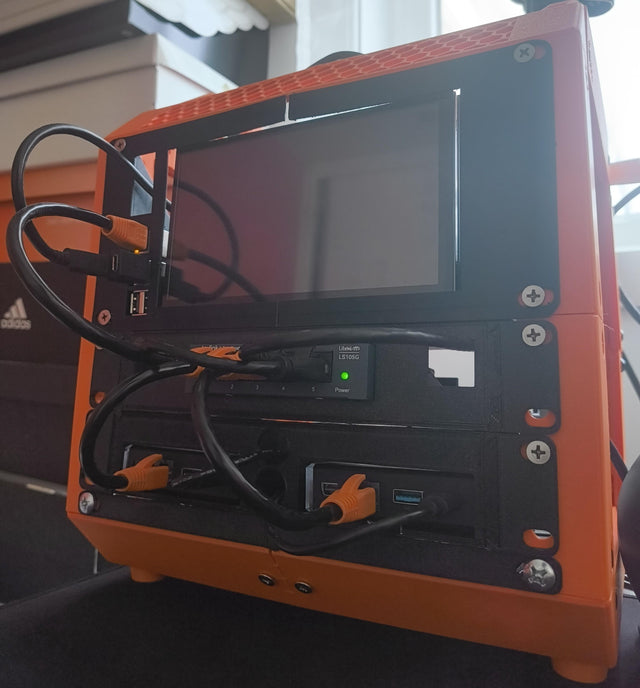
SSD App Pool Checklist Before Choosing Consumer Drives
A consumer-SSD purchase gate for databases, containers, VMs, metadata, and logs based on measured writes and recoverable failure behavior.
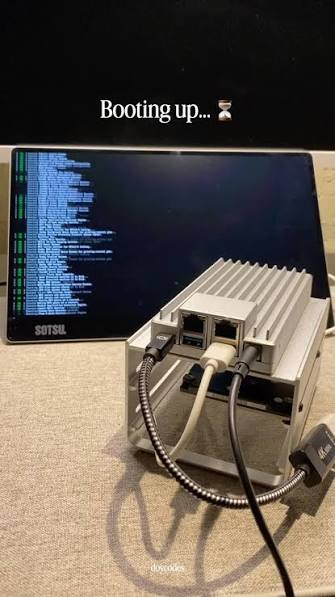
Home NVR Checklist Before Adding More Cameras
A camera-expansion gate that sizes a home NVR from measured bitrate and retention instead of resolution labels or unused channel counts.
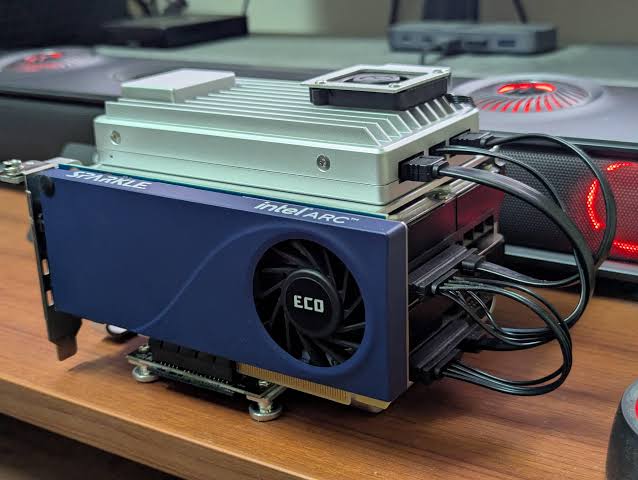
Small Office NAS Checklist Before Adding Remote Staff
A remote-work readiness checklist that protects office files without giving every employee broad NAS or network access.


