
How to Evaluate Warranty, Replacement, and Recovery Costs for Home Assistant


Evaluate a Home Assistant server by the cost of getting household control back after failure, not just by its purchase price. Warranty length matters, but so do repairability, replacement lead time, storage portability, backup quality, spare parts, power draw, and the amount of administrator time required to restore service.
The right comparison is total recovery exposure. A cheaper mini PC can be excellent value when it uses standard storage and memory, has a tested restore path, and can be replaced locally. A premium appliance can also be excellent value when support and fast replacement reduce downtime. The expensive choice is the platform whose failure turns a simple hardware swap into an undocumented migration project.
Separate Warranty Coverage From Time to Recover
A three-year warranty does not mean Home Assistant returns in three hours. Record what the warranty actually covers, who pays shipping, whether advance replacement exists, whether the vendor repairs or swaps the unit, and how long the household can tolerate the server being absent.
A current mini-PC buyer guide for homelabs notes that warranty support can be more limited on consumer mini-PC brands than on business-class hardware. Treat that as a recovery variable, not a footnote: document the return channel, shipping burden, and likely time without the unit before you count the warranty as protection.
A 2026 mini-PC review comparing warranty and RMA responsiveness illustrates why printed coverage and support execution are separate variables. A long warranty with slow or uncertain replacement can still miss the household's outage target.
Value a warranty most highly when the product is proprietary or difficult to substitute. Value local replaceability more highly when the household needs rapid recovery and the application state is portable.
Price Repairability and Standard Parts Into the Hardware Decision
List the SSD, memory, fan, power supply or adapter, network interface, CMOS battery, and any radio adapters. Mark each as standard, soldered, proprietary, or field-replaceable. A low-cost server with a unique power brick or inaccessible storage may have a higher practical failure cost than a slightly more expensive system built from common parts.
The iFixit mini-PC repairability scores provide a useful framework: easy disassembly, replaceable components, available parts, and documented procedures all extend the useful life of a small computer.
Do not confuse upgradability with recoverability. A spare RAM slot is convenient, but a standard removable boot SSD and a known replacement power path often matter more after a real outage.
Include Power and Maintenance in Total Ownership Cost
Home Assistant runs continuously, so electricity and maintenance accumulate even when the purchase price is small. Compare measured idle draw, expected life, likely replacement parts, backup media, and the administrator time required for patching and recovery across the intended ownership period.
A 2026 mini-PC total-cost comparison shows why a cheap used system can lose some of its purchase advantage through higher continuous power draw. The exact electricity assumptions vary by household, but the method is transferable: calculate the complete ownership period instead of comparing checkout prices.
For Home Assistant, add downtime cost even if it is not monetary. Losing lighting scenes, climate schedules, notifications, or remote access for several days may be unacceptable even when the replacement part itself is cheap.

Measure the Restore Labor Before You Need the Replacement
A backup that has never been restored is an estimate, not a recovery plan. Time a clean restore to a spare VM, mini PC, or isolated target and record the steps that sit outside the backup: USB radio identity, network addressing, certificates, external databases, broker credentials, DNS, reverse proxy, and storage mounts.
A recent Home Assistant backup and SSD migration case study documents how a seemingly simple restore can expand into boot, browser, storage, and command-line troubleshooting. Use that class of failure as a planning input rather than assuming the happy path is guaranteed.
The ZimaSpace workflow for testing whether Home Assistant backups are actually restorable turns recovery time into something you can measure before deciding how much warranty or spare hardware is worth paying for.
Choose a Replacement Strategy Before Comparing the Final Price
Define one of three replacement strategies: repair the same unit, restore to any compatible commodity host, or keep a prequalified spare. Then calculate the maximum outage each strategy creates and the cost of achieving it.
A vendor-neutral NAS versus DIY server comparison emphasizes that support horizon and administrator time belong beside hardware cost. That same principle applies to a Home Assistant host: a platform is inexpensive only if its lifecycle remains manageable.
Prefer the candidate whose warranty, repair path, replacement availability, standard parts, backups, and restore time together satisfy the household outage target. If two machines perform the same today, the one with the simpler proven recovery path is usually the safer long-term purchase.

Recommended products

Buying Guide
More to Read
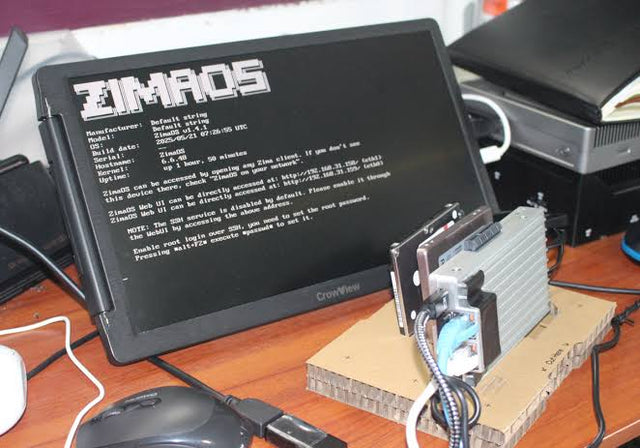
Local AI Server Checklist Before Buying a GPU
A pre-purchase checklist for avoiding a fast but incompatible, under-cooled, or VRAM-limited GPU in a home AI server.
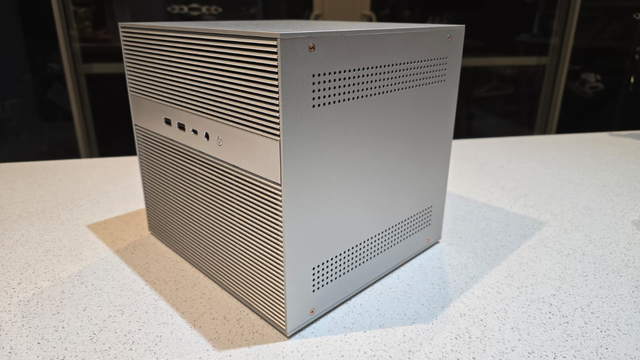
Container Server Storage Checklist Before One Large Pool
A storage design checklist that prevents one convenient container pool from becoming one shared capacity and recovery failure domain.
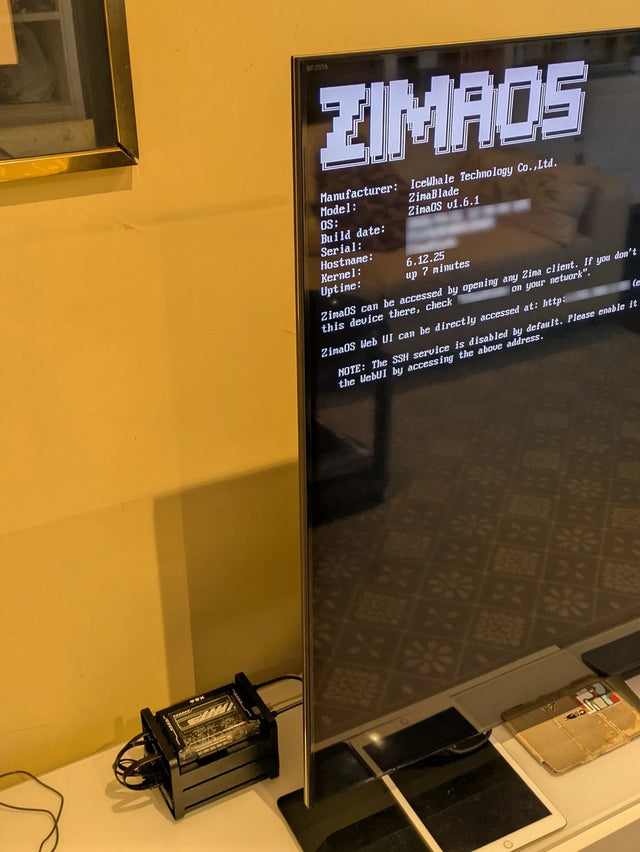
NAS Drive Mixing Checklist Before Combining Capacities
A pre-purchase and pre-deployment checklist for mixed NAS disks that prevents hidden capacity waste and unpredictable recovery behavior.


