
ZimaBlade vs Beelink EQ13: Server Board or Mini PC?
A practical comparison of a compact x86 storage board and an enclosed N100 mini PC, centered on drive attachment, networking, expansion, and the amount of assembly each deployment requires.
Updated September 21, 2026
ZimaBlade 7700 vs Beelink EQ13 N100 16GB: Verdict and Best Use Cases
Start with the direct answer, then use the scenario matrix to see which NAS fits each workload.
A compact x86 storage board
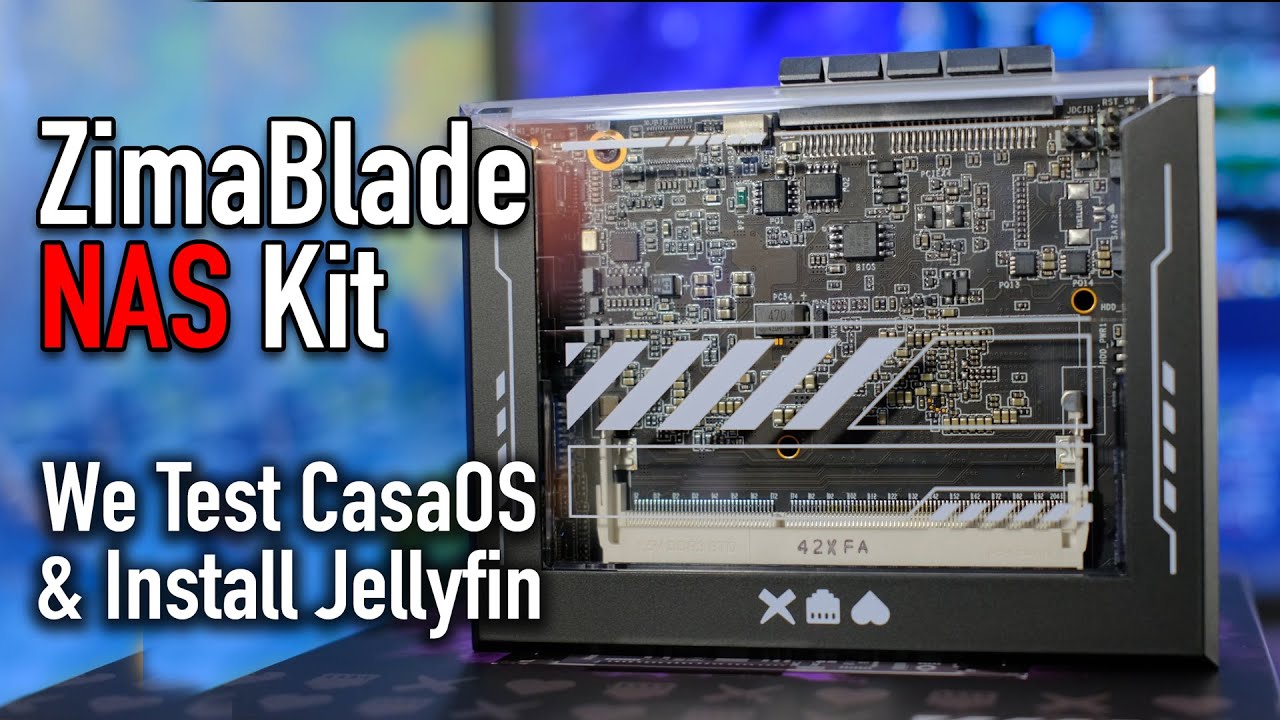
The ZimaBlade product page uses an Intel Atom x7-E3950, accepts up to 16GB DDR3L SO-DIMM memory, includes 32GB eMMC, and exposes two powered SATA ports, one Gigabit Ethernet port, Mini DisplayPort, USB, and a PCIe 2.0 x4 interface. It is a board for focused NAS, Docker, router, and maker-server builds rather than a finished mini PC.
An enclosed N100 mini PC for general computing
The EQ13 N100 configuration is commonly sold with 16GB DDR4, a 500GB PCIe 3.0 SSD, dual 1GbE, Wi-Fi 6, dual HDMI, a second M.2 position, and an internal power supply. It is a tidy small computer first; using it as a NAS still requires a USB or network storage plan because it does not provide ZimaBlade's powered two native SATA layout.
| Use Case | Better Choice | Why |
|---|---|---|
| Two-drive mirrored server | ZimaBlade | Two powered SATA ports are native and keep the storage path direct. |
| Quiet enclosed desktop | EQ13 N100 | Memory, SSD, Wi-Fi, display outputs, and cooling arrive together. |
| Wireless utility host | EQ13 N100 | Wi-Fi 6 and Bluetooth avoid an adapter plan. |
| Custom PCIe storage or NIC project | ZimaBlade | PCIe 2.0 x4 is exposed for a validated add-in card. |
| Large single-disk workspace | EQ13 N100 | The representative 500GB SSD is a more convenient starting volume. |
ZimaBlade 7700 vs Beelink EQ13 N100 16GB Specifications
The main table compares the closest standard configurations only, so higher-end SKUs do not distort the baseline comparison.
| Specification | ZimaBlade | Beelink EQ13 |
|---|---|---|
| Processor | Intel Atom x7-E3950, 4 cores, up to 2.0GHz | Intel N100, 4 cores/4 threads, up to 3.40GHz |
| Memory | Up to 16GB DDR3L SO-DIMM | 16GB DDR4 in the representative bundle; check SKU |
| Boot storage | 32GB eMMC | 500GB PCIe 3.0 SSD in the representative bundle |
| Native data storage | 2 × powered SATA 3 | No native powered SATA pair; external storage is required |
| Networking | 1 × 1GbE | 2 × 1GbE |
| Expansion | PCIe 2.0 x4 | Second M.2 position; revision-dependent |
| Wireless | No onboard Wi-Fi listed | Wi-Fi 6 and Bluetooth in the representative configuration |
| Display | Mini DisplayPort 1.4 | 2 × HDMI |
| Physical format | Open server board; owner supplies mounting | Enclosed mini-PC chassis with matched cooling |
Primary comparison baseline: The primary ZimaBlade 7700 is a bare x86 board with a 32GB eMMC boot device and direct powered SATA. The comparison EQ13 baseline is the N100 16GB/500GB bundle. EQ13 is a complete computer with more convenient desktop I/O; ZimaBlade exposes the more direct storage-card path but has only one 1GbE port.
Category-by-Category Comparison
What the specification differences mean for storage, networking, software, self-hosting, media, and local AI.
Storage: Direct SATA Versus a Finished SSD Bundle
ZimaBlade separates the operating environment from data drives: 32GB eMMC can hold the system while two powered SATA 3 ports attach a mirrored pair or independent disks. That topology is straightforward for a small NAS and leaves the PCIe slot available for a controller, NIC, or another validated device.
The EQ13 feels more complete at first boot because a representative N100 bundle includes a 500GB SSD. Its second M.2 position can add flash depending on the revision, but that is not the same as two powered SATA connections. A redundant multi-drive plan therefore adds a USB enclosure, network storage, or custom cabling.
Category verdict: ZimaBlade is the cleaner two-drive server; EQ13 is the cleaner single-box computer with included flash.
CPU and Memory: Similar Low-Power Class, Different Starting Point
Atom x7-E3950 is a four-core x86 processor with a 2.0GHz maximum clock and a 16GB DDR3L SO-DIMM ceiling. It is adequate for focused file services, routing, lightweight containers, and maker-server roles, but it is not a modern high-throughput workstation platform.
The EQ13's N100 reaches up to 3.40GHz and the representative bundle includes 16GB DDR4. That gives the mini PC a more generous out-of-box desktop baseline, although sustained performance still depends on its firmware, cooling, and power limits. Compare the complete service stack rather than treating clock speed as a guarantee.
Category verdict: EQ13 has the stronger ready-to-run compute bundle; ZimaBlade's advantage is the server-oriented I/O layout.
Networking: EQ13 Has More Ports, ZimaBlade Has the Card Slot
ZimaBlade provides one 1GbE port. That is enough for many light NAS and automation roles, but it is a real ceiling for large transfers and it does not provide the two-interface topology found on the EQ13 baseline. A PCIe 2.0 x4 network card may help, subject to card support, power, cooling, and the owner-provided enclosure.
EQ13's dual 1GbE and Wi-Fi 6 make it more flexible as a desktop, small router, or media client. Two 1GbE ports still require software support for bonding or routing and do not turn one file transfer into a 2Gbps session. The mini PC wins convenience; the board keeps a more explicit hardware expansion path.
Category verdict: Choose EQ13 for ready network variety; choose ZimaBlade only when native SATA or a planned PCIe network card matters more than its single onboard port.
Ownership: Open Board Project Versus Enclosed Appliance
ZimaBlade asks the owner to provide safe mounting, drive mounting, airflow, and cable routing. That work is useful when the final appliance needs a particular SATA arrangement or PCIe card, but it is part of the purchase cost and setup time.
EQ13 packages the board, cooling, memory, storage, wireless module, and power arrangement in one small enclosure. It is easier to place behind a monitor or on a desk, while the internal expansion ceiling is fixed by the exact revision. A mini PC is simpler, not automatically a better NAS.
Category verdict: EQ13 minimizes physical setup; ZimaBlade gives the builder more control over the final server.
Pros, Cons, and Which One Should You Buy?
Bring the important trade-offs and final buyer recommendations together in one decision section.
Start With the Physical Storage and Network Plan
Draw the finished system before choosing. If it needs two directly attached drives or a planned PCIe network card, the Board wins. If it needs a quiet general-purpose computer with Wi-Fi, an included SSD, and dual display output, EQ13 is the more coherent package.
| Buyer | Recommended Model | Decision Rule |
|---|---|---|
| Two-drive home server builder | ZimaBlade 7700 | Native powered SATA and eMMC match the storage plan; budget for mounting and cooling. |
| Office or media mini PC buyer | Beelink EQ13 N100 | The enclosed chassis, SSD, wireless, and display outputs reduce setup friction. |
| Network appliance needing two onboard links | Beelink EQ13 N100 | EQ13 has dual 1GbE; ZimaBlade has one onboard 1GbE unless expanded. |
| PCIe experimenter | ZimaBlade 7700 | Use its exposed PCIe 2.0 x4 after validating the card and power path. |
Bottom line: ZimaBlade is the better server foundation when native SATA and one 1GbE matter. The EQ13 N100 is the better finished mini PC when included memory, SSD, wireless, displays, and a tidy enclosure matter more than direct-drive storage.
SKU Family: What Changes Above the Standard Models?
The head-to-head comparison stays focused on ZimaBlade 7700 and Beelink EQ13 N100 16GB. Higher-end variants are explained separately here.
Compare the Complete EQ13 Bundle With the Board Build
The EQ13 N100 is often sold as a 16GB/500GB bundle, while ZimaBlade 7700 includes 8GB and 32GB eMMC but needs data drives and a physical deployment plan.
| Configuration | What Changes | Who It Fits |
|---|---|---|
| ZimaBlade 7700 | up to 16GB DDR3L SO-DIMM, 32GB eMMC, one 1GbE, dual powered SATA | Two-drive server, router, or PCIe lab node |
| ZimaBlade 7700 | up to 16GB DDR3L SO-DIMM, 32GB eMMC, same server I/O | More containers without changing the board |
| EQ13 N100 16GB/500GB | 16GB DDR4, 500GB PCIe SSD, dual 1GbE, Wi-Fi 6 | Enclosed desktop, utility PC, or light host |
Watch and Read More About ZimaBlade
Three creator videos and three related Zima articles add real-world context beyond the comparison tables.
Watch Creator Videos


Frequently Asked Questions
Long-tail buying questions, SKU questions, and query fan-out from the comparison.
ZimaBlade vs Beelink EQ13 FAQ
Which EQ13 model is compared?
This page uses the N100 version with a representative 16GB DDR4 and 500GB SSD bundle. Beelink has also sold other EQ13 processor variants, so confirm the exact listing.
Does ZimaBlade have two Ethernet ports?
No. ZimaBlade 7700 has one 1GbE port. A compatible PCIe NIC can change the finished build, but it is not onboard.
Can EQ13 run a NAS?
Yes, but a multi-drive NAS usually needs external or network-attached storage because the mini PC does not provide ZimaBlade's two powered SATA ports.
Does ZimaBlade include an SSD?
It includes 32GB eMMC for boot or system duties. Data storage can use the two SATA ports or a validated PCIe storage device.
Which is easier to deploy?
EQ13 is easier as a complete mini PC. ZimaBlade is easier only when its native SATA and planned PCIe topology match the server design.
Which one is quieter?
The answer depends on the enclosure, drives, and load. ZimaBlade is an open board that needs a thermal plan; EQ13 has integrated active cooling.


