
ZimaBoard 2 vs Radxa ROCK 5B+: Server I/O or Edge AI?
A comparison between a dual-network x86 home-server board and an upgraded RK3588 SBC with dual M.2 storage, onboard wireless, cellular expansion, and edge-AI hardware.
Updated September 21, 2026
ZimaBoard 2 832 vs Radxa ROCK 5B+ 8GB: Verdict and Best Use Cases
Start with the direct answer, then use the scenario matrix to see which NAS fits each workload.
Better for conventional server connectivity
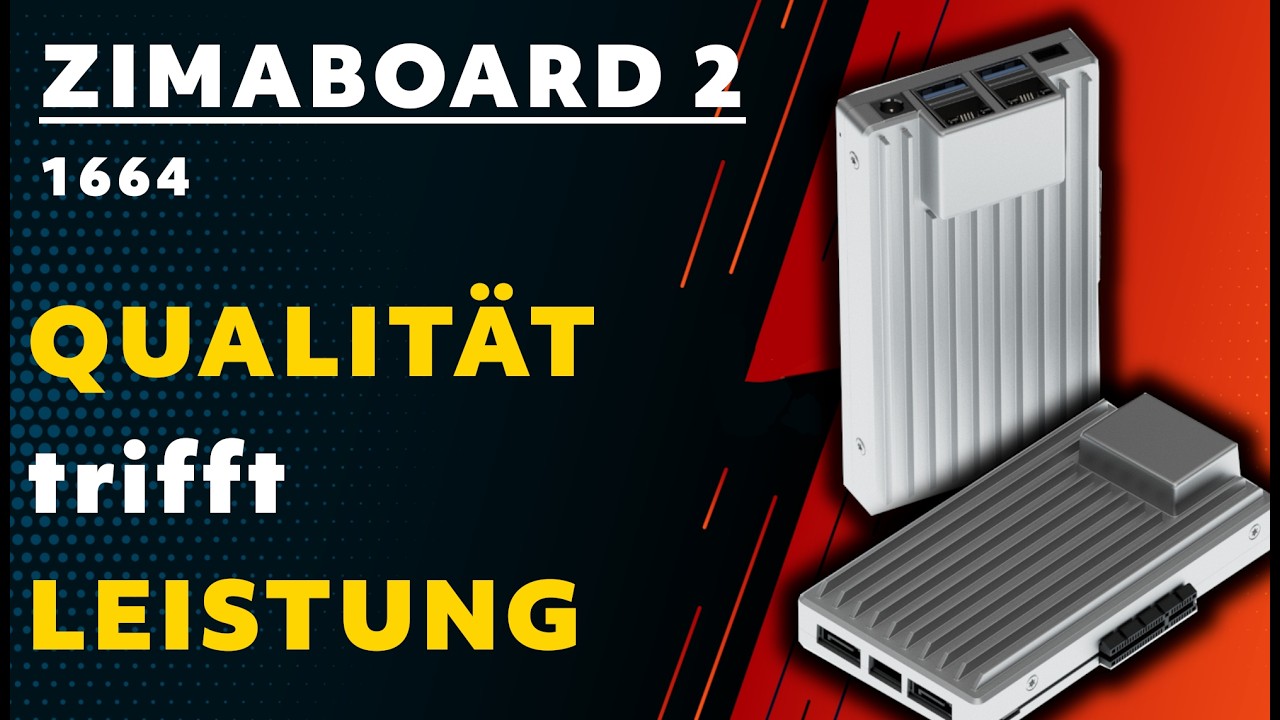
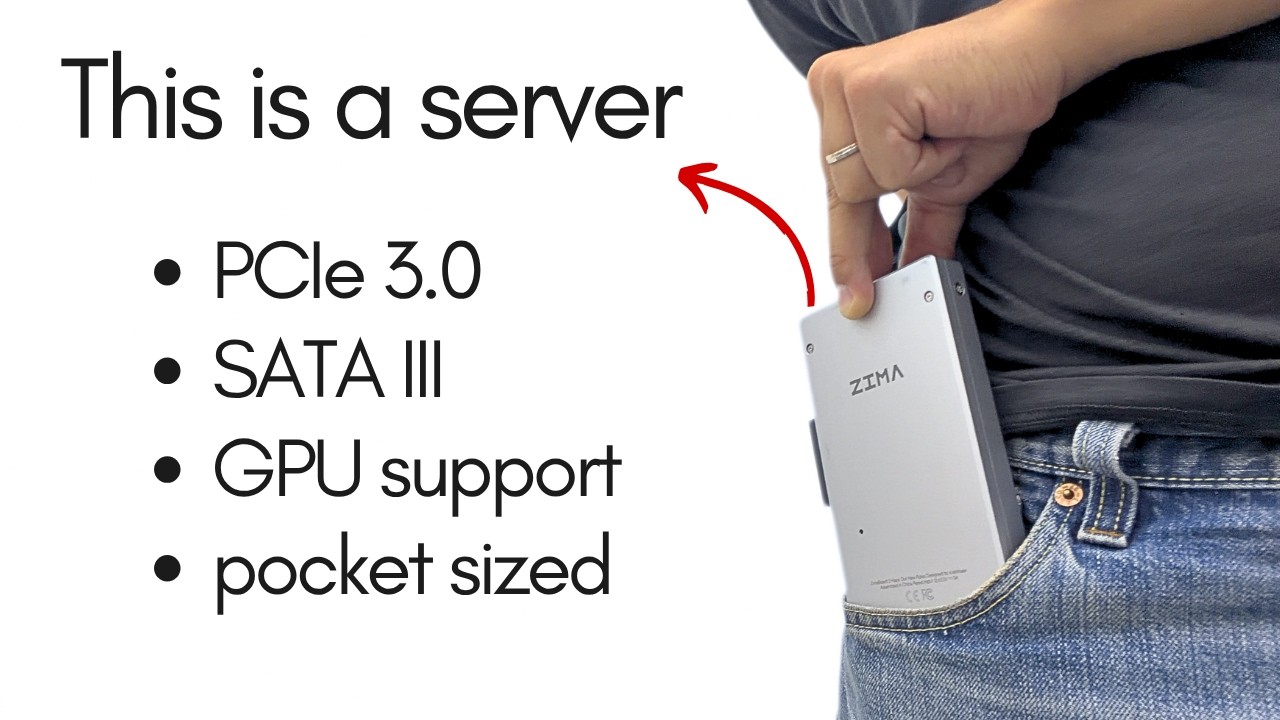
The ZimaBoard 2 product page integrates Intel N150, 8GB LPDDR5, 32GB eMMC, dual 2.5GbE, two powered SATA 3 ports, and an open-ended PCIe 3.0 x4 slot. Its I/O is arranged around wired storage, routing, add-in cards, and x86 self-hosting.
Better for connected edge-compute builds
ROCK 5B+ keeps the eight-core RK3588, Mali-G610 GPU, and 6-TOPS NPU, then adds onboard eMMC options, two M.2 M-key connectors, onboard Wi-Fi 6 and Bluetooth 5.2, an M.2 B-key cellular path with SIM support, and expanded camera connectivity.
| Use Case | Better Choice | Why |
|---|---|---|
| Two-drive SATA NAS | ZimaBoard 2 | Direct powered SATA avoids adapting an NVMe or USB interface to hard drives. |
| Dual-NVMe ARM appliance | ROCK 5B+ | Two M.2 M-key connectors can host separate NVMe devices, each using PCIe 3.0 x2. |
| Dual-wired-network router | ZimaBoard 2 | Two onboard 2.5GbE interfaces are available without an adapter. |
| Wi-Fi 6 or cellular edge node | ROCK 5B+ | Wireless, Bluetooth, M.2 B-key, and SIM support are integrated into the platform. |
| Standard PCIe card | ZimaBoard 2 | The open-ended x4 slot is more direct for an HBA, NIC, accelerator, or other add-in card. |
| On-device vision inference | ROCK 5B+ | The RK3588 NPU and expanded camera interfaces target compatible edge-AI pipelines. |
ZimaBoard 2 832 vs Radxa ROCK 5B+ 8GB Specifications
The main table compares the closest standard configurations only, so higher-end SKUs do not distort the baseline comparison.
| Specification | ZimaBoard 2 | Radxa ROCK 5B+ |
|---|---|---|
| Primary configuration | ZimaBoard 2 832 | ROCK 5B+ 8GB |
| Processor | Intel N150, 4 cores, up to 3.60GHz | Rockchip RK3588, 4 × Cortex-A76 plus 4 × Cortex-A55 |
| Architecture | x86-64 | Arm64 |
| Memory | 8GB LPDDR5 4800 | 8GB baseline; capacities up to 32GB |
| Onboard storage | 32GB eMMC | Onboard eMMC options up to 128GB plus microSD |
| NVMe | Through PCIe adapter | 2 × M.2 M-key, each PCIe 3.0 x2 |
| Native SATA | 2 × SATA 3 with power | No native SATA |
| Ethernet | 2 × 2.5GbE | 1 × 2.5GbE with optional PoE HAT |
| Wireless | No onboard Wi-Fi or Bluetooth listed | Onboard Wi-Fi 6 and Bluetooth 5.2 |
| Mobile network | Possible only through a compatible PCIe solution | M.2 B-key and SIM slot for supported cellular modules |
| AI and cameras | Optional PCIe accelerator path | 6-TOPS NPU and expanded MIPI camera connectivity |
Primary comparison baseline: Both baseline configurations have 8GB memory and onboard eMMC, but the rest of the design diverges. ZimaBoard 2 concentrates on wired server interfaces and standard PCIe expansion; ROCK 5B+ concentrates on compact NVMe, wireless, cellular, camera, and RK3588 acceleration.
Category-by-Category Comparison
What the specification differences mean for storage, networking, software, self-hosting, media, and local AI.
ROCK 5B+ Is Not Just a Faster Storage Board
The plus revision changes the I/O mix from the original ROCK 5B: onboard eMMC replaces the removable socket, two M.2 M-key connectors divide the available storage lanes, Wi-Fi 6 and Bluetooth are onboard, and an M.2 B-key interface with SIM support enables cellular projects. These changes make the board more self-contained for edge deployments.
None of those upgrades adds native SATA or a second Ethernet port. A buyer building a wired NAS or router should not let the plus label obscure the interfaces that still require adapters. The revision is most valuable when wireless connectivity, dual NVMe, cameras, or mobile networking are part of the project.
Category verdict: ROCK 5B+ wins when its new edge I/O is used; ZimaBoard 2 remains the simpler wired server platform.
Storage Choice: Two SATA Devices or Two NVMe Devices
ZimaBoard 2 directly powers two SATA disks and can keep the operating system on eMMC. This matches mirrored hard-drive or SSD storage where capacity, replacement, and direct attachment matter more than peak flash throughput. Its PCIe slot remains free for another role.
ROCK 5B+ provides two M.2 M-key connectors, each using PCIe 3.0 x2, plus onboard eMMC and microSD. This creates a compact all-flash design without cables. Hard drives require an adapter and power plan, while workloads needing one full PCIe 3.0 x4 NVMe path should notice that the two connectors split lanes differently from the original 5B.
Category verdict: Choose ZimaBoard 2 for a two-disk SATA server; choose ROCK 5B+ for a small dual-NVMe Arm appliance.
Network Design: Wired Infrastructure vs Edge Connectivity
ZimaBoard 2's two 2.5GbE ports support separate LAN and WAN connections, an isolated storage path, failover, or a lab with two wired segments. ROCK 5B+ has one 2.5GbE port but adds Wi-Fi 6, Bluetooth 5.2, and a cellular expansion path.
Wireless and cellular interfaces are not substitutes for a second Ethernet port in every deployment. A router, storage network, or deterministic wired service may need two physical copper links. A remote kiosk, camera gateway, mobile lab, or field appliance may gain more from Wi-Fi and cellular resilience than from dual Ethernet.
Category verdict: ZimaBoard 2 fits fixed wired infrastructure; ROCK 5B+ fits a connected edge device that may operate beyond Ethernet.
AI Expansion: Integrated NPU or Open PCIe
ROCK 5B+ includes the RK3588 NPU rated up to 6 TOPS and multiple camera interfaces. It is the compact choice for supported computer-vision and inference pipelines, but model conversion, operators, runtime versions, and drivers must be validated. General AI labels do not guarantee compatibility.
ZimaBoard 2 has no integrated NPU in the listed configuration. Its open-ended PCIe 3.0 x4 slot can host a compatible accelerator, offering a different framework and performance path. That approach is physically larger and may need more power or cooling, but it can be better when the application already targets an x86-supported card.
Category verdict: ROCK 5B+ wins for a validated RK3588 stack; ZimaBoard 2 wins when a standard PCIe accelerator and x86 runtime are required.
Pros, Cons, and Which One Should You Buy?
Bring the important trade-offs and final buyer recommendations together in one decision section.
Choose the Interfaces the Final Deployment Will Use
Do not decide from CPU core count. Draw the finished device with its disks, network links, camera, wireless or cellular module, and accelerator; the missing interface becomes obvious before software installation begins.
| Buyer | Recommended Model | Decision Rule |
|---|---|---|
| Fixed home NAS or router | ZimaBoard 2 832 | Use dual Ethernet and powered SATA while keeping PCIe open for a later card. |
| Dual-NVMe edge application | ROCK 5B+ 8GB | The onboard flash and two M.2 connectors produce a compact cable-light design. |
| Remote camera or mobile gateway | ROCK 5B+ 8GB | Wi-Fi, Bluetooth, cellular expansion, camera I/O, and NPU capabilities align with the deployment. |
| x86 service host with an add-in card | ZimaBoard 2 832 | Native x86 plus an open-ended PCIe slot avoids converting an M.2 storage connector. |
Bottom line: ZimaBoard 2 is the better wired storage and network server. ROCK 5B+ is the better integrated edge platform when dual NVMe, wireless, cellular, cameras, and RK3588 acceleration are real requirements.
SKU Family: What Changes Above the Standard Models?
The head-to-head comparison stays focused on ZimaBoard 2 832 and Radxa ROCK 5B+ 8GB. Higher-end variants are explained separately here.
The Plus Revision Changes Connectivity More Than CPU
ROCK 5B and 5B+ share the RK3588 compute foundation. The 5B+ purchase case is its revised storage and connectivity layout, not a different processor. Compare those interfaces against the fixed server-oriented layout of ZimaBoard 2.
| Configuration | What Changes | Who It Fits |
|---|---|---|
| ZimaBoard 2 832 | 8GB, 32GB eMMC, dual 2.5GbE, dual SATA, PCIe x4 | Wired home server and NAS |
| ZimaBoard 2 1664 | 16GB and 64GB eMMC with the same interfaces | Heavier x86 services |
| ROCK 5B+ | RK3588, up to 32GB, onboard eMMC, dual M.2, wireless and cellular options | Edge AI, camera, mobile, and all-flash Arm builds |
Watch and Read More About ZimaBoard 2
Three creator videos and three related Zima articles add real-world context beyond the comparison tables.
Watch Creator Videos


Frequently Asked Questions
Long-tail buying questions, SKU questions, and query fan-out from the comparison.
ZimaBoard 2 vs Radxa ROCK 5B+ FAQ
What does ROCK 5B+ change from ROCK 5B?
It adds onboard eMMC, two M.2 M-key connectors, onboard Wi-Fi 6 and Bluetooth 5.2, an M.2 B-key cellular path with SIM support, and revised camera and USB-C connectivity.
Does ROCK 5B+ have two 2.5GbE ports?
No. It has one 2.5GbE port. ZimaBoard 2 has two.
Can both M.2 slots run NVMe drives?
ROCK 5B+ provides two M.2 M-key connectors, each with a PCIe 3.0 x2 connection. Confirm SSD size, power, thermal, and OS support.
Does ROCK 5B+ have SATA?
No native SATA ports are listed. SATA devices need an adapter, separate power, and a mounting plan.
Which is better for a cellular gateway?
ROCK 5B+ is the more direct route because it includes an M.2 B-key interface and SIM slot, subject to modem, carrier, antenna, and driver compatibility.
Which is better for a PCIe accelerator?
ZimaBoard 2 offers the clearer standard-card path. ROCK 5B+ instead provides an integrated NPU for supported RK3588 workloads.


