
Top 10 AI Agent Memory Tools for Local Deployments in 2026


The best AI agent memory tool for local deployment depends on what the agent actually needs to remember. Mem0 is the safest general-purpose choice, OpenViking is stronger when memory should live beside files and skills, while Graphiti is better when facts and relationships change over time.
This ranking focuses on self-hosting, cross-session persistence, inspectability, active development, and clear memory architecture. It complements broader open-source local AI agent projects by comparing the memory layer itself rather than complete agent runtimes.
Top 10 AI Agent Memory Tools for Local Deployments
| Rank | Memory Tool | Best For | Memory Model |
|---|---|---|---|
| 1 | Mem0 | General-purpose agent memory | Extracted long-term memory |
| 2 | OpenViking | Files, knowledge and agent context | Context database |
| 3 | Graphiti | Changing facts and relationships | Temporal context graph |
| 4 | Cognee | Project knowledge memory | Knowledge graph + retrieval |
| 5 | MemOS | Multi-layer memory | Memory operating system |
| 6 | ReMe | Human-readable local memory | File-native memory |
| 7 | Letta | Stateful agents | Runtime-integrated memory |
| 8 | Memobase | User personalization | Profile and event memory |
| 9 | LangMem | LangGraph applications | Memory extraction and management |
| 10 | Honcho | Reasoning about users and agents | Peer representations |
How We Ranked Local Agent Memory Tools
This is not a vector-database ranking. A memory system also needs to decide what deserves to be stored, how it should be updated, and what should be retrieved later.
We therefore weighted five factors: local deployment, persistence, memory management, inspectability, and agent integration. Project popularity matters, but architecture matters more.
What Does AI Agent Memory Actually Mean?
| Memory Type | What It Stores | Examples |
|---|---|---|
| Fact / Preference | User facts and recurring preferences | Mem0, Memobase |
| File-Native | Readable notes and experience | ReMe, OpenViking |
| Graph | Entities and relationships | Graphiti, Cognee |
| Runtime | Agent identity and persistent state | Letta |
| Reasoning | Representations inferred from interactions | Honcho |
RAG is related but different. RAG usually retrieves external documents; agent memory preserves information learned through previous interactions and tasks. For document-centered retrieval, the existing guide to document search and RAG workflows covers that layer separately.
1. Mem0 — Best Overall AI Agent Memory Layer

Mem0 is the easiest general recommendation when an existing agent needs persistent memory without replacing its architecture.
Mem0 extracts useful information from conversations, stores durable memories, and retrieves relevant items in later sessions. It can run as a library or self-hosted service and allows developers to choose their own models and storage components.
Best for: adding long-term memory to an existing chatbot or agent. Not ideal for: users who want memory to remain directly readable as ordinary files.
2. OpenViking — Best Context Database for Local Agents

OpenViking is a better fit when memory is part of a larger local context system.
OpenViking organizes memory, resources, knowledge, and skills behind a hierarchical context layer with filesystem-like viking:// paths.
This makes it useful when the same agent works with project files, reusable skills, documents, and durable user context rather than treating memory as a separate vector collection.
Best for: local agents that need memory, files, and skills in one context layer. Not ideal for: simple applications that only need a few user preferences.
3. Graphiti — Best for Facts That Change Over Time

Graphiti is strongest when the agent needs to know not only what happened, but when it was true.
Graphiti builds temporal context graphs that preserve entities, relationships, source episodes, and historical state.
If a project changes databases or a user's preferences change, temporal memory can distinguish old information from current information instead of retrieving both as equally valid facts.
Best for: evolving project state, CRM, customer histories, and changing relationships. Not ideal for: simple static preference memory.
4. Cognee — Best Knowledge-Graph Memory for Projects

Cognee is useful when conversations need to connect with a larger body of project knowledge.
Cognee turns documents, code, and conversations into a persistent graph-backed knowledge layer that can be searched later.
Its strength is connecting information across different sources instead of treating every memory as an isolated note.
Best for: technical documentation, codebases, private project knowledge, and graph-based retrieval. Not ideal for: lightweight personal assistants that only need a small user profile.
5. MemOS — Best for Multi-Layer Memory

MemOS treats memory as a managed system rather than a single database.
MemOS can coordinate different memory forms, including textual information, graphs, tool traces, personas, and knowledge bases.
This breadth becomes useful when several agents, projects, or memory types need to be governed under one layer.
Best for: complex agents with multiple memory types. Not ideal for: developers who only need basic cross-session recall and want minimal infrastructure.
6. ReMe — Best Human-Readable Local Memory

ReMe is the clearest option when users need to inspect and edit what the agent remembers.
ReMe follows a file-native approach in which Markdown and related local files remain the source of truth while indexes and graphs can be rebuilt from them.
This gives users ordinary control over memory: read it, correct it, delete it, back it up, sync it, or put it under version control.
Best for: local-first users who value transparency and file ownership. Not ideal for: applications that need large-scale graph reasoning without human-readable memory files.
7. Letta — Best Memory-First Agent Runtime

Letta makes persistent memory part of the agent runtime rather than attaching it afterward.
Letta is designed around stateful agents that maintain identity, experience, and context across interactions.
That makes Letta a broader architectural choice than Mem0 or ReMe. If you are still choosing the entire agent framework rather than only its memory layer, the comparison of AI agent frameworks provides the wider context.
Best for: applications where persistent identity is central to the agent. Not ideal for: adding a small memory feature to an otherwise finished application.
8. Memobase — Best for User Profile Memory

Memobase focuses on remembering the user rather than trying to remember everything.
Memobase manages profiles, events, preferences, and timelines and provides a Dockerized path for self-hosting.
Best for: personal assistants, education, customer service, and personalization. Not ideal for: large project knowledge graphs or shared agent knowledge.
9. LangMem — Best for LangGraph Developers

LangMem is the most natural option when the application already uses LangGraph.
LangMem provides primitives for extracting, searching, updating, and consolidating long-term memories and integrates directly with LangGraph storage.
Its advantage is ecosystem fit rather than being a complete standalone memory server.
Best for: LangGraph applications that need background memory extraction or persistent user state. Not ideal for: teams using an unrelated agent stack and looking for a framework-neutral service.
10. Honcho — Best Reasoning-First Memory

Honcho focuses on building representations of users, agents, and relationships instead of simply retrieving old messages.
Honcho stores events and interactions, then builds persistent representations that an agent can query later.
This lets an agent retrieve conclusions about a person or relationship rather than only finding the original message that mentioned a fact.
Best for: assistants that need deeper user or peer representations. Not ideal for: simple fact retrieval where a smaller memory layer is enough.
Which AI Agent Memory Tool Should You Choose?
| If You Need... | Start With |
|---|---|
| General persistent memory | Mem0 |
| Memory, files and skills together | OpenViking |
| Facts that change over time | Graphiti |
| A project knowledge graph | Cognee |
| Multiple managed memory types | MemOS |
| Readable local memory files | ReMe |
| A memory-first stateful agent | Letta |
| User profiles and preferences | Memobase |
| Memory inside LangGraph | LangMem |
| Reasoning about users and relationships | Honcho |
File Memory vs Vector Memory vs Graph Memory
Vector memory works well when semantic similarity is the main retrieval problem. File-native memory is easier for humans to inspect and correct. Graph memory is more useful when relationships and changing facts matter.
There is no benefit in choosing the most complicated architecture by default. Use the simplest memory model that preserves the information your agent actually needs later.
Can AI Agent Memory Run Fully Locally?
Yes, but a self-hosted memory service can still call an external model or embedding API. A fully local setup keeps the memory store, extraction model, embedding model, and agent inference path on infrastructure you control.
This distinction also applies to local agents more broadly: the runtime can be local while individual services still send context elsewhere. Always evaluate the full data path, not only where the memory database runs.
What Should Not Become Agent Memory?
More memory does not automatically produce a better agent. Stale, weak, or irrelevant records can crowd out current evidence; the separate guide on agent memory quality explains this failure mode in more detail.
Long-term memory should be cautious about storing:
- temporary tool output;
- unverified model assumptions;
- obsolete project state;
- duplicate memories;
- credentials or secrets;
- raw conversation history with no future value.
The memories worth preserving are usually those that can change a future decision: stable preferences, verified facts, important events, project decisions, or useful lessons from previous work.
Frequently Asked Questions
What is the best AI agent memory tool for local deployment?
Mem0 is the safest general-purpose starting point. OpenViking is a stronger fit when memory should live alongside files, knowledge, and skills in one local context system.
Which memory tool is best for changing information?
Graphiti is designed around temporal context and can distinguish current facts from information that was true earlier.
Which agent memory tool stores readable files?
ReMe uses a file-native approach in which local files remain the source of truth, making memories easier to inspect, edit, back up, and version.
What is the difference between RAG and agent memory?
RAG retrieves external knowledge such as documents. Agent memory usually preserves information learned through previous interactions, decisions, and tasks.
Do AI agents need a vector database for memory?
No. Memory can use files, relational databases, keyword indexes, graphs, vectors, or several methods together.
Which memory tool is best for user personalization?
Memobase is specifically focused on profiles, preferences, events, and timelines. Mem0 is a broader choice when personalization is only one memory requirement.

Recommended products

Tech & AI HUB
More to Read
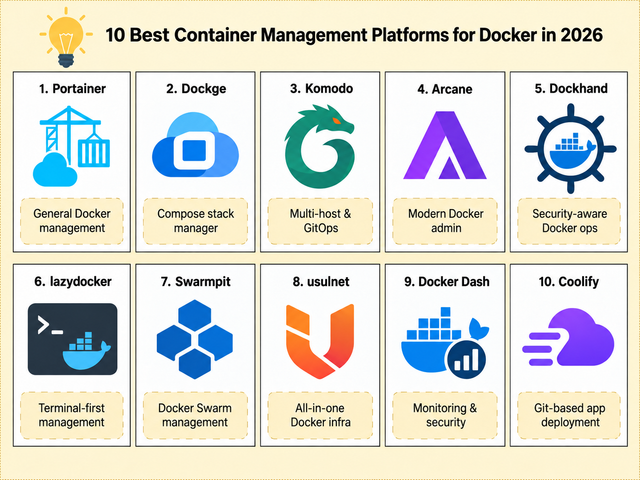
10 Best Container Management Platforms for Docker in 2026
Compare 10 Docker management platforms for Compose, multi-host control, GitOps, security, Swarm, monitoring, and self-hosted deployment.
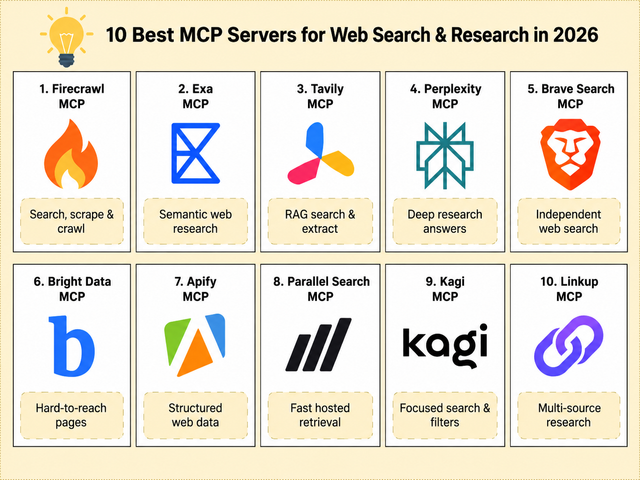
10 Best MCP Servers for Web Search and Research in 2026
Top MCP servers for web search, page retrieval, crawling, structured data, and multi-source research in AI agent workflows.
Top 10 Open-Source AI Coding Assistants in 2026
Compare 10 open-source AI coding assistants for IDEs, terminals, local models, self-hosting, Git workflows, and autonomous development.


