
Can Home Assistant Preserve Reliable Local Control When One Dependency Is Unavailable?


Yes, Home Assistant can preserve reliable local control during one dependency outage when critical paths are local, bounded, and tested with explicit fallbacks.
The answer depends on which component fails. An unavailable weather API need not stop a wall switch from controlling a local light, while a failed MQTT broker can remove the message path for every device that depends on it. Reliable degradation therefore comes from dependency mapping, timeouts, last-known-state rules, manual control, and tests that prove unrelated functions continue.
A Dependency Graph Defines the Failure Radius
Each control path crosses inputs, Home Assistant Core, integration code, transports, coordinators or brokers, and the target device. A failed node affects only the paths that require it unless automations have coupled unrelated decisions to the same result.
Reports of MQTT entities remaining unavailable after an integration restart illustrate how MQTT dependency branch can remove an entire protocol branch even while Core and other integrations stay healthy.
Draw the path for critical functions instead of labeling the whole installation local. A local dashboard does not help a light whose command still requires a cloud API or an unavailable broker.
Local Transport Does Not Eliminate Coordinators
MQTT, Zigbee, Z-Wave, Thread, and Bluetooth can avoid the public internet, yet each may rely on a broker, coordinator, border router, USB path, or radio process. Co-locating components reduces network hops but can increase the blast radius of one host failure.
A restart case in which MQTT devices stayed unavailable shows why broker reconnection behavior must be tested after service ordering and reconnection, not only during steady operation.
Redundancy is useful only when the fallback does not share the failed component. A second dashboard on the same dead host is not a control fallback; a physical switch with direct binding may be.
Timeouts and Fallback Rules Bound the Degradation
Automations should distinguish fresh values, stale values, unknown state, and unavailable services. A bounded timeout can skip an optional enrichment step, retain a safe last-known setpoint, or choose a local default rather than waiting indefinitely.
A household outage report found Wi-Fi and Zigbee devices unavailable despite expectations of local operation, demonstrating that actual outage dependency path must be verified against the actual network and coordinator topology.
Last-known state is unsafe for facts that expire, such as occupancy or a door position. The fallback contract must state how old data may be, which actions are suppressed, and which manual control remains available.

Local-First Design Has a Clear Boundary
Local integrations, local DNS, independent radio networks, and on-premises brokers reduce external dependence. They cannot preserve control if the failed component is Core itself, the only power source, a shared switch, or the sole radio coordinator.
A local-first architecture guide explains how local-first control design keeps data and decisions inside the home while still requiring deliberate service boundaries.
This is the flip condition: one failure is tolerable only when critical paths either bypass it or enter a defined safe state. If every path traverses the unavailable node, reliability requires redundancy, relocation, or manual operation rather than another automation.
Perform a One-Failure-at-a-Time Drill
Select a harmless period and disable one dependency: internet, DNS, broker, database, coordinator, or optional API. Measure local action latency, automation outcomes, unavailable entities, queued work, recovery time, and whether physical controls still function.
The outage control-path test identifies delayed local-control paths during internet outages, helping select tests that separate external failure from internal network coupling.
Pass when the documented critical controls meet their target and affected features fail visibly into the declared fallback. Restore the dependency and verify clean reconciliation before testing the next one; never combine failures until each individual boundary is understood.

Recommended products

Tech & AI HUB
More to Read
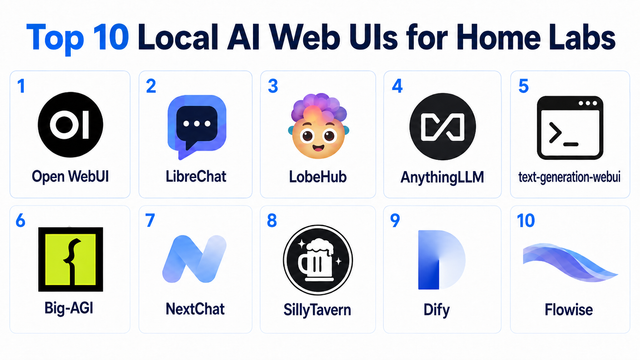
Top 10 Local AI Web UI for Home Labs In 2026
Compare 10 self-hosted local AI web UIs for home labs, covering Ollama support, RAG, agents, multi-user access, setup effort, and ideal use cases.
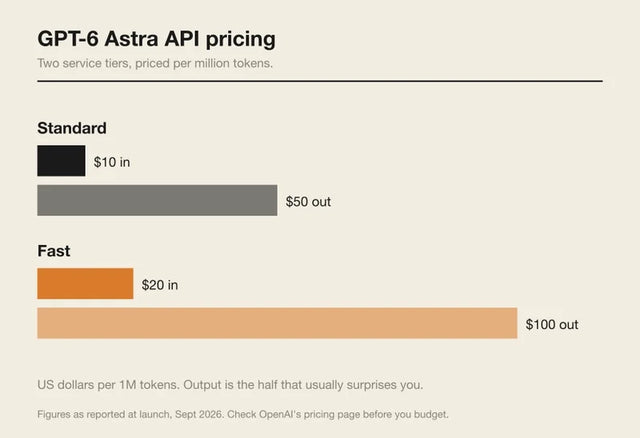
How Much Does GPT-6 Astra Cost Over Time? When Cloud AI Makes Sense vs Local AI
A practical GPT-6 Astra cost guide covering token usage, long-term AI workloads, cloud vs local tradeoffs, and why hybrid AI infrastructure matters.
GPT-6 Astra vs Local AI: Which Parts of an Agent Should Stay on Your Home Server?
GPT-6 Astra can stay in the cloud while your home server keeps files, memory, RAG, tools, permissions, and durable agent state local.


