
Why Does Your Mac Run Out of Storage So Quickly?


Your Mac usually runs out of storage quickly because too many things compete for the same internal SSD: apps, photos, videos, downloads, iPhone backups, caches, swap files, local snapshots, cloud sync files, and hidden System Data.
Deleting a few files may help for a week, but it does not solve the structure problem. Active work should stay on the Mac. Old projects, photo archives, Time Machine backups, media libraries, and finished exports should move to external storage, NAS, or personal cloud.
The Internal SSD Is Smaller Than It Feels
A Mac with 256GB or 512GB of storage can feel large on the spec sheet and small in daily use. macOS, built-in apps, browsers, productivity tools, creative apps, messages, mail, and updates all take space before you store a single photo library or video project.
The problem becomes worse because modern files are larger. iPhone videos, Live Photos, screen recordings, RAW images, design files, Xcode data, AI models, games, and editing caches can each take tens of gigabytes. A few heavy apps and one large media folder can turn a new Mac into a low-storage Mac quickly.
| Mac Storage Size | Practical Risk |
| 256GB | Fills quickly with apps, photos, caches, updates, and downloads |
| 512GB | Usable, but tight for creative work, iPhone backups, and local media |
| 1TB | Better for active projects, but still needs an archive plan |
| 2TB+ | Comfortable for active work, but not a backup or long-term storage strategy |
The fix is not simply buying more local space every time. The better long-term fix is deciding which files deserve the fast internal SSD and which files should live somewhere else.
System Data Is Where Storage Feels Like It Disappears
System Data is confusing because it is not one folder. It is a broad macOS category that can include caches, logs, app support files, containers, old updates, iOS backups, Mail data, Messages attachments, temporary files, local snapshots, and other files that do not fit cleanly into Photos, Apps, Documents, Music, or Movies.
An Apple Community discussion about System Data storage on Mac shows why users get stuck: large space usage may hide inside Library folders such as Application Support, Caches, Containers, Group Containers, Logs, Mail, Messages, Mobile Documents, and local backups. Some of those files can be removed safely; others are app data you should not delete blindly.
| System Data Source | Why It Grows | Safe First Move |
| App caches | Browsers, creative tools, and apps rebuild working files | Clean inside the app where possible |
| Logs | Apps and system processes record activity | Identify large log folders before deleting |
| Application Support | Apps store libraries, databases, models, and settings | Do not delete unless you know the app and purpose |
| iPhone backups | Old local iOS backups remain on the Mac | Review and archive before removing |
| Mail and Messages | Attachments and local copies build up over time | Export or clean carefully if you rely on them |
| Local snapshots | macOS keeps backup points on the internal disk | Check Time Machine behavior before panic-deleting files |
The mistake is treating System Data like junk. Some of it is temporary. Some of it is important. The safe approach is to identify large sources first, then clean known caches, old backups, installers, logs, and app-generated data with care.
Swap Files Can Make Free Space Drop Suddenly
When your Mac runs low on memory, macOS can use the internal SSD as temporary working space. This is called swap. It helps the Mac keep working under memory pressure, but it can also make free storage drop quickly during heavy sessions.
A technical overview of macOS swap usage and memory pressure explains why users may see storage shrink while working and then recover after a restart. The space was not always a new permanent file. It may have been temporary memory pressure, cache, or swap activity.
| Symptom | Likely Cause |
| Free space drops while working | Swap files, app caches, temp exports, or indexing |
| Space returns after reboot | Temporary files, swap, or cache cleared |
| Space disappears during search or photo work | Spotlight, Photos, or media indexing |
| Mac slows when storage is nearly full | Internal SSD has less room for swap and system work |
Restarting can help temporarily, but it is not a storage strategy. If swap keeps eating space, the real issue may be too many browser tabs, not enough RAM for the workload, heavy creative apps, virtual machines, AI tools, or a Mac that is running too close to full capacity.
Photos, Videos, and iPhone Backups Are the Long-Term Growth Problem
Photos and videos are the files most likely to grow forever. iPhone photos, 4K video, Live Photos, screen recordings, edited exports, RAW images, and duplicate libraries can fill a Mac even when the user feels organized.
Local iPhone and iPad backups are another quiet storage drain. They may live out of sight, but they can become huge if multiple devices have been backed up to the same Mac over several years.
| Data Type | Why It Grows Fast | Better Long-Term Home |
| Photos Library | Originals, edits, Live Photos, and thumbnails | NAS or external archive |
| 4K videos | Large source files and exported versions | NAS or external SSD |
| iPhone backups | Full device snapshots accumulate over time | External storage or NAS archive |
| Screen recordings | Easy to create and forget | Archive or delete after review |
| Finished projects | Valuable but no longer active | NAS project archive |
These files should not all fight for the same internal SSD. Keep active albums and current projects local. Move older originals, exports, backup archives, and finished work to dedicated storage.
Apps Create Storage You Do Not See in Documents
Large apps do not only take space in the Applications folder. Many create hidden working data: cache, previews, derived data, render files, containers, virtual devices, downloaded assets, temporary exports, models, datasets, and logs.
| App Type | Hidden Storage Source |
| Developer tools | Derived data, simulators, SDKs, build cache |
| Video editors | Render files, proxy media, cache, optimized media |
| Design apps | Preview cache, autosaves, temp exports |
| Games | Game files, patches, downloadable content, save data |
| AI tools | Models, datasets, embeddings, local indexes |
| Docker | Images, volumes, build cache, logs |
The safest cleanup usually happens inside the app. Video editors often have cache controls. Developer tools have known cache folders. Docker has image and volume cleanup commands. Randomly deleting Library folders can break apps, lose settings, or remove data you still need.
Cloud Sync Does Not Always Free Local Space
iCloud Drive, Google Drive, Dropbox, and OneDrive are useful, but sync is not the same as a storage plan. A file can be in the cloud and still keep a local copy or cache on the Mac.
Apple’s guide to optimize storage space on Mac explains options such as storing files in iCloud, optimizing Apple TV storage, emptying Trash automatically, and reducing clutter. Those settings can help, but they do not replace a decision about what should remain local.
If Optimize Mac Storage is off, more iCloud files and Photos content may stay downloaded. If it is on, older files may be offloaded, but apps can still create caches, previews, and local working files. Cloud sync helps files follow you. It does not automatically decide what should leave your Mac forever.
Time Machine Local Snapshots Can Occupy Space
Time Machine can create local snapshots on your Mac. These snapshots help preserve recoverable file states when your backup destination is not available, but they can also appear as storage pressure when the internal SSD is already tight.
Apple’s documentation on Time Machine local snapshots explains that snapshots are stored on the Mac and can be used to recover files. That is useful, but it also means backup behavior may be part of the reason storage feels like it disappears.
The answer is not to stop backing up. It is to move Time Machine to a stable external drive or NAS destination, make sure backups complete regularly, and avoid keeping the Mac in a constant state where snapshots pile up because the real backup target is unavailable.
Downloads and Desktop Become a Hidden Archive
The Downloads folder often becomes a permanent storage dump. Installers, ZIP files, DMG files, PDFs, screenshots, exported videos, duplicate documents, and temporary files can sit there for years because they do not feel like “real storage.”
The Desktop can do the same thing. It starts as a workspace and slowly becomes an archive. That is a problem because every active folder on the internal SSD competes with apps, caches, swap, and System Data.
| Cleanup Step | Why It Works |
| Sort Downloads by size | Large installers and exports appear quickly |
| Sort by date | Old unused files are easier to identify |
| Delete old DMG and ZIP files | Installed apps usually do not need their installers |
| Move finished exports | Large media files leave the internal SSD |
| Archive old project folders | Important but inactive work stays safe elsewhere |
Do not start with obscure system folders. Start with visible files you understand. The fastest safe wins are usually in Downloads, Desktop, Movies, Pictures, old exports, and old project folders.
External SSD and NAS Solve Different Parts of the Problem
An external SSD is best when one Mac needs fast local expansion. It is ideal for active video projects, creative scratch space, large working folders, and portable storage.
A NAS or personal cloud solves a different problem. It is better when multiple devices need access, when Time Machine backups should run outside the Mac, when photo and video archives keep growing, or when family media and shared folders should not live on one laptop.
| Need | External SSD | NAS / Personal Cloud |
| Active video editing | Strong | Depends on network speed |
| One Mac expansion | Strong | Sometimes more than needed |
| Multi-device access | Weak | Strong |
| Time Machine backup | Good | Strong |
| Family photo archive | Limited | Strong |
| Shared files | Weak | Strong |
| Private media library | Limited | Strong |
If the storage problem is one active project, an external SSD may be enough. If the problem is years of photos, videos, backups, and shared files, a NAS is the cleaner long-term layer.
What Should Stay on the Mac?
Keep files local when they need speed, offline access, or constant editing. Move files away when they are important but inactive.
| Keep Local | Move Away |
| Current creative projects | Finished exports |
| Active design files | Old project folders |
| Frequently used documents | Archived PDFs |
| Apps you use daily | Old installers |
| Current code repositories | Old datasets |
| Files needed offline | Time Machine backup destinations |
The internal SSD should feel like a workspace, not a storage warehouse. Once a project is finished, archive it before the next project starts.
What Should Move to a NAS or Personal Cloud?
A NAS is useful when storage growth is long-term and multi-device. Time Machine backups, photo archives, video libraries, iPhone backup archives, old downloads, finished creative projects, shared family files, and media libraries are better candidates than active files you edit every minute.
| Move to NAS / Personal Cloud | Why It Helps |
| Time Machine backups | Keeps backup storage outside the Mac |
| Photo and video archives | Large, valuable, and rarely all needed locally |
| iPhone backup archives | Useful to keep, but not ideal on the internal SSD |
| Finished creative projects | Preserves work without crowding active storage |
| Family media | Better shared across devices |
| Shared folders | Avoids sending copies between multiple Macs |
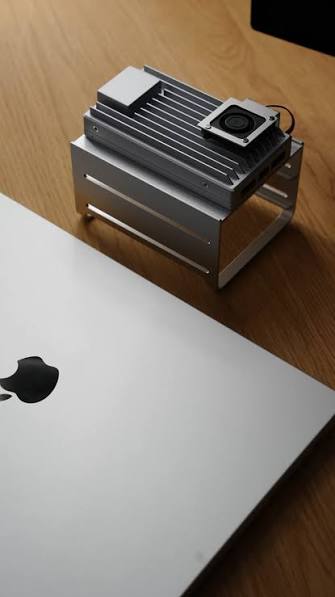
A ZimaBoard 2 personal server can support lightweight Mac backup, file sharing, and personal cloud workflows. A ZimaCube 2 NAS fits larger photo libraries, video archives, Time Machine backups, and multi-device storage.
A Cleanup Workflow That Does Not Break Things
The safest cleanup path starts with visible, understandable files and moves toward hidden data only when needed.
| Step | Action |
| 1 | Check System Settings → General → Storage. |
| 2 | Restart once to clear temporary pressure and confirm what returns. |
| 3 | Sort Downloads by size and remove old DMG, ZIP, and installer files. |
| 4 | Review large apps, games, and developer tools. |
| 5 | Check iPhone and iPad backups before deleting them. |
| 6 | Review Mail and Messages attachments if they are large. |
| 7 | Clean creative app caches from inside the app. |
| 8 | Move finished projects to external storage or NAS. |
| 9 | Set Time Machine to a stable external drive or NAS destination. |
| 10 | Keep enough free space for macOS, swap, updates, and active work. |
Do not delete random folders in Library just because they are large. Identify what app created them first. If the folder belongs to Mail, Messages, Photos, Docker, Xcode, Adobe, or a video editor, use that app’s cleanup path where possible.
When Buying a Bigger Mac Is Not the Real Fix
A bigger internal SSD helps if your active work is large. It does not automatically fix long-term storage growth. If years of photos, videos, backups, exports, and shared files keep filling the Mac, the problem is storage architecture, not only local capacity.
| Problem | Better Fix |
| Active video editing fills the disk | Bigger Mac SSD or fast external SSD |
| Old photos and videos fill the disk | NAS archive |
| Time Machine takes local space | External drive or NAS backup destination |
| iPhone backups fill storage | Archive old backups outside the Mac |
| Multiple devices need the same files | NAS or personal cloud |
| System Data keeps growing | Identify the app, cache, snapshot, or backup source |
The right setup is layered: Mac for active work, external SSD for fast project expansion, NAS or personal cloud for archive and backup, and cloud storage for sync or offsite copies.
Final Takeaway
Your Mac runs out of storage quickly because active files, hidden System Data, swap, local snapshots, cloud sync caches, photos, apps, downloads, and backups all compete for the same internal SSD.
The long-term fix is not deleting everything. It is separating active work from long-term storage. Keep current projects on the Mac, move archives and backups to dedicated storage, and use a NAS or personal cloud when your Mac has become the only place holding too much of your digital life.
FAQ
Why does System Data take so much space on Mac?
System Data can include caches, logs, temporary files, app support data, local snapshots, old updates, iOS backups, Mail data, Messages attachments, and other hidden working files.
Why does Mac storage come back after restarting?
Restarting can clear some temporary files, swap pressure, and caches. If the same workload continues, the space may disappear again.
Can I delete System Data manually?
Some parts can be cleaned, but random deletion is risky. Start with known app caches, old backups, installers, and cleanup controls built into macOS or individual apps.
Is iCloud enough to solve Mac storage problems?
Not always. iCloud is useful for sync, but files, previews, and caches may still remain local. Long-term archives and backups may still need external storage or NAS.
Is a NAS good for Mac storage?
Yes. A NAS is useful for Time Machine backups, photo and video archives, finished projects, family media, shared folders, and long-term storage outside the Mac.

Recommended products

Support & Tips
More to Read
Live TV Recording Storage Guide for Capacity, Retention, and Cleanup
Measure real recordings, reserve headroom, combine age and capacity limits, and prove the oldest eligible program is removed before storage fills.
Home Media Metadata Recovery Workflow After a Database Restore
Protect the restored state, verify media identity and paths, then repair missing artwork or matches in a pilot library before broad metadata changes.

Jellyfin Client Compatibility Checklist for Audio, Video, and Subtitles
Test representative files one variable at a time and record Direct Play, remux, audio conversion, video transcode, or failure for every client.


