
Google MCP Toolbox Vulnerability: What Self-Hosted AI Users Should Check


Cover image: Google Cloud — MCP Toolbox architecture.
CVE-2026-93328 connects a concrete software advisory to a larger home-server issue: an AI tool service can possess file and cloud-storage authority that exceeds the task an agent was asked to perform. Start with the exact affected component rather than assuming every MCP server shares the same flaw.
This guide separates the published event from practical implementation. It explains what the source establishes, where the evidence stops, and how a private-file workflow can be evaluated without assuming that an impressive model or a newer server removes the need for bounded access and review.
| Decision | Verified fact or practical boundary |
|---|---|
| Advisory scope | The public advisory identifies the cloud-storage source in googleapis/mcp-toolbox versions 1.2.0–1.4.0. |
| Risk | The advisory describes unauthorized host-file export and local-file overwrite. |
| Timing | The advisory appeared October 26; the linked source-access restriction work was merged earlier in June. |
| Verification | Version, endpoint exposure, mounted paths and effective allowlists must all be checked. |

Which Software Does the Advisory Describe?
The GitHub Advisory Database entry describes a path-traversal and missing-authorization issue in the cloud-storage source of Google Cloud MCP Toolbox for Databases. Its affected range is component-specific. An unrelated MCP implementation, a connector that never runs this source, or a different version requires its own assessment. Preserve the installed image digest, release tag and configuration so that the comparison can be checked rather than inferred from an application display name.
The database entry was marked unreviewed when checked, so it should not be presented as a complete vendor deployment advisory. Follow its references into the upstream repository and compare them with current release notes. The linked pull request adds bucket and local-path restrictions, but its earlier merge date is not the public disclosure date. A chronology that says the project first fixed everything this week would misrepresent the evidence.
Why Is Updating Only One Part of the Boundary?
An updated image can include controls while still running with permissive settings, unnecessary mounts or a broad cloud credential. Review the effective configuration rather than assuming a setting name proves a restricted deployment. A tool that can read the host filesystem and write to a remote bucket creates a data-transfer path even when the model itself is hosted elsewhere. The principal that runs the tool determines what the tool can reach.
Inventory local roots, bucket access, runtime users and network exposure. Prefer a dedicated task directory and a purpose-specific service identity. If the process cannot access the family archive or unrelated cloud buckets, a mistaken tool call has less authority to misuse. Restrictions should exist below the prompt layer: operating-system permissions, container mounts and cloud IAM remain meaningful when an agent misunderstands a request or receives hostile instructions in retrieved content.
The linked upstream pull request names allowedBuckets and allowedLocalRoot and notes permissive defaults. Inspect the effective values for the deployed source; merely seeing those settings in a newer binary does not demonstrate a restricted deployment. The same history references the 1.5.0 release in June, so a recently published advisory should not be described as a newly merged October fix.
How Can You Check Exposure Without Replaying an Attack?
Read configuration and runtime metadata first. Identify the deployed source type, the exact version and whether the endpoint is reachable from untrusted networks. Then verify allowed local roots and buckets using disposable fixtures in a staging environment. You do not need to send production secrets or reconstruct an exfiltration sequence to establish that an overly broad credential or mount exists.
If logs or other evidence suggest unauthorized activity, preserve relevant records before routine cleanup and rotate credentials associated with the exposed service. A version upgrade cannot revoke a copied key or retrieve a file that has already left the system. Keep remediation records separate from exploratory testing, and validate normal workflows after the change. The goal is a tool service with demonstrably bounded authority, not simply a container that restarts successfully.
What Should You Measure Before Trusting This Workflow?
Create an exposure record for each deployed instance: image digest, source configuration, runtime identity, mounted paths, cloud identity and reachable endpoints. Distinguish a component being installed from the affected source being enabled. A container label or a package listed in a lockfile is a useful lead, but it does not tell you which configuration is active in the running process. Preserve the evidence used to reach each conclusion.
Evaluate enforcement with harmless fixtures. A permitted operation within a dedicated test root should work; a request outside that root should be denied by the actual control, without requiring the model to decide that it is inappropriate. Apply the same reasoning to bucket scope and IAM. Do not infer enforcement solely from a configuration file on disk: confirm the service loaded that file and that deployment overrides have not widened the intended restriction.
How Do You Keep the Result Reviewable and Recoverable?
Treat a suspected exposure as an operational event with a timeline. Preserve relevant access logs, deployment records and credential identifiers before routine cleanup, while restricting unnecessary access to those records. Record what you know and what you cannot yet establish. The existence of a vulnerable version does not prove data was accessed; the absence of a convenient log entry does not prove that access was impossible.
Recovery depends on the affected authority. Restrict or disable the exposed source, replace vulnerable software as appropriate, rotate implicated credentials and restore overwritten files from a known copy if needed. Then validate that ordinary authorized operations still work under the reduced permissions. Keep a record of the deployed digest and effective allowlists after remediation. An upgrade can change executable code without correcting a broad mount, a permissive default or an already exposed credential.
How Can You Test the Workflow Before Using Important Files?
The following is an editorial validation protocol, not a claim that ZimaSpace has benchmarked the service. Run it with disposable or approved test data and keep the test conditions with the result.
- Inventory the running component and affected source. Compare the deployed version with the advisory range and preserve the exact image digest and configuration identity.
- Read the advisory and upstream change together. Separate the disclosure date from the earlier implementation history, and check the current release information before selecting an update.
- Map effective authority. Inspect local roots, container mounts, runtime permissions, bucket scope, IAM and endpoint reachability; identify permissions the intended job does not require.
- Validate restrictions with disposable fixtures in staging. Check permitted and denied paths and buckets without placing production secrets into test requests.
- Preserve evidence and address exposed credentials if activity is suspected. Keep incident observations distinct from assumptions and exploratory tests.
- Repeat the normal authorized workflow after remediation. Record the final version, loaded configuration and enforcement result so that the change can be independently reviewed.
Where Does a ZimaOS Server Fit?
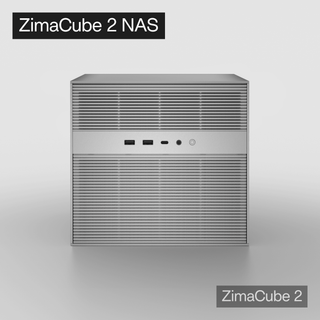
A ZimaCube 2 personal cloud NAS can provide a local storage and application layer when a project genuinely needs multiple drives, an SSD working tier or shared access to a growing archive. Choose hardware for retained source data, active services and backup policy. The product recommendation is architectural context, not evidence that this cloud model, preview service or research system runs locally on the NAS.
Separate inference from data custody. A hosted model may receive approved excerpts while the authoritative originals remain on the server. Optional local indexing, conversion or smaller-model services require their own memory and compute assessment. Keep a second recoverable copy outside the main device, and do not treat RAID or a successful upload as a complete backup strategy. A smaller existing server remains reasonable when it already meets the measured workload.
FAQ
Does this advisory affect every MCP server?
No. The cited entry describes the cloud-storage source in googleapis/mcp-toolbox versions 1.2.0–1.4.0. Other implementations and deployments need their own assessment.
Does updating the image complete remediation?
An update is only part of the assessment. Check the effective local-root and bucket restrictions, mounted paths, runtime identity and cloud credentials. A newer binary can still operate with excessive authority.
Should I reproduce file export against production data?
Use configuration evidence and harmless staging fixtures to assess exposure. Production secrets or private files are unnecessary for validating an overly broad mount, identity or allowlist.
Should I expose the whole private archive to an AI tool?
Only provide the material needed for the task through an appropriately restricted account or working directory. Check what the specific service uploads, logs and retains. A private storage location does not guarantee that a connected tool keeps processing local.
When does a larger NAS become useful?
When measured source-data growth, shared access, active applications or retention requirements justify the storage topology. It does not automatically resolve model access, unsupported runtimes, network upload limits or uncertainty in a research claim.
What is the stopping condition before production use?
Stop when you cannot establish the software/model identity, input authority, required feature availability or recovery path. Resolve those conditions first, then repeat the small test. Do not compensate for missing evidence by making a more confident recommendation.
Sources and Further Reading
- Official announcement or advisory
- Upstream cloud-storage access-control changes
- Upstream project releases
Reporting checked on October 28, 2026. Product availability, access plans and security advisories can change. Upstream claims are attributed; workflow recommendations and architecture examples are editorial analysis, not measurements from a ZimaSpace hardware test.
Related guide: Can a Self-Hosted AI Agent Operate Through a Read-Only Filesystem View?.
Related guide: How to Test Whether Agent Permissions Cover Only Required Tool Actions.
Related guide: AI Vulnerability Discovery vs Automated Patching: What Does Each Solve?.

Recommended products
Support & Tips
More to Read
How to Check Memory and Runtime Requirements Before Running LFM2.5-24B-A2B
Check LFM2.5-24B-A2B weight format, memory overhead, runtime versions, context, and tool compatibility before attempting a home-server deployment.

How to Test Granite Speech 5.0 with English Audio Files Stored on Your NAS
Test Granite Speech 5.0 on a short English recording from your NAS. Verify checkpoint revision, runtime, sample rate, transcript quality, and output handling.

How to Prepare Files and Permissions for a Claude Duet Workflow
Prepare a Claude Duet task with selected files, scoped connected accounts, separate drafts, reviewable outputs, and a clear connection-removal plan.


