
How to Prepare Files and Permissions for a Claude Duet Workflow


Prepare a Claude Duet workflow by defining the deliverable first, then selecting the few files and connected accounts needed to produce it. Give the task a separate draft location and an explicit review point. Verify access to the research preview before relying on a configuration path that may not yet be available to your account.
For NAS files, keep the originals on your storage and create an approved export through a supported sharing method. Do not assume Duet can mount a private network share. Start with a low-risk task, verify the resulting draft, and retain recoverable copies before widening what the agent can reach.
What should a first task instruction contain?
Specify the outcome, relevant dates, source documents, required format, and the point at which you want to review. For example, request a project brief from three named documents, with source links and unresolved questions, saved as a draft. Avoid asking the agent to “manage everything” during initial setup.
The Duet overview explains the move from answering a prompt to ongoing work. That shift makes a clear stopping condition especially useful.
How should I organize the input and output folders?
| Folder or record | Purpose |
|---|---|
| Originals | Authoritative files outside the agent’s writable workspace |
| Approved inputs | A dated subset needed for the current task |
| Draft outputs | Generated files awaiting review |
| Accepted outputs | Reviewed versions returned to your archive |
| Task notes | Sources, dates, and connection decisions without secrets |
Follow the NAS preparation guide for input selection and the recoverable-copy guide for protecting originals. A shared folder and a recovery copy solve different problems.
Which connected accounts should I authorize?
Choose only accounts that contribute necessary context to the task. Review the connector’s actual permissions and whether access can be narrowed. If a task only needs a copied meeting note, attaching that note may be more appropriate than connecting an unrelated mailbox.
Use the agent permission checklist to record the decision. A prompt asking for restraint does not technically remove permissions that a connector has already granted.
How do I check the first result?
Open the draft and verify its main claims against the supplied sources. Confirm that references point to the correct documents and that the output is in the requested location. If the task proposes an external action, review the exact action in the product’s available approval flow.
Do not promote an attractive brief into an authoritative record without checking dates and unresolved assumptions. Keep corrections with the task so subsequent work has a clear instruction.
What should I do when a project ends?
Remove connections that are no longer necessary and archive the accepted output with its source context. Review the product’s current retention and deletion controls separately: disconnecting access should not be assumed to erase previously processed material.
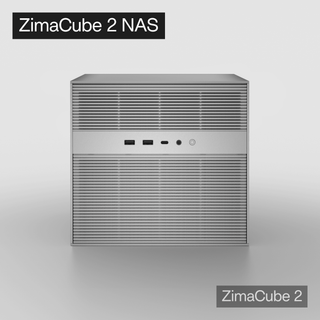
The Duet versus Dots comparison highlights why connection control, background behavior, and information retention should be evaluated separately. ZimaCube 2 can keep the local project record without replacing the agent service’s own controls.
Frequently asked questions
Can I follow this guide without preview access?
You can prepare the files and task definition. Confirm actual product access and supported sharing methods before configuring the workflow.
Do instructions alone make a broad connector read-only?
No. Inspect the technical permissions offered by the connector and narrow them where supported.
Should drafts overwrite the source documents?
Keep drafts separate until reviewed, and retain recoverable originals.
Does removing a connector necessarily delete prior information?
No such assumption is safe. Check the service’s current retention and deletion controls separately.
Related reading
- Claude Duet Explained: Proactive Tasks, Connected Apps, and Personal Files
- Claude Duet vs ChatGPT Dots: Ongoing Work, File Access, and Approvals Compared
Sources
- Official announcement and model documentation — claude.com
- Technical documentation and reference — privacy.claude.com
Cover: Claude Duet official announcement image. Image source.

Recommended products
Support & Tips
More to Read
How to Check Memory and Runtime Requirements Before Running LFM2.5-24B-A2B
Check LFM2.5-24B-A2B weight format, memory overhead, runtime versions, context, and tool compatibility before attempting a home-server deployment.

How to Test Granite Speech 5.0 with English Audio Files Stored on Your NAS
Test Granite Speech 5.0 on a short English recording from your NAS. Verify checkpoint revision, runtime, sample rate, transcript quality, and output handling.

How to Review and Test Agentic Autofix Changes Before Deploying to Your Home Server
Review an Agentic Autofix pull request with a focused diff check, relevant security evidence, functional validation, backups, and a traceable deployment.


