
Remote Backup Server vs Cloud Object Storage for Home VM Backups


A remote backup server is usually the better home-VM target when you want fast full restores, frequent incremental jobs, predictable repository behavior, and control over the entire recovery stack. Cloud object storage is usually stronger when geographic separation and removing a second server from your maintenance list matter more than local control. The decision flips on restore size, upstream bandwidth, object-storage retrieval behavior, immutability requirements, and how much infrastructure you are willing to operate offsite.
Define the VM Recovery Job Before Choosing the Target
A VM backup is not just a folder of documents. Recovering a failed home hypervisor may require disk images, VM configuration, guest metadata, encryption material, networking notes, and enough throughput to rebuild several large guests in the right order.
Proxmox documents that its backup integration can create scheduled backups of virtual machines and containers while Proxmox Backup Server adds deduplicated backup infrastructure. That makes the target choice part of a full-VM recovery workflow rather than generic file storage.
Set the controlled outcome first: how many terabytes must come back, how soon must the first critical VM boot, and whether a complete site loss is inside the threat model. Those answers determine whether a reachable server or a provider-operated object store solves the harder constraint.
A Remote Backup Server Wins When Large Restores Must Start Immediately
A server at another trusted location can keep the backup format online and ready for restore without waiting for an archive tier to rehydrate. If the inter-site link is fast enough, it can also support frequent incrementals and repository verification using the same tooling as the primary home lab.
This model gives you direct control over cache, network paths, retention, disk replacement, and repository software. It is especially useful when you expect to restore whole VMs rather than a few files, because the recovery target can remain continuously addressable.
The hidden cost is that the “offsite backup” becomes another server you own. Someone must provide power, networking, physical space, updates, monitoring, drive replacement, and a recovery plan for the remote node itself. The route is attractive only if that operational work buys a real RTO benefit.
Cloud Object Storage Wins When Removing the Second Site Is the Priority
Object storage replaces the remote chassis, disks, UPS, and household network dependency with a provider-managed storage service. That can create clean geographic separation without asking a friend or relative to host a second machine.
Amazon S3 supports lifecycle policies that move or expire backup objects while other object providers expose similar policy primitives. The important operational gain is not one vendor's feature list; it is that media replacement and storage hardware maintenance are no longer your tasks.
Cloud object storage is the stronger fit when the restore is rare, WAN upload is acceptable, and the backup application can use the provider safely. It becomes less attractive when multi-terabyte full restores are time-critical or when provider retrieval and network transfer behavior dominate the recovery window.

Retrieval Class Can Change the Cloud RTO Before Download Even Begins
Not every cloud object is instantly readable. Low-cost archive classes may require a restore request before data becomes available, so “stored in the cloud” does not automatically mean “ready to stream back now.”
AWS documents retrieval windows ranging from minutes to many hours for archive tiers. If a VM repository is placed in an archival class, that waiting period belongs inside the RTO before Internet download time is even counted.
Use immediately accessible storage for recovery points that must boot quickly, and archive only generations whose RTO permits delay. If you need the low storage cost of deep archive and the speed of a ready remote server at the same time, the requirements are conflicting and should be split across tiers.
Immutability and Credential Separation Can Reverse the Security Winner
A remote server under the same administrator credentials as the primary lab can be easier to manage but easier to destroy from the same compromised control plane. Cloud object storage can create a stronger boundary if retention locks and limited credentials are configured correctly.
Backblaze documents Object Lock for restricting deletion or modification during retention alongside lifecycle controls. The value comes from an independently enforced retention boundary, not from the word “cloud.”
A remote server can achieve strong separation too with append-only repositories, distinct accounts, firewall restrictions, and offline recovery credentials. Choose the architecture whose isolation you can actually prove during a compromised-primary scenario.
Object-Storage Economics and Network Policy Matter as the Repository Grows
Cloud removes drive purchases but introduces provider billing dimensions such as stored capacity, operations, storage class, and sometimes retrieval or egress. A remote server moves more cost up front into hardware, disks, power, and replacement labor.
Cloudflare R2 publishes storage and request billing dimensions, illustrating why object storage should be modeled as an ongoing service rather than a one-time disk purchase. Do not hard-code today's provider price into an architecture that will hold years of VM history.
The remote server becomes more attractive as restore volume and repeated access increase, provided the site and hardware remain reliable. The cloud becomes more attractive when the repository is mostly write-once, rarely restored, and the value of avoiding another physical system is high.
Restore Testing Matters More Than the Backup Target Label
A remote server can fail silently through bad disks, stale credentials, broken sync, or missing VM metadata. Cloud object storage can fail operationally through expired credentials, incompatible repository software, forgotten encryption keys, or retrieval assumptions that were never tested.
Restic's restore documentation recommends using full snapshot restore rather than browse-only access for large recoveries. The principle applies regardless of target: perform a real VM recovery drill, not just a repository listing.
The ZimaSpace recovery comparison on host recovery dependencies around virtualized storage is a useful companion. Stop comparing targets after one architecture meets the tested RTO, isolation requirement, and maintenance budget with a documented restore path.
Choose the Target That Makes the Worst Acceptable Restore Boring
Choose a remote backup server when large VM restores must begin without provider archive delay, you value tight integration with the backup stack, and you are willing to maintain a second physical system and site.
Choose cloud object storage when geographic separation and removing remote hardware maintenance are worth more than maximum control, and when the expected restore volume fits the provider's access model and your Internet connection.
For critical home VMs, a hybrid can be justified: recent recovery points on a ready remote server and older immutable generations in object storage. Add that complexity only when the two tiers protect genuinely different RTO or failure requirements.

Recommended products

Product Comparisons
More to Read
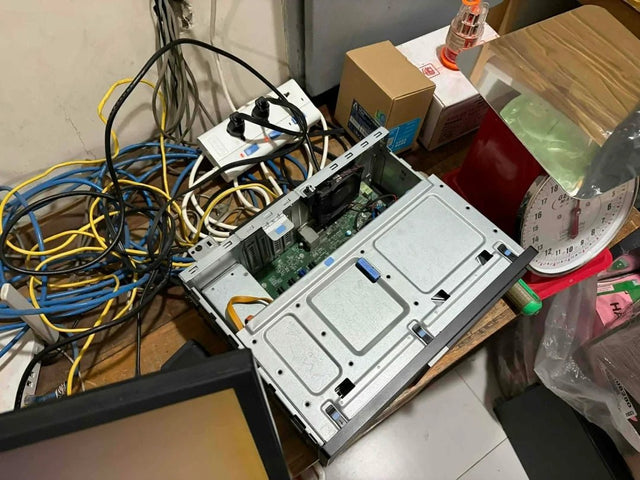
WireGuard Server vs Mesh VPN for Devices Behind CGNAT
Use mesh VPN for low-friction roaming devices; use a WireGuard relay when you want to own routing, keys, and the public endpoint.
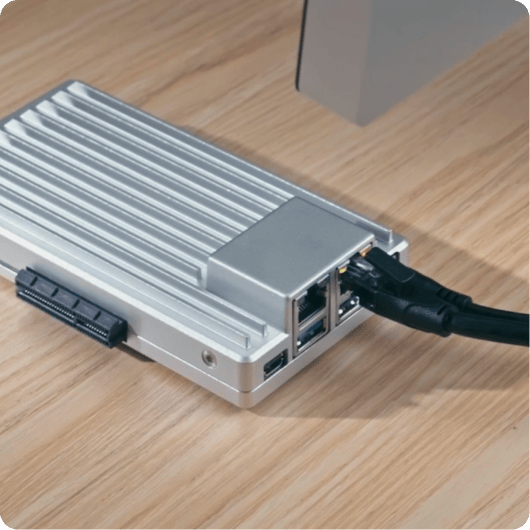
10GbE NAS on Gigabit Clients: Upgrade the Server or Endpoints First?
Upgrade the endpoint path for one slow workstation; upgrade the NAS uplink first when several gigabit clients saturate it together.
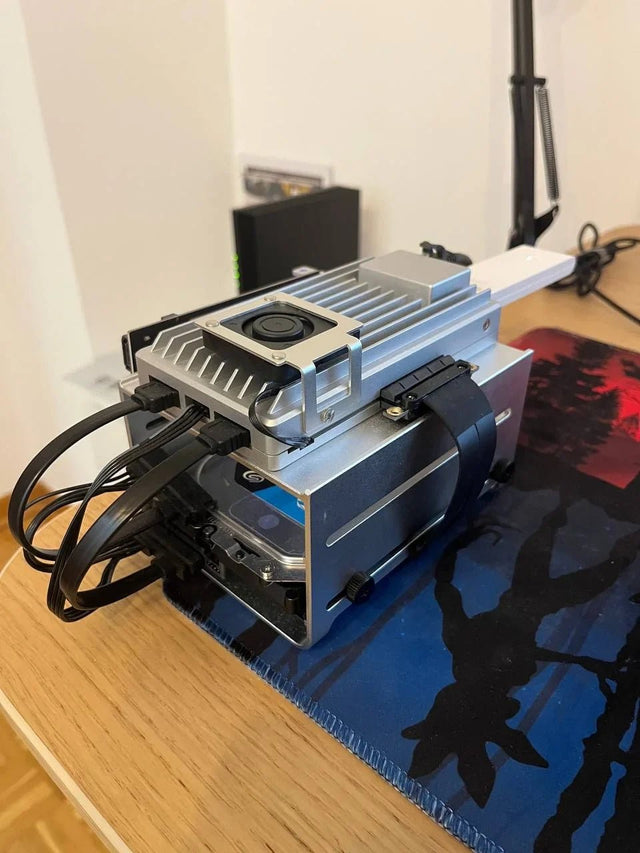
1GbE vs 2.5GbE for a Home Server: Which Workloads Cross the Line?
Keep 1GbE for light services and single streams; move to 2.5GbE when recurring transfers or combined clients sustain more than about 100 MB/s.


