
Does a NAS Web Interface Reduce Recovery Work Over Plain Linux?


A NAS web interface reduces recovery work only when it preserves the state you need, exports it portably, and guides a supported pool import or service rebuild after the original system is gone.
During normal operation, a dashboard can combine disk health, storage pools, shares, permissions, snapshots, schedules, and alerts. Recovery is a harder test: the boot device may be dead, the interface may be unavailable, and replacement hardware may differ. Compare the steps needed from blank media to a verified client connection, not the clicks required to create the first share.
Define Recovery Work With the Same Failure Baseline
Hold the disks, filesystem, redundancy layout, client accounts, SMB or NFS settings, backup copy, and replacement machine constant. Then compare four events: failed boot media, one failed data disk, a broken update, and complete motherboard replacement.
Measure hands-on steps, hidden prerequisites, decision points, and elapsed time until one client can read and write with the correct permissions. A web interface wins only when it removes or validates steps; a command line wins only when its procedure is reproducible by someone other than the original builder.
This baseline prevents a polished dashboard from being credited for better hardware or a familiar shell from being credited for undocumented knowledge.
Identify What Must Survive the Failed System
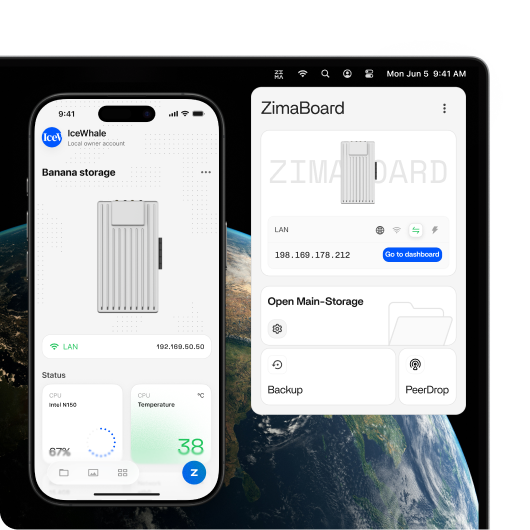
Independent coverage of NAS distributions with browser-based storage controls shows why an integrated interface helps less experienced operators: sharing protocols, RAID or filesystem options, permissions, and plugins can be managed through one product surface.
That integration lowers recovery work only if the configuration export contains the relevant state and can be restored to a supported version. Keep recovery keys, pool details, and one independent data backup outside the NAS under either route.
| Recovery input | NAS web interface route | Plain Linux route |
|---|---|---|
| Storage metadata | Pool metadata plus supported import workflow | Filesystem or pool metadata plus native import commands |
| Share configuration | Exported appliance configuration | Versioned Samba or NFS configuration |
| Identity and permissions | Users, groups, ACLs in configuration or backup | Accounts, IDs, ACL records, and directory services |
| Schedules and alerts | Integrated jobs and notification settings | Timers, cron jobs, monitoring, and mail configuration |
| Rebuild proof | Test restore on supported release | Automation or runbook tested on clean Linux |
Account for Abstraction and Configuration Drift
A NAS interface can validate fields, coordinate services, and prevent some syntax errors. It can also regenerate native configuration files, so manual edits outside supported extension points may disappear during an update or restore.
Plain Linux exposes every layer: packages, mount definitions, share files, identities, ACLs, firewall rules, monitoring, and schedules. That transparency is an advantage when configuration is versioned and automated, and a liability when changes live only in shell history.
A community discussion comparing NAS software with a hand-managed Samba server captures this operational trade: a basic share may be simple, while storage tooling, encryption, concurrency, and maintenance broaden the real job beyond the first configuration file.

Run a Blank-System Recovery Rehearsal
Use spare media or a virtual test machine. Install the exact NAS release or Linux distribution, reconnect copied or noncritical disks, import the pool read-only first when possible, restore identities and shares, then validate access from each client type.
Record every package, plugin, key, account identifier, network setting, and manual decision. Repeat the test using only the exported configuration or repository plus the written runbook. If the original operator must improvise, the route has not yet reduced recovery work.
Time the test but prioritize correctness: pool health, ACLs, snapshots, schedules, alerts, and one restored file must all pass. A fast dashboard restore that silently omits permissions or notifications is not a successful recovery.
Choose the Interface Only If It Shortens the Tested Runbook
Choose the NAS interface when it replaces separate storage, sharing, monitoring, and scheduling procedures with supported configuration export and pool-import workflows your operator can rehearse. Stay within its supported management paths so the saved state remains authoritative.
Choose plain Linux when the storage stack is deliberately small, native configuration is versioned, rebuild automation is tested, and custom behavior would fight the NAS abstraction. The NAS OS versus general Linux comparison covers the broader role choice beyond recovery alone.
Do not award either route the win before a blank-system rehearsal. The interface is valuable when it shortens a verified runbook; otherwise it mainly reduces setup friction while leaving disaster recovery unproven.

Recommended products

Product Comparisons
More to Read
LXC vs Docker on Proxmox for App Updates and Rollbacks
Docker gives app-level version control; LXC gives guest-level rollback. The better fit follows the smallest state unit you can restore safely.
Docker vs LXC Security Boundaries for Privileged Home Services
Docker fits narrowly packaged apps; LXC fits fuller Linux services, but neither replaces a VM when shared-kernel risk is unacceptable.

Turnkey NAS OS vs Modular Linux for a First-Time Builder
Choose turnkey NAS software for guided storage operations; choose modular Linux when learning and explicit control justify more ownership.


