
NAS OS vs General Linux After a Boot-Drive Failure: Which Rebuilds More Predictably?


A NAS OS usually rebuilds faster when its configuration export is current and the data pool imports cleanly. General Linux is equally predictable only when the server is declared outside the failed boot disk.
Hold the failure constant: the data drives remain healthy, but the system disk, installed packages, and local configuration are gone. The useful comparison is how each route reconstructs storage identity, shares, users, applications, keys, and network access without writing prematurely to the surviving pool.
Define What Survived Before Reinstalling Anything
Label the boot device, every data disk, cache or log device, and any external backup. Photograph connections and record serial numbers before moving hardware.
Do not initialize, format, or repair a data disk simply because the fresh installer does not recognize the old pool immediately. Import read-only where possible and preserve evidence when a disk reports hardware errors.
The comparison applies only when the storage pool is healthy enough to import. If data disks are failing too, stop platform recovery and follow a storage-recovery path.
NAS OS Recovery Wins When Configuration Is Portable
A purpose-built NAS platform can reinstall to a new boot device, import the data pool, and restore users, shares, services, and settings from an exported configuration. The integrated sequence reduces the number of components the owner must rebuild individually.
A boot-failure walkthrough describes reinstalling the NAS OS and importing the existing pool while keeping a configuration export off the NAS. That boot-device recovery sequence supports the advantage, but only for a matching platform and a valid export.
The NAS OS loses its lead when configuration is stale, application state lived in hidden paths, or migration to replacement hardware depends on platform-specific compatibility.
General Linux Wins When the Host Is Declarative
General Linux can reconstruct storage imports, mount units, Samba or NFS shares, users, firewall rules, containers, and monitoring from versioned configuration. That path is portable across compatible hardware and does not require one vendor interface.
The cost is completeness. A missing UID map, secret, scheduled job, package repository, boot parameter, or network rule can leave files intact while the service remains unavailable.
Choose Linux only when a clean-machine rehearsal can rebuild the host from the external record. A package list copied from the dead disk after failure is not a recovery design.

Pool Import Is Only the Middle of Recovery
Independent analysis of NAS crashes notes that a nonbooting appliance can reflect boot-media failure while the data pool remains importable on a fresh system. It also warns that configuration may not follow automatically. This distinction between boot state and pool state is the core recovery boundary.
After import, validate permissions, one SMB or NFS client, snapshots, scrub schedules, alerts, replication, containers, and backup jobs. Encryption keys and recovery credentials must already exist off-host.
The ZimaSpace comparison of virtualized and dedicated NAS recovery extends this test when the storage OS also depends on a hypervisor.
Conditional Verdict: Choose the Recovery Record You Can Maintain
Choose a NAS OS when storage is the primary job, configuration exports are routine, replacement hardware is supported, and a reinstall-plus-import rehearsal has passed.
Choose general Linux when the owner maintains declarative files, portable credentials, and a tested build process for every storage and application service.
Choose neither design as currently operated if the only keys, configuration, or application records live on the boot drive. Fix that dependency before measuring recovery speed.

Recommended products

Product Comparisons
More to Read
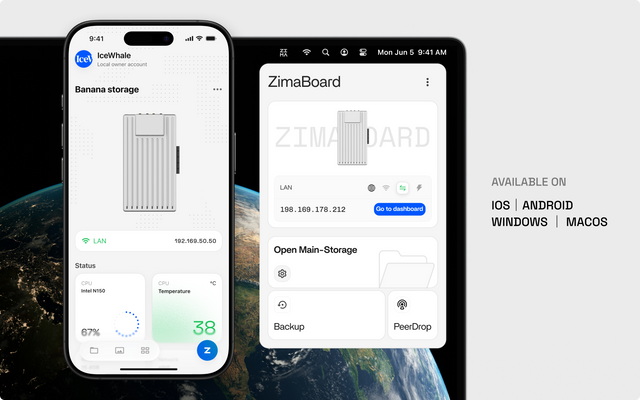
1GbE Line Rate vs Real NAS Throughput: When Is the Gap Normal?
About 110–120 MB/s can be normal for large wired transfers; a wider gap needs link, protocol, storage, CPU, or client tests before an upgrade.
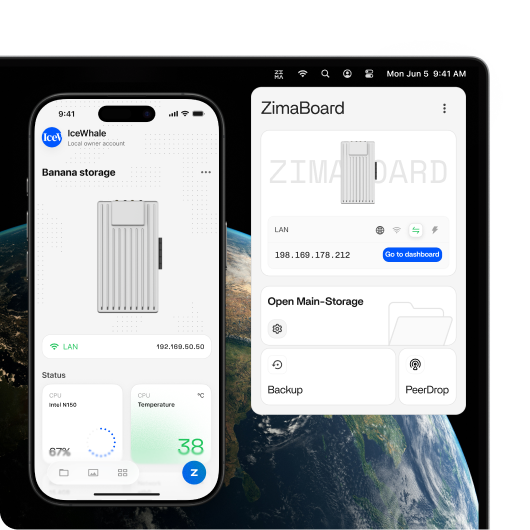
LXC vs Docker on Proxmox for App Updates and Rollbacks
Docker gives app-level version control; LXC gives guest-level rollback. The better fit follows the smallest state unit you can restore safely.
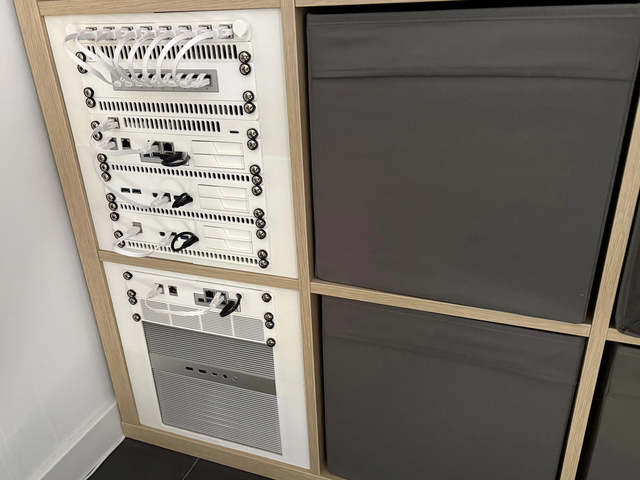
Docker vs LXC Security Boundaries for Privileged Home Services
Docker fits narrowly packaged apps; LXC fits fuller Linux services, but neither replaces a VM when shared-kernel risk is unacceptable.


