
1GbE Line Rate vs Real NAS Throughput: When Is the Gap Normal?


A 1GbE link advertises 1,000 megabits per second, not a guaranteed 125 megabytes per second of file payload. Large wired NAS transfers near roughly 110–120 MB/s can be normal.
A larger gap is not automatically a reason to buy 2.5GbE. First separate negotiated link speed and network-only throughput from SMB or NFS, encryption, CPU, disk layout, file size, antivirus, and the client's storage. Upgrade only after the current link is proven full during a task whose delay matters.
Translate Line Rate Into a Usable Baseline
Dividing 1,000 megabits by eight gives a raw ceiling of 125 megabytes per second. Ethernet, IP, TCP, and file-sharing headers consume part of the link, and acknowledgments plus processing prevent ordinary file copies from delivering every raw bit as payload.
An independent Gigabit Ethernet overview places practical throughput around 900 Mbps and names disk, congestion, and processing limits that can lower it further. That practical 1GbE payload range makes a sustained large-file result near 110 MB/s plausible rather than defective.
Use the range only for a large sequential wired transfer. Thousands of small files, Wi-Fi clients, encrypted shares, or concurrent users are different workloads and should not be judged by the same number.
Run a Network-Only Test Before Testing NAS Files
Confirm both endpoints negotiate 1.0 Gbps full duplex, then run a network throughput test between capable wired machines on the same path. Repeat in both directions and during the period when the slow transfer normally occurs.
If the network-only test is far below the expected range, inspect cables, switch ports, power-saving behavior, adapters, drivers, and whether traffic crosses a router or tunnel. File-system tuning cannot repair a link negotiated at 100 Mbps.
If the network test is healthy but file copies are slow, keep the Ethernet link out of the next experiment and measure the storage and protocol layers.
Let the File Workload Reveal the Next Bottleneck
Measure one large file, a representative small-file set, and local read or write speed on both the NAS and client. Watch NAS CPU, disk latency, network utilization, and any encryption or antivirus process during the same run.
A NAS review measured about 115 MB/s read and 97 MB/s write on 1GbE, then much higher throughput on faster links. Those measured 1GbE NAS results show both the expected ceiling and the possibility of asymmetric storage or protocol behavior.
When network utilization stays low, find the busy resource. A single HDD, parity writes, snapshots, CPU encryption, SMB signing, small-file metadata, or a slow client disk can all become the queue.

Use a Crossing Condition for Tuning or Upgrading
Keep 1GbE when large transfers approach its usable ceiling, backups finish within their window, and daily work is not delayed. A lower headline than 125 MB/s is not itself a failure.
Tune or repair the existing path when network-only tests are weak, link negotiation is wrong, or the file workload leaves Ethernet idle. Change one variable and repeat the same dataset rather than comparing unrelated speed screenshots.
Use the ZimaSpace 1GbE versus 2.5GbE workload threshold only after measurement shows that the current link is the sustained limiter.
Conditional Verdict: Normal Gap, Fixable Gap, or Upgrade Trigger
Treat roughly 110–120 MB/s on a large wired transfer as broadly consistent with a healthy 1GbE path when the rest of the system is fast enough.
Treat a much lower result as a diagnostic task when raw network throughput, disk activity, CPU load, or client storage identifies an underused link or a different saturated component.
Upgrade only when the real workload repeatedly fills 1GbE, its transfer window matters, and the NAS, switch, client, cabling, and storage can use the wider path. Otherwise the faster port moves the bottleneck without solving it.

Recommended products

Product Comparisons
More to Read
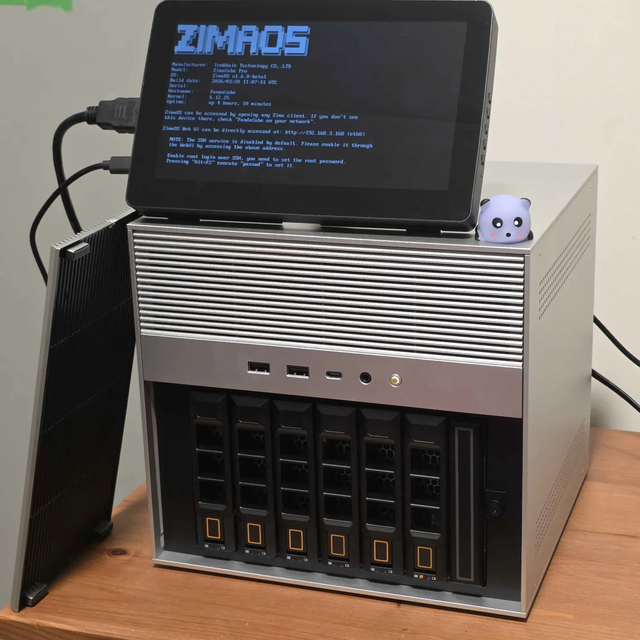
NAS OS vs General Linux After a Boot-Drive Failure: Which Rebuilds More Predictably?
A NAS OS wins with a tested configuration restore; general Linux wins when storage and services are declarative and portable off-host.
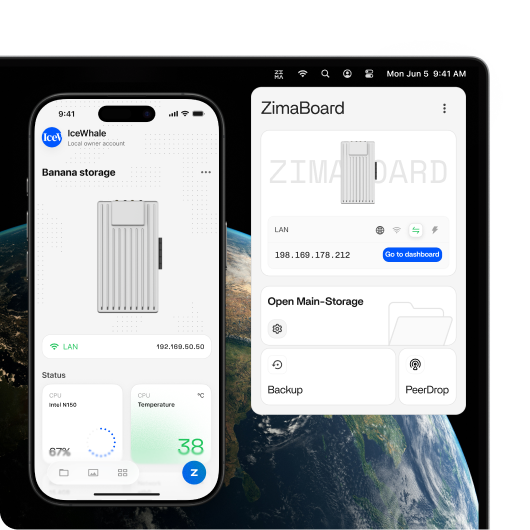
LXC vs Docker on Proxmox for App Updates and Rollbacks
Docker gives app-level version control; LXC gives guest-level rollback. The better fit follows the smallest state unit you can restore safely.
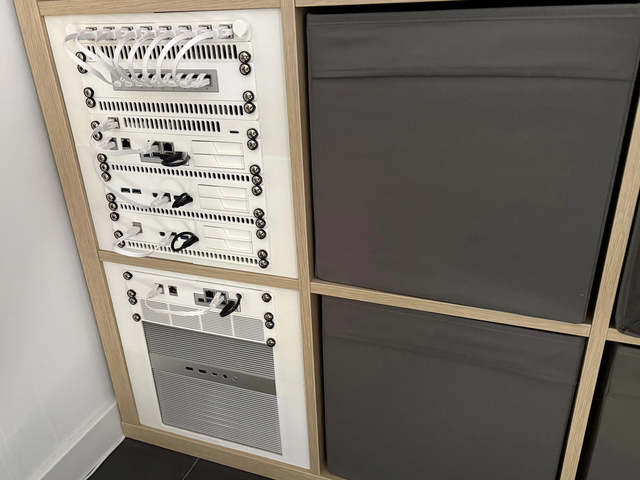
Docker vs LXC Security Boundaries for Privileged Home Services
Docker fits narrowly packaged apps; LXC fits fuller Linux services, but neither replaces a VM when shared-kernel risk is unacceptable.


