
Why a Lower-Power Server Can Beat a Faster PC for Always-On Home Assistant


A lower-power server beats a faster PC when it meets Home Assistant's latency and recovery targets while consuming less energy, producing less heat, and needing less cooling.
Always-on systems spend far more time near idle than at benchmark peak. The faster PC still wins when cameras, local AI, media, or many virtual machines use its sustained compute and expansion. Hold the complete workload and response target constant, then compare wall power, noise, temperature, tail latency, and recovery.
Idle Energy Is the Primary Always-On Axis
An always-on host accumulates each watt across every hour of the year. A processor that finishes a short task faster may still lose if its platform, memory, storage, fans, and power supply draw much more during the long idle period. Measure at the wall with the final configuration attached.
Home Assistant owners report complete mini-PC systems idling in single-digit watts while other platforms use considerably more. The measured wall-power range shows why model labels are weaker evidence than whole-system readings.
The low-power server wins when annual energy and cooling savings matter and it still passes response targets. The faster PC wins this axis only when consolidation lowers total household draw.
Performance Matters at the Tail, Not the Peak Score
Home Assistant values prompt handling of short events, database writes, integrations, and dashboards. A modest modern CPU with SSD storage can meet those needs while a much faster desktop remains mostly unused. Compare median and high-percentile event-to-action latency during the busiest normal overlap.
A desktop-power discussion records an example Home Assistant host drawing about 45 watts at idle, illustrating how legacy peripherals and platform design can dominate a light workload.
Choose the faster PC when the smaller server misses the latency target, queues database work, or throttles during sustained required tasks. Stop comparing CPU when both pass with margin.
Thermals and Noise Affect Long-Term Fit
Lower heat can reduce fan speed, dust movement, and room discomfort, but fanless is not automatically reliable. A sealed low-power enclosure may throttle during backups or local inference. A larger efficient system with a slow fan can outperform a tiny passively cooled box under sustained load.
Low-power server guidance emphasizes idle consumption, efficient components, power settings, and monitoring together. This low-power system design supports evaluating the complete platform rather than CPU TDP alone.
Prefer the candidate that stays within temperature and acoustic limits during its heaviest job. If the faster PC can be power-limited without losing the result, rerun the comparison under that profile.

Use a Seven-Day Energy and Workload Trial
Run each candidate or configuration for seven representative days. Record wall energy, idle and peak power, temperature, fan behavior, automation tail latency, database response, restarts, and the exact neighboring jobs. Include one restart and backup to test recovery headroom.
The ZimaSpace guide to performance and power balance provides the next architecture decision after the comparison identifies a winner.
Choose the low-power server when every required workflow passes and total energy, heat, and noise are lower. Choose the faster PC when a sustained workload crosses the smaller system's limit. Choose neither when storage or networking is the bottleneck.

Recommended products

Product Comparisons
More to Read
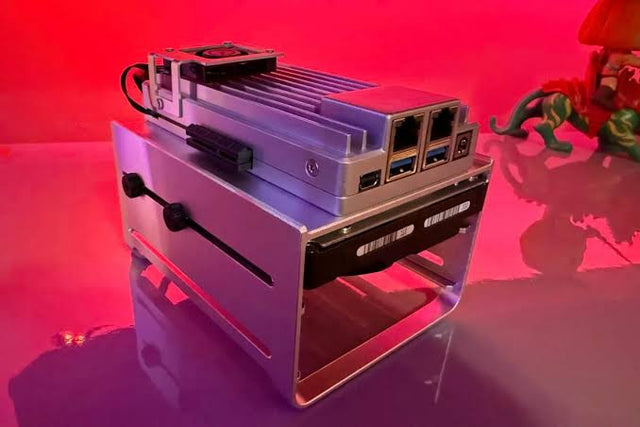
Intel vs AMD vs ARM for Home Assistant Home Servers
ARM fits supported low-power appliances; Intel and AMD fit broader x86 needs. Exact software, workload, power, I/O, and recovery determine the winner.
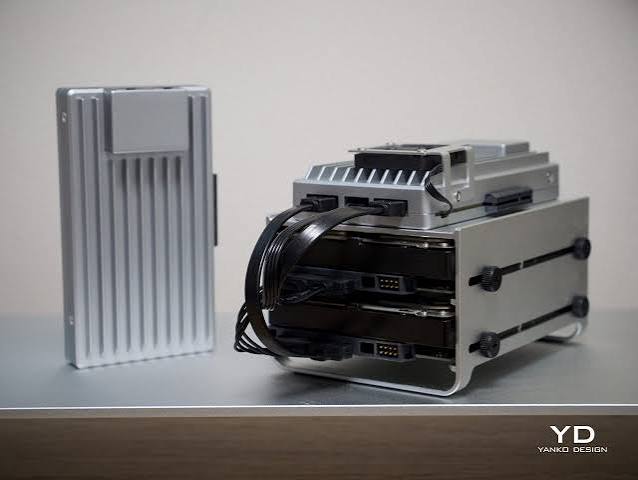
How to Choose Between One Large Home Assistant Server and Two Smaller Hosts
One host is simpler; two earn their cost for measured isolation. A cold spare may beat both when predictable manual recovery is the real...
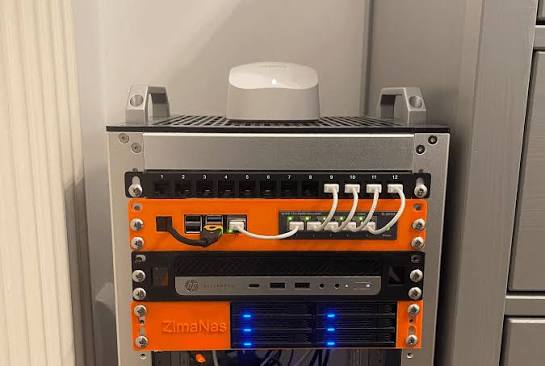
Home Assistant With Local Storage vs Network Storage: Which Is More Reliable?
Local storage usually wins for live Home Assistant data; network storage earns backups and media. A tested hybrid often provides the safest balance.


