
Four-Core vs Eight-Core CPU for Plex: Which Fits Mixed-Client Concurrency?


Four cores fit a Plex household dominated by direct play; eight cores earn their cost when software transcodes and concurrent host jobs cross a measured threshold.
Core count is only one axis. The comparison changes when hardware video acceleration, client codecs, subtitles, storage latency, or backup jobs become the weakest link. Establish the workload before treating eight cores as headroom.
Compatibility gate: what does each client force?
Record the household’s codecs, resolutions, subtitles, remote bitrate, and direct-play rate. A four-core CPU with a working hardware-video path can outperform a larger CPU that falls back to software transcoding. If a required client cannot direct play and hardware acceleration is unavailable, stop the core-count comparison and solve the media path first.
Axis: mixed-client concurrency under one workload
Run the expected peak: direct-play sessions, one or more transcodes, a library scan, and any backup job that normally overlaps. Four cores win on fit-per-dollar when CPU utilization stays below the sustained margin and playback remains stable. Eight cores win when software transcodes queue, subtitles consume CPU, or background work repeatedly steals the playback margin.
Axis: power, thermals, and ownership cost
Eight cores can reduce queueing but may add heat, fan noise, and idle power. Compare total ownership over the time you will run the server, including cooling, storage, and a backup target. If the extra cores sit idle because clients direct play, the cheaper option is the technically correct choice.

Axis: expansion and failure boundary
Choose the CPU that leaves a named next step. If growth means two more remote transcodes, a hardware-acceleration upgrade or separate transcode node may be better than doubling cores. Keep the media database, cache, and backups on explicit roles so a CPU change does not alter the recovery path.
Conditional verdict and the middle option
Choose four cores when the measured peak is mostly direct play, hardware acceleration is available, and background jobs stay below the margin. Choose eight cores when mixed-client concurrency creates repeatable software-transcode queues or host contention. Choose a lower-core CPU with a supported iGPU when it clears the same test; choose neither if the network or storage path is the actual bottleneck. A multi-stream hardware discussion illustrates why transcode type matters more than a headline stream count (mixed-stream workload evidence).

Recommended products

Product Comparisons
More to Read
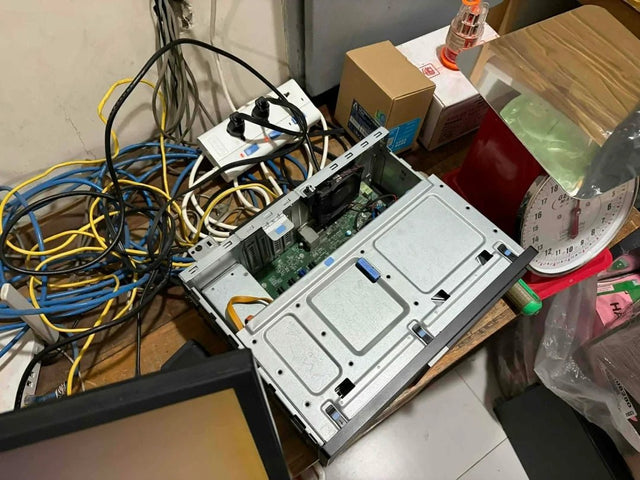
WireGuard Server vs Mesh VPN for Devices Behind CGNAT
Use mesh VPN for low-friction roaming devices; use a WireGuard relay when you want to own routing, keys, and the public endpoint.
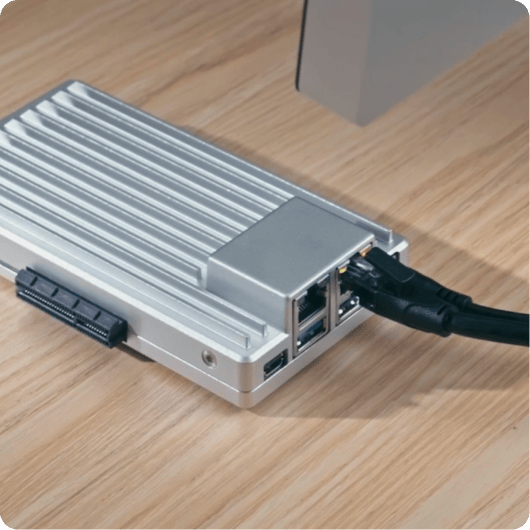
10GbE NAS on Gigabit Clients: Upgrade the Server or Endpoints First?
Upgrade the endpoint path for one slow workstation; upgrade the NAS uplink first when several gigabit clients saturate it together.
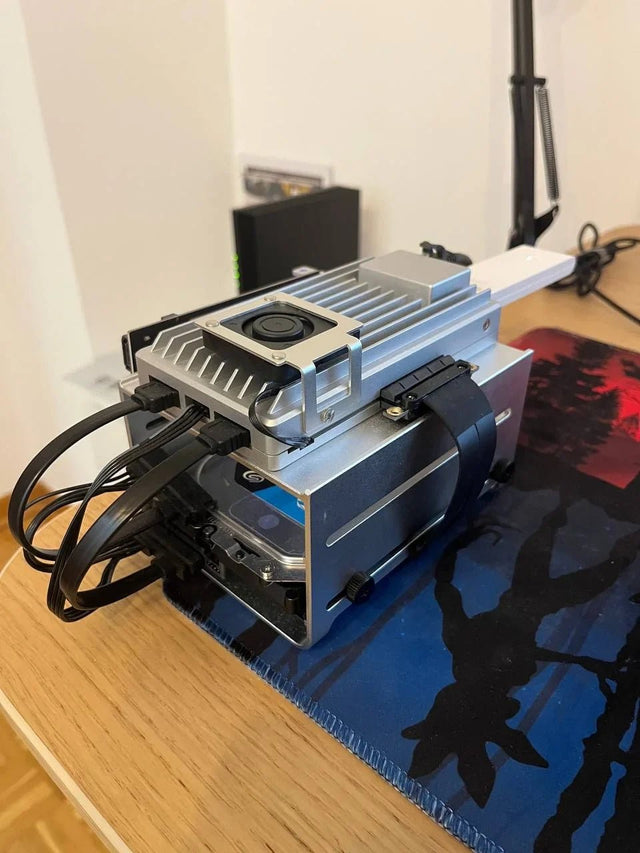
1GbE vs 2.5GbE for a Home Server: Which Workloads Cross the Line?
Keep 1GbE for light services and single streams; move to 2.5GbE when recurring transfers or combined clients sustain more than about 100 MB/s.


