
Dedicated Media Server vs General Home Server Under Concurrent Loads


A general home server is usually the better first home for Plex, Jellyfin, or similar media apps when concurrent workloads still leave enough CPU, memory, storage I/O, network, and video-engine headroom. Move media to a dedicated server when peak transcoding, library maintenance, downloads, backups, VMs, or AI tasks repeatedly interfere with one another, or when media maintenance needs a different reboot and failure schedule from the rest of the home server.
The comparison is not about whether a dedicated box is inherently faster. The same CPU or iGPU can perform similarly in either role. What changes is resource contention and ownership: consolidation reuses idle capacity, while separation reserves hardware and a maintenance domain for media.
Peak Overlap, Not Average CPU, Is the Separation Trigger
A general server can idle most of the day and still fail at the exact moment that matters: a 4K transcode starts while a backup compresses data, a photo library indexes new uploads, and another container performs a database migration. Average utilization hides those collisions.
Plex's streaming model distinguishes Direct Play, Direct Stream, and transcoding, and its playback-path overview shows why two apparently similar streams can place very different loads on the server. A direct-play session may barely touch the CPU, while an incompatible stream can trigger conversion.
Measure the busiest repeatable period with media running alongside the other services that matter. If latency-sensitive apps stay responsive and playback remains stable, consolidation is working. If interference appears only during a rare one-time job, schedule or limit that job before buying a second host.
Consolidation Uses Idle Hardware More Efficiently
A general home server lets media borrow capacity that would otherwise sit idle. The same RAM can cache files, the same network interface can serve applications and video, and one UPS, chassis, boot drive, monitoring stack, and backup plan can support multiple services.
Docker documents CPU and memory controls that can constrain container resource use. Those controls can stop a background service from consuming all CPU time or memory and are often enough to make a consolidated server predictable without dedicating a second machine.
Consolidation wins when the workloads complement rather than collide. A media server that mostly direct-plays in the evening can coexist well with daytime backup or development tasks. Paying the power and maintenance cost of another always-on host for unused isolation would not improve the user experience.
A Dedicated Host Buys Predictable Media Headroom
A dedicated media server reserves its CPU, memory, video engine, storage paths, and network scheduling for playback and library work. That does not guarantee zero buffering, but another home-lab experiment can no longer consume the same compute pool at the worst moment.
Jellyfin's hardware-acceleration documentation explains that fixed-function video engines can handle codec work and that partial acceleration can still leave more work on the CPU. Its guidance on hardware-accelerated transcoding makes the relevant boundary clear: media load depends on the exact decode, filter, and encode path, not simply the number of users.
Separation is strongest when those media resources are regularly saturated and cannot be protected cleanly inside the general host. If the only issue is one runaway background container, resource controls are a smaller fix. If the issue is that several unavoidable media conversions consume the machine's available video or CPU capacity, a dedicated host can create real headroom.

Resource Limits Delay a Split but Cannot Create New Hardware
Containers and service managers can allocate CPU shares, hard CPU quotas, memory limits, and I/O priorities. These controls reduce noisy-neighbor behavior and make a general server less likely to let one task starve everything else.
The Linux cgroup v2 interface exposes CPU, memory, and I/O controllers for distributing resources through a hierarchy. The kernel's resource-control model explains the useful distinction: limits redistribute or cap resources that already exist; they do not add another encoder, memory channel, storage device, or network link.
That creates a stopping boundary for consolidation. If reducing a backup job's CPU or I/O share restores stable playback, keep the general server. If playback still misses its target while the media workload itself consumes the available hardware, no scheduling policy can manufacture the missing capacity.
Shared Storage and Video Engines Can Be the Hidden Collision
CPU graphs alone can make a consolidated server look healthy while storage or accelerator contention causes the real slowdown. Download unpacking, parity checks, thumbnail generation, photo indexing, and VM writes can compete with media reads and transcode scratch space. Likewise, several services may want the same iGPU or discrete GPU.
FFmpeg's processing model separates decoding, filtering, encoding, and stream copy. The transcoding pipeline is a useful reminder that media conversion can touch several resources even when one headline metric looks low.
Before dedicating a whole server, first separate hot paths where practical: keep transcode scratch on fast local storage, avoid running large unpack jobs during peak viewing, and confirm the network is not the actual ceiling. A dedicated host is justified when those mitigations still leave recurring contention or when shared accelerator ownership is operationally fragile.
Maintenance and Failure Radius Can Matter More Than Throughput
A general server couples maintenance windows. Updating the hypervisor, changing a GPU driver, rebooting for a kernel change, or recovering a broken storage mount can interrupt media alongside every other service on the host. For a household that treats media as a daily appliance, that coupling may matter even when performance is adequate.
The adjacent ZimaSpace comparison of a compact x86 media server and an Android TV box already shows that media architecture changes with client count and transcoding needs. Here the next question is ownership: whether the media role should share its compute and maintenance domain with unrelated home-server services.
Dedication is therefore reasonable when a reboot for a lab experiment should not stop family playback, or when the media stack needs drivers and packages you do not want on the main server. If the household tolerates occasional shared maintenance, consolidation preserves the simpler recovery model.
Use Two Busy Windows Before Buying Another Host
Measure one window with the media workload by itself and another with the real concurrent services active. Record playback path, transcode FPS or speed, CPU pressure, memory pressure, storage latency, GPU/video-engine use, and network utilization. The difference between the two runs tells you whether the problem is media capacity or interference.
| Observed condition | General server first | Dedicated media server first |
|---|---|---|
| Mostly Direct Play | Strong fit | Usually unnecessary for performance |
| One occasional transcode | Strong fit with headroom | Only for maintenance isolation |
| Several unavoidable transcodes | Works if hardware acceleration has margin | Strong fit when media saturates shared resources |
| Backups/indexing disrupt playback | Try limits and scheduling | Choose separation if contention persists |
| Independent reboot windows required | Weak fit | Strong fit |
| Power and device count are priorities | Strong fit | Extra host adds idle power and maintenance |
If the media-only run is already slow, separation by itself will not help unless the dedicated machine has more suitable hardware. If the media-only run is healthy but the concurrent run fails, you have identified a contention problem; then compare resource controls with physical separation.
Stop after the smallest change that makes the concurrent window reliable. If CPU or I/O limits solve the collision, there is no need to create a second maintenance domain. If the same peak still exhausts shared hardware or forces unacceptable outages, physical separation has a measured job to do.
FAQs
Can Docker Limits Make a General Server Equivalent to a Dedicated Media Server?
No. Limits can reserve or cap CPU, memory, and I/O behavior, which is often enough to stop noisy neighbors. They still share the same host kernel, physical devices, power supply, and maintenance window, so they do not create the failure or hardware isolation of another machine.
Does Hardware Transcoding Remove the Need for a Dedicated Server?
It can greatly reduce CPU pressure, but it does not remove every shared resource. Several conversions may still use the same video engine, memory bandwidth, storage, transcode scratch space, and network path. If those remain below their limits, consolidation is usually sufficient.
Should Download and Library Automation Move Off the Media Server?
Only when their unpacking, hashing, moves, or scans repeatedly interfere with playback. Start by scheduling or limiting them and placing heavy temporary I/O appropriately. Split services when those controls do not provide the isolation you need.
Choose Isolation Only When It Changes the Busy Period
Keep a general home server when media is mostly direct-play, hardware acceleration has margin, background services can be constrained, and one shared maintenance window is acceptable. This is the most resource-efficient architecture and keeps backups, monitoring, and spare hardware simpler.
Choose a dedicated media server when concurrent media work repeatedly consumes the shared host's available compute, accelerator, storage, or network capacity, or when unrelated maintenance should not interrupt family playback. In that case, the value is predictable ownership rather than a theoretical speed advantage.
If you cannot reproduce a concurrent-load problem or name the maintenance boundary you need to separate, keep the roles together. Add a second host after the measured busy period proves that isolation—not a client, network, or storage fix—is what changes the result.

Recommended products

Product Comparisons
More to Read
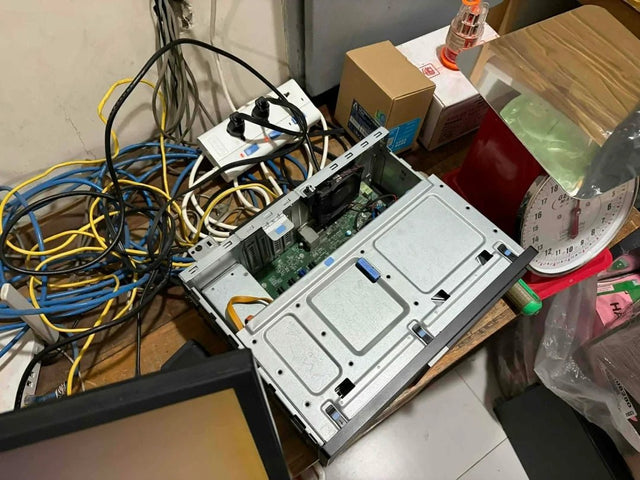
WireGuard Server vs Mesh VPN for Devices Behind CGNAT
Use mesh VPN for low-friction roaming devices; use a WireGuard relay when you want to own routing, keys, and the public endpoint.
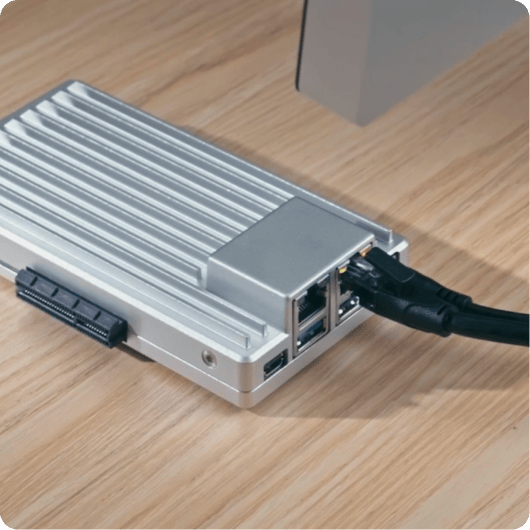
10GbE NAS on Gigabit Clients: Upgrade the Server or Endpoints First?
Upgrade the endpoint path for one slow workstation; upgrade the NAS uplink first when several gigabit clients saturate it together.
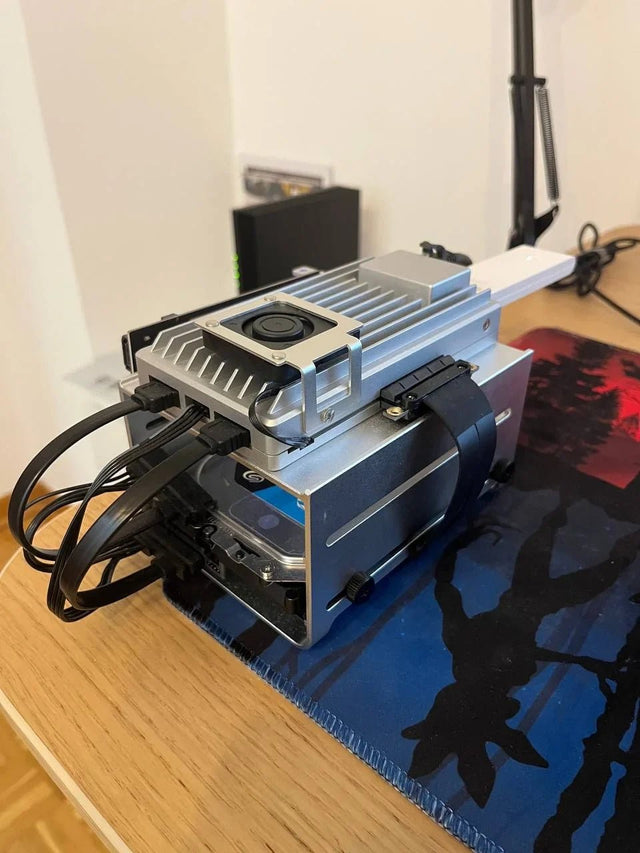
1GbE vs 2.5GbE for a Home Server: Which Workloads Cross the Line?
Keep 1GbE for light services and single streams; move to 2.5GbE when recurring transfers or combined clients sustain more than about 100 MB/s.


