
Bind Mounts vs Docker Named Volumes in CasaOS: Which Makes App Recovery Easier?


Bind mounts usually make CasaOS app recovery easier when the administrator wants visible directories that can be copied, snapshotted, and restored to documented host paths. Docker named volumes are often cleaner when Docker or Compose should manage storage independently of the host’s folder layout. Neither method creates a backup automatically, and databases still require an application-consistent recovery plan.
Why Recovery Changes the Storage Choice
Bind mounts and named volumes can both keep data after a container is replaced. The important difference is who controls the storage location. A bind mount points directly to a chosen host file or directory. A named volume refers to a Docker-managed storage object by name.
This difference changes what the administrator sees during a failure. With a bind mount, the recovery record includes an explicit path such as /DATA/AppData/immich. With a named volume, the deployment refers to an object such as immich_database, while Docker determines its normal local mount location.
Recovery therefore involves two separate questions: can the container definition be recreated, and can the correct persistent data be restored? A working Compose file without the volume contents is incomplete. A copied data directory without image versions, variables, users, ports, secrets, and permissions is also incomplete.
| Recovery factor | Bind mount | Docker named volume |
|---|---|---|
| Data location | Explicit host path | Docker-managed storage object |
| Visibility outside Docker | High | Lower unless inspected or mounted by a backup process |
| Host-path dependency | High when absolute paths are hard-coded | Lower at the Compose-definition level |
| Filesystem snapshots | Simple when the path sits on a protected dataset | Possible, but depends on Docker root placement and backup tooling |
| Migration | Copy the directory and recreate the same or revised path | Create the volume and restore data into it |
| Human error | Visible files can be altered or deleted directly | Unused volumes can be overlooked or removed during cleanup |
How Bind Mounts Store CasaOS App Data
A bind mount connects a real host path to a path inside the container. Many home-server deployments use this model for configuration, media, downloads, imports, exports, and application data because the administrator can see exactly where the files live.
That visibility supports straightforward backup policies. A directory under a documented app-data root can be included in rsync, restic, Borg, snapshot, replication, or ordinary file-backup jobs. The same path can also be inspected without starting Docker, which is useful when recovering from a broken container image or damaged management interface.
A detailed comparison of host-visible bind mounts and Docker-managed volumes illustrates why bind mounts are attractive when direct file access is part of the operating model.
The cost is path coupling. A Compose file that expects /mnt/storage/appdata/postgres will fail or create the wrong directory if that path is unavailable on the replacement host. Disk mount order, filesystem names, permissions, UID/GID ownership, and network-share availability become part of the application’s recovery dependency.
How Docker Named Volumes Store App Data
A named volume gives persistent storage an identifier instead of exposing an ordinary host path in the deployment file. Docker creates and manages the normal local storage location, and the container mounts the volume by its name. This separates the Compose definition from one administrator’s preferred directory layout.
Named volumes work well for internal application state that users do not need to browse directly. Databases, indexes, queues, and service-specific state can remain attached to a stable volume name while containers are replaced. A Docker volume lifecycle and Compose guide shows how a volume can outlive a container and be reattached to a replacement service.
The abstraction does not remove the data location; it makes Docker responsible for it. Backup software must either understand Docker volumes, access the volume mount point carefully, or start a temporary container that mounts the volume and writes a backup archive to protected storage.
Compose naming also requires attention. A declared volume may receive a project-name prefix unless the definition assigns an explicit name or marks the volume as external. Recovery documentation should record the logical name, actual Docker volume name, owning stack, mounted container path, and backup method.
Backup and Restore Compared
Bind mounts are easier to include in host-level backup jobs because the path is already visible. A restore can copy the directory back to the expected location, apply the required ownership, and start the container. This simplicity is valuable only when the path is documented and the backup captured a consistent application state.
Named volumes require one additional layer. The target volume normally has to exist before data is restored into it. The recovery process then mounts the empty target and backup source into a temporary container, copies the files, restores ownership where necessary, and reconnects the application.
Recent guidance on Compose bind-mount and named-volume tradeoffs reinforces that the better method depends on whether host visibility or Docker-managed portability is the stronger requirement.
Neither raw method guarantees a valid database backup. Copying PostgreSQL, MariaDB, SQLite, or another database while writes are active can capture an inconsistent state. Use the application’s dump, export, replication, or quiesce procedure before protecting the resulting files or volume.
Migration, Permissions, and Human Error
Bind mounts make migrations understandable because the source files can be copied directly. They also expose every difference between hosts. A new machine may use another mount point, filesystem, UID/GID scheme, security context, or directory owner. The data may be present while the container still cannot read it.
Named volumes reduce absolute-path differences in Compose files, but the contents still need to move. A new host does not receive the old volume merely because the same volume name appears in YAML. The volume must be backed up, transferred, created, populated, and tested.
Permissions affect both methods. Docker-managed creation can reduce some initial path mistakes, but an application running as a specific UID can still encounter ownership problems inside a named volume. Bind mounts expose those permissions directly, making them easier to inspect but also easier to change incorrectly.
Remote storage adds another boundary. Mounting SMB or NFS on the CasaOS host and then bind-mounting that path into a container can work well for media, imports, exports, and backups. The comparison of SMB and NFS for Docker-mounted home-server data explains why databases and lock-sensitive state need more caution than ordinary shared files.
Which App Data Fits Each Method?
Configuration Files and User-Visible Data
Bind mounts are often the clearer choice for configuration files, scripts, certificates, media, downloads, imports, exports, and documents that administrators need to inspect or restore by path. They are especially useful when the host filesystem already provides snapshots and replicated datasets.
Databases and Internal Application State
Named volumes can keep internal state separate from ordinary user folders and make the Compose definition less dependent on one path layout. They fit best when a volume-aware backup process and an application-consistent database export are already part of the deployment.
Caches, Thumbnails, and Rebuildable Data
Either method can store rebuildable data, but recovery priorities should be explicit. Large caches and thumbnails may not need off-site backup if the application can regenerate them. Excluding them can shorten backup windows and prevent low-value data from consuming recovery storage.
CasaOS installation or update problems can expose hidden assumptions about paths, permissions, ports, and container state. The guide to CasaOS application installation failures provides a useful reminder that storage recovery must be tested together with the rest of the deployment.
How Should You Test Recovery Before Standardizing?
- List every persistent container path and identify whether it uses a bind mount or volume.
- Record the host path or actual Docker volume name, not only the container path.
- Document image versions, environment variables, secrets, ports, networks, devices, and UID/GID values.
- Create an application-consistent database dump before copying raw database storage.
- Restore the data onto a clean Docker host with a different temporary hostname.
- Confirm ownership, permissions, file counts, database integrity, login, and application history.
- Test whether an absent disk or network share causes the container to write into an unintended empty directory.
A platform such as ZimaBoard 2 can serve as a replacement host for recovery testing, but the hardware does not determine whether bind mounts or named volumes are safer. The decisive factor is whether the chosen method has a documented and verified restore path.
FAQs
Are Bind Mounts Automatically Easier to Back Up?
They are easier to locate and include in ordinary filesystem backup jobs. They are not automatically consistent, protected, or recoverable. Active databases, incorrect permissions, missing secrets, and undocumented paths can still make the restored application unusable.
Are Named Volumes More Portable Than Bind Mounts?
The deployment definition is less dependent on an absolute host path, which improves configuration portability. The volume contents still need a separate backup and migration process. Reusing the same volume name on another host does not transfer the original data.
Can CasaOS Back Up Either Method Automatically?
Do not assume that installing an app through CasaOS creates a complete backup workflow. Verify what the selected app, host filesystem, backup tool, and storage design actually protect. Application configuration and persistent data should be tested through a full restore.
Should Every CasaOS App Use the Same Storage Method?
No. A practical deployment can use bind mounts for visible configuration and user files, named volumes for selected internal service state, and temporary container storage for disposable data. The important rule is that each persistent path has one documented owner and recovery process.
Does RAID or a Mirrored Disk Replace These Backups?
No. Storage redundancy can keep data available after a supported drive failure, but it cannot restore deleted files, broken application state, bad updates, ransomware-damaged data, or an earlier working database version. Recovery still requires independent copies and tested restores.
Final takeaway: bind mounts make recovery more transparent because app data lives at known host paths. Named volumes make deployment definitions cleaner and less path-dependent, but require volume-aware backup tooling. Choose by the recovery process you can test successfully, not by which syntax looks simpler.

Recommended products

Product Comparisons
More to Read
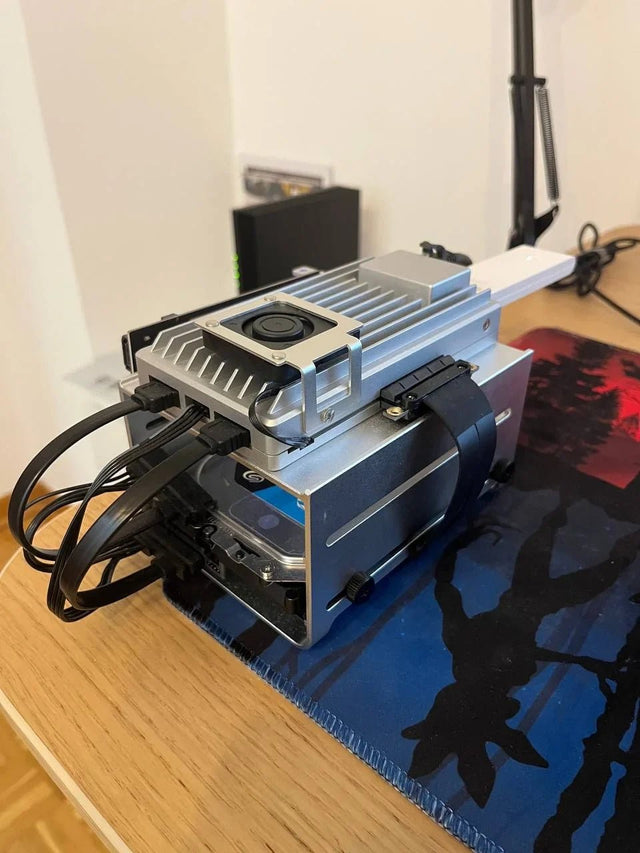
1GbE vs 2.5GbE for a Home Server: Which Workloads Cross the Line?
Keep 1GbE for light services and single streams; move to 2.5GbE when recurring transfers or combined clients sustain more than about 100 MB/s.
Direct-Attached vs Switched 10GbE for Multi-Editor NAS Access
Direct 10GbE suits one priority workstation; a 10GbE switch is the cleaner choice when multiple editors need simultaneous, predictable NAS access.
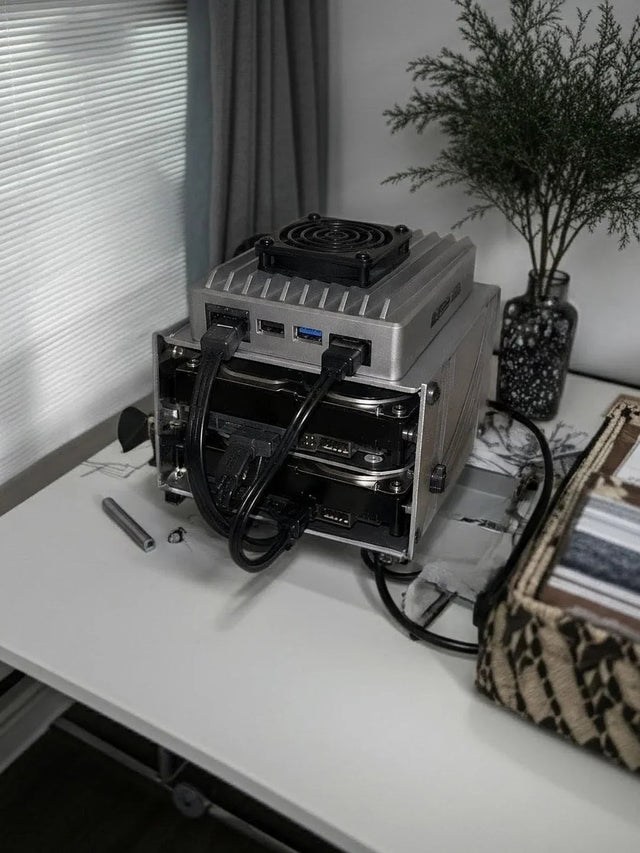
Port-Based vs Identity-Based VLAN Assignment at Home
Use port-based VLANs for stable wired devices; use identity-based assignment only when mobility and centralized policy justify an authentication service.


