
Why Are Multi-Device Households Separating Personal Folders From Shared Family Libraries?


Multi-device households separate personal folders from shared libraries because ownership, privacy, sync, deletion, and recovery behave differently for individual and family data.
Phones, laptops, tablets, cameras, and televisions create data for different people and purposes. A single household share makes automatic uploads convenient at first, but it soon mixes private files, shared memories, device backups, school documents, and app-generated data under one permission model. Separating personal and shared zones gives every device a clear destination while making collaboration an intentional workflow rather than the default state of all files.
More Devices Turn One Shared Folder Into an Ownership Problem
One laptop and one user can treat a shared folder as a general file destination. Add several phones, work computers, school tablets, and media clients, and the same folder begins receiving private photos, exported documents, duplicate downloads, backup data, and shared media from different owners.
A current family NAS guide recommends an individual account and personal folder for each household member alongside shared spaces for family photos, movies, and documents. That personal-plus-shared storage model gives every incoming file an ownership context.
Inventory the devices and identify which person or service creates each data stream. Device backups and private phone uploads should not land in the same location as a family library that several users can reorganize or delete.
Individual Accounts Preserve Ownership Across Every Device
A household account shared by several people hides who uploaded, modified, moved, or deleted a file. Individual identities support private folders, device-specific credentials, revocable access, quotas, and accurate audit records. Groups then provide shared access without erasing ownership.
TechTarget defines role-based access control as assigning permissions to roles and then associating users with those roles. That role-based permission model scales better than granting every family member direct access to every folder.
Create standard users for daily access and keep administrator accounts separate. Use simple groups such as family, adults, children, media viewers, or backup operators only when each group maps to a real workflow.
Personal Folders Should Be Private and Bounded by Default
A personal folder may contain phone uploads before review, work documents, private scans, device exports, or files that should never appear in a family search index. The owner should control when content moves into a shared library. Other household accounts should have no access unless a recovery policy explicitly grants it.
Linux Handbook explains how file ownership and user, group, and other permissions determine access to Linux-hosted files. That owner-group permission boundary provides the technical basis for private and shared paths.
Apply quotas or capacity alerts when one device can upload indefinitely. A personal area should not be able to fill the storage pool silently or inherit administrative access because it sits under the same top-level directory.

Shared Libraries Should Represent Deliberate Household Workflows
Shared storage works best when each library has a purpose: selected family photos, household documents, homework exchange, read-only media, or a temporary contribution area. A single folder called Family tends to combine content with conflicting deletion, retention, and privacy rules.
WIRED describes a NAS as an always-available household repository for documents, photos, media, and backups, with selected files and folders shared across devices. That purpose-built sharing approach depends on setting different access levels for different libraries.
| Storage zone | Normal writers | Normal readers | Primary rule |
|---|---|---|---|
| Personal phone uploads | Owner and upload service | Owner | Review before sharing |
| Private device backup | Backup service | Recovery operator | Not used as an ordinary file share |
| Family photo library | Approved curators or workflow | Family group | Selected originals and shared albums |
| Household documents | Approved contributors | Household group | Versioned with clear deletion rights |
For each library, define who can add, rename, delete, and restore. Read-only access may be sufficient for televisions and media clients even when adults can curate the underlying library.
Different Devices Need Different Intake and Synchronization Rules
A phone may upload new photos automatically, a laptop may synchronize active documents, a camera may be imported manually, and a television may only read a media library. Treating all devices as equal writers increases duplicates, accidental moves, and unclear deletion behavior.
Digital Citizen’s home NAS setup guide describes centralized storage serving multiple devices through shared folders and individual user accounts. That device-to-central-storage model is safer when each client receives only the paths and actions its role requires.
Use intake folders for unreviewed phone and camera uploads, personal sync folders for active user work, and read-only libraries for playback clients. Document whether deletion on a device deletes the server copy, removes only the local cache, or propagates to every synchronized client.
A safe intake design also separates arrival from publication. New phone photos can land in a private staging area, where the owner reviews duplicates and sensitive images before selected items enter the family library. Laptop sync should preserve active working folders without turning the server into the only copy, while camera imports should retain original filenames and metadata until validation is complete. These steps reduce the chance that an automatic client reorganizes or deletes the shared archive.
Applications Should Index Shared Data Without Owning Every Personal Folder
Photo, media, search, and document applications often request broad storage access because it simplifies installation. In a multi-user household, the app should receive only the private folders explicitly enrolled by their owners and the shared libraries needed for its function.
Cloudwards’ comparison of NAS and cloud storage emphasizes that local systems provide greater control over data placement and access while requiring the owner to configure and maintain those boundaries. That control-with-administration trade-off becomes visible when one app can scan every household folder.
Give each service its own account. A media application may read the shared movie library and write its own database, but it should not browse personal backups. A photo application may manage selected photo paths without receiving write access to unrelated household documents.
Backups and Administrative State Need a Fourth, Protected Zone
Personal and shared data both need recovery, but backup repositories, snapshots, app databases, service definitions, credentials, and retention controls should not appear as ordinary household libraries. Users who can edit a document or delete a photo should not automatically be able to erase every recovery point.
Backblaze’s 3-2-1 strategy separates primary data from additional local and off-site copies. That independent recovery-copy model adds an administrative protection zone outside personal and shared workflows.
Run backups through a dedicated service identity and protect the destination from ordinary accounts and user-facing apps. Restore tests should verify both file content and permissions so private data does not become shared after recovery.
Test the Separation From Every Household Device
A folder plan is not complete when the server dashboard displays the expected permissions. Sign in from each device type and ordinary account. Confirm personal files remain private, shared libraries are easy to reach, televisions cannot modify originals, and backup destinations remain invisible.
TechRadar’s 2026 NAS guide evaluates systems partly around multi-user file sharing, backup, media use, and access from different household devices. That multi-device usage test is more meaningful than checking permissions only through the administrator interface.
Repeat the test after restoring one private folder and one shared library into a temporary location. Confirm that ownership, group membership, read-only rules, and hidden administrative paths return with the data. A restore that makes every recovered file visible to the family group has preserved bytes but broken the household storage model.
| Test client | Should reach | Should not reach |
|---|---|---|
| Personal phone | Owner upload area and approved shared libraries | Other users’ private folders and backups |
| Family laptop | Household documents and assigned personal folder | Administrative app state |
| Television or media client | Read-only family media | Uploads, private files, and deletion controls |
| Administrator device | Management and recovery paths | Routine access through unrestricted credentials |
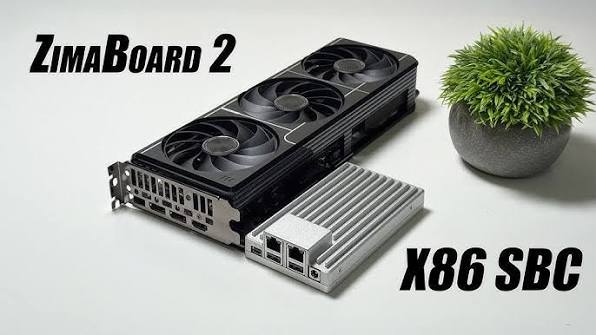
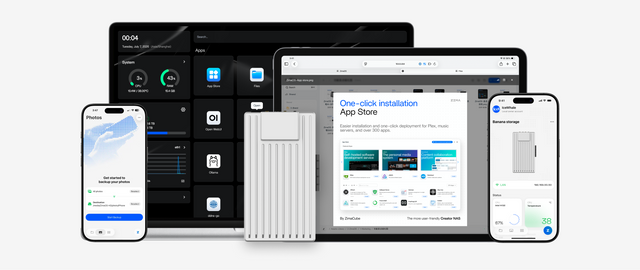
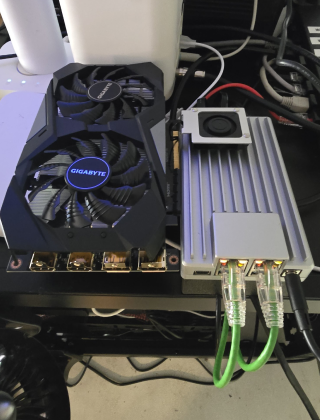
The ZimaSpace first-time home NAS guide reinforces individual accounts and permission testing. A ZimaBoard 2 Mini Home Server fits a compact multi-device file and app stack with deliberate attached storage. A ZimaCube 2 AI NAS is the clearer base when several users, multiple drives, longer history, and storage-first recovery define the household library.
The separation is successful when each device has an obvious destination, each person retains ownership of private data, and shared libraries remain useful without exposing the entire server.

Recommended products

NAS & Server Setup
More to Read
A Local RAG Setup for Research Papers, Notes, and Private Documents
Keep original documents authoritative, make indexing repeatable, require citations, and separate replaceable models from private source data.
Why Are Developers Using a Gateway Node for Private DNS, VPN, and Test Apps?
A gateway node gives private apps one controlled name and access path, while compute nodes stay unexposed and replaceable.
How to Build a Reproducible App Stack With Compose Files, Secrets, and Persistent Data Separated
Keep Compose definitions portable, secrets protected, and app data independently backed up so the stack can be rebuilt on a clean host.


