
How to Set Up Jellyfin for Multi-User Home Streaming


For multi-user Jellyfin, build around predictable Direct Play first, then add enough transcoding, network, storage, and recovery capacity for the exceptions.
A shared household stresses several paths at once: one TV may Direct Play a 4K file while a browser needs video conversion, another user searches the library, and a backup starts in the background. Treat compute, media storage, Jellyfin app data, network access, and backup as separate roles so one busy path does not silently become the limit for everyone.
Start With the Clients, Not the Server Spec Sheet
List the devices that actually play media: TVs, streaming boxes, browsers, phones, tablets, and remote clients. Record representative video codecs, audio formats, subtitle types, HDR use, and typical bitrates. This turns “three users” into a set of playback paths instead of an arbitrary concurrency number.
Jellyfin decides whether to Direct Play, remux, or transcode according to client capabilities and stream constraints. The official transcoding documentation explains that the client sends capability profiles and the server chooses a compatible output, which is why two users watching different files can create very different server loads.
Design for the common case first. If the main living-room devices Direct Play your library, do not size the entire server as though every stream will require software video encoding. Instead, identify the few repeatable conditions that cause conversion—unsupported video, audio conversion, subtitle burn-in, bitrate limits, or remote bandwidth.
Put Jellyfin App Data on Fast Storage and Media on Capacity Storage
Separate the active Jellyfin data path from the large media path. The database, metadata, indexes, cache, and transcode workspace perform many small reads and writes, while movie and episode files are mostly large sequential reads.
Jellyfin’s hardware selection guide recommends SSD storage for Jellyfin files because of their random-access pattern, while media storage only needs sequential throughput above the media bitrate. That makes an SSD for app data plus HDD or NAS capacity for media a more useful split than placing everything on one large disk.
Keep enough free space on the fast tier for imports, generated images, and temporary transcode segments. If the app-data volume fills, a large empty media pool does not help because the blocked path is the database/cache side, not the movie-file side.
Give the Server One Reliable Wired Path to the Household
Connect the Jellyfin host by Ethernet and treat Wi-Fi as a client-side convenience rather than the server’s primary uplink. Multiple users concentrate their traffic at the server even when the individual clients are spread across wireless access points.
The current Jellyfin networking guidance recommends Ethernet for the server and explains that local discovery is subnet-bound. If you use VLANs, guest networks, or multiple subnets, plan explicit routing and name resolution instead of assuming discovery broadcasts will cross those boundaries.
Validate the path during a realistic busy period: two or three concurrent streams, a library browse, and a file transfer or backup. If playback degrades only when storage traffic is active, the next fix may be traffic placement, link capacity, or scheduling rather than a faster CPU.

Treat Transcoding as an Exception Path With Its Own Capacity
When a client cannot consume the source directly, video transcoding can become the dominant compute job. Hardware acceleration can move compatible decode, processing, and encode stages to fixed-function media hardware, but unsupported stages can still fall back to the CPU.
Jellyfin documents Intel QSV, NVIDIA NVENC, AMD AMF/VA-API, Apple VideoToolbox, and Rockchip RKMPP among supported acceleration methods. The hardware acceleration guide also notes that partial acceleration can leave higher CPU load, so “GPU enabled” is not the same as proving the whole stream is accelerated.
Force one representative transcode for every difficult client class and inspect the stream details plus host activity. ZimaSpace’s hardware-transcoding verification workflow is useful here because it treats the dashboard, GPU activity, and FFmpeg evidence as one test rather than trusting a toggle.
Separate Household Identities, Remote Access, and Admin Rights
Create individual Jellyfin users for household members when watch state, parental boundaries, remote access, or library visibility should differ. Shared credentials erase useful separation and make it harder to change one person’s permissions without affecting everyone.
For remote use, expose only the access path you intentionally manage. Jellyfin’s networking documentation warns against direct internet exposure and supports safer patterns such as a reverse proxy or VPN. Keep administrative access narrower than ordinary playback access, especially when the server also hosts other home services.
After identity rules are in place, test a normal local user, a restricted user, and a remote user separately. A server that streams well for the administrator is not yet a validated shared-household setup if another profile sees the wrong libraries or cannot authenticate from its expected network.
Close the Build With Backup, Recovery, and an Expansion Trigger
Back up Jellyfin state independently from the media library. Media can often be reacquired or restored on a different schedule, while users, watch state, metadata choices, subtitles, and server configuration may be the operational state you want back quickly.
The built-in Jellyfin backup system can include the database, metadata, subtitles, and trickplay data. Store backups on a destination that is not lost with the same app-data volume, and perform a test restore before treating the setup as complete.
Expand only when measurement identifies a repeated limit: persistent transcode saturation, app-data latency, insufficient usable capacity, backup windows colliding with viewing, or a network path hitting its ceiling. If normal clients Direct Play smoothly, app data stays responsive, and recovery is tested, more hardware is optional rather than required.

Recommended products

NAS & Server Setup
More to Read
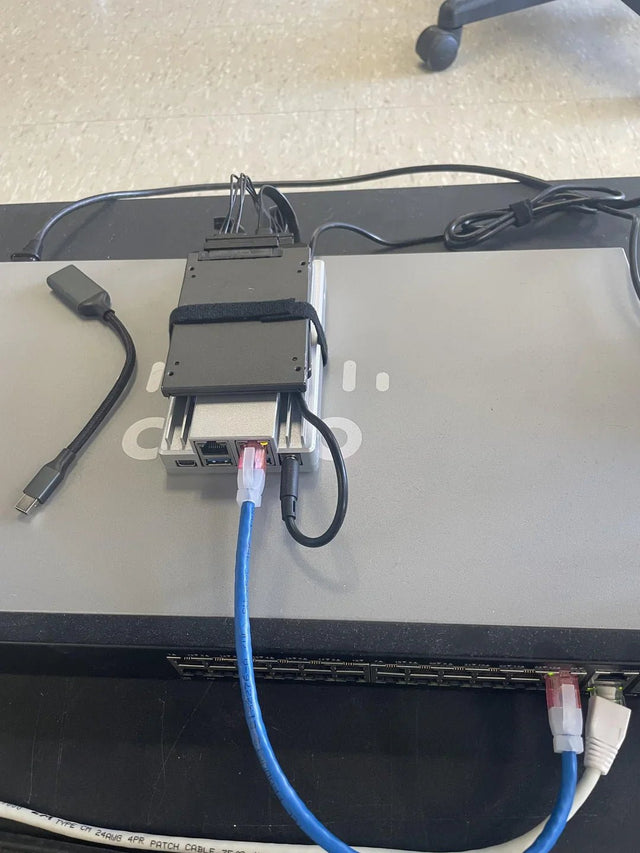
How AI-Like Analysis and Automation Change Jellyfin Storage and Compute Needs
Automation and adjacent AI analysis add scans, derived data, CPU/GPU work, cache, scratch space, and background scheduling beyond ordinary Jellyfin playback.
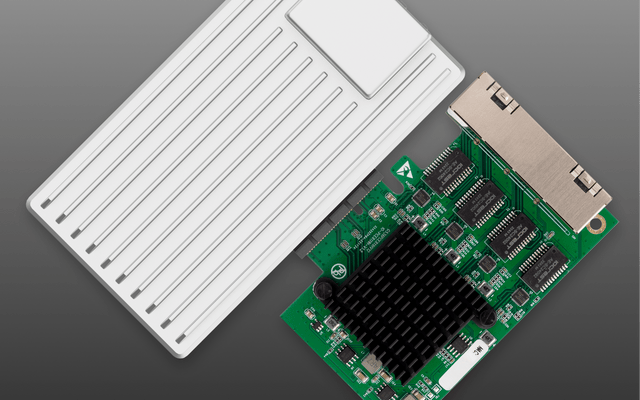
How to Integrate Jellyfin Into a Small Apartment or Rental Network
Build a rental-friendly Jellyfin network around stable local addressing, minimal wiring, quiet hardware, CGNAT-aware remote access, and reversible changes.
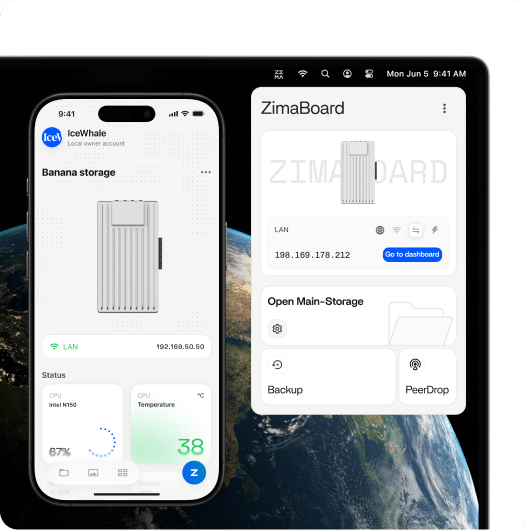
How Many Users and Background Jobs Should One Jellyfin Host Support?
Treat Jellyfin users and background jobs as one shared workload budget; capacity ends when playback latency, queues, or resource pressure becomes repeatable.


