
A First Home Server Setup for Someone Who Has Never Managed Linux


Someone who has never managed Linux should not begin with a command-line course disguised as a home server project. The first setup should behave like a recoverable appliance: a web interface for normal work, one protected administrative path for exceptions, clearly separated data, private local access, and a written way to rebuild the system after a failed update or boot drive.
Linux still exists underneath. The goal is not to pretend otherwise. The goal is to keep daily operation inside a small set of repeatable actions while making the few important technical boundaries visible: where data lives, who can change it, how remote access works, and what must be restored first.
Build a Recoverable Appliance, Not a Linux Learning Curriculum
A beginner does not need to understand every package, filesystem option, or shell command before running a useful service. A current mini-PC home server guide makes the entry point explicit: Linux experience is not required to start, but the user still needs clear workload choices and a willingness to follow a controlled setup path.
Define success in operational terms:
- the server can be found from the main computer;
- one service can be installed and opened locally;
- important data is stored outside the replaceable system layer;
- an ordinary user cannot change system settings;
- the server can be restarted without losing the service;
- the operator knows what to restore if the boot device fails.
This keeps learning attached to real outcomes. The user learns a command only when it solves a problem the interface cannot solve, rather than collecting commands before the server has a purpose.
Use an App-First Interface, but Keep One Protected Admin Path
A web-based management layer is appropriate for normal operations: checking storage, creating users, installing a service, viewing status, and restarting an application. Modern NAS platforms commonly provide web interfaces for storage pools, shared folders, and user accounts, which reduces the number of Linux details a beginner must handle during routine work.
The interface should not be the only recovery path. Keep one protected administrative account and document how to reach a local terminal or secure shell session from the home network. That path is for reading logs, exporting configuration, checking disk space, or recovering when the dashboard fails. It should not be used for daily browsing or family file access.
The strongest beginner setup therefore has two layers:
- Daily layer: dashboard, service controls, storage view, users, and alerts;
- Recovery layer: one restricted admin path, stored credentials, and a short command reference for known tasks.
Separate the Boot System, Application State, and Shared Data
The first storage decision should make a reinstall survivable. The boot system contains Linux and the management layer. Application state contains databases, configuration, indexes, and service-specific metadata. Shared data contains documents, media, backups, or other user-owned files. These layers may live on the same physical device at first, but they should have separate paths and separate backup policies.
Better Stack explains that container data disappears with the replaceable container unless it is placed in persistent storage with an independent lifecycle. The same design rule applies beyond containers: the part you reinstall should not be the only place that the service’s state exists.
| Layer | Contains | Expected change rate | Recovery approach |
|---|---|---|---|
| Boot system | Linux, management interface, system packages | Changes during updates | Reinstall from known media and documented settings |
| Application state | Databases, configuration, indexes, secrets | Changes whenever the service is used | Frequent backup plus application-aware restore test |
| Shared data | Files the household recognizes and owns | Varies by workflow | Versioned backup and an independent second copy |
Use paths that remain meaningful after software changes, such as /data/shared, /data/backups, and /appdata/service-name. Avoid scattering irreplaceable files inside the boot filesystem where a reinstall may erase them.
Use One Daily Account and One Protected Administrative Account
Do not log in as the most powerful user for ordinary tasks. Linux Handbook recommends setting up a non-root user and avoiding remote root login because a root session has unrestricted control. That non-root administration pattern gives a beginner a safer default without requiring a complex identity system.
Create these roles before inviting other users:
- Owner account: normal file access and everyday dashboard use;
- Admin account: system changes only, protected by a separate credential;
- Household accounts: access only to the folders and services each person needs;
- Service identities: applications receive access only to their own data paths.
Test permissions with disposable files. An ordinary account should not be able to modify system configuration, another user’s private folder, or the destination that holds backups. A permissions model is complete only when denied actions have been tested, not merely when successful access works.
Prove Local Access Before Adding Remote Access
The server should work for at least a week on the local network before it is reachable from outside the home. Confirm local login, service restarts, permissions, backups, and recovery first. Remote access adds identity, encryption, routing, and device-approval decisions; adding them too early makes local failures harder to distinguish from network failures.
An independent home-server guide demonstrates a remote-access design that avoids opening router ports. For a first server, the important principle is narrower than the specific tool: prefer an authenticated private path, approve only the devices that need access, and do not publish the administrative dashboard to the open internet.
Test remote access with one non-admin account first. Confirm that disconnecting the remote-access layer does not break local use. Keep the router and internet connection independent of the experimental server so a reboot does not take the household offline.
Back Up Application Databases and Configuration, Not Just Visible Files
Beginners often back up the folders they can see and miss the service state required to make those files usable. A photo or media folder may survive while user accounts, indexes, labels, schedules, and permissions disappear. A database backup therefore needs more than a copied directory: it needs a consistent backup method, retention, and a tested restore.
N2WS’s database backup article emphasizes automation, regular testing, off-site redundancy, and retention policies as core database-backup practices. Applied to a home server, that means identifying which services own a database, exporting or backing it up on a schedule, and restoring it into a test instance before trusting it.
For each service, record four items:
- the user files it reads or creates;
- the database or configuration it needs;
- the credentials or keys required after reinstall;
- the order in which those elements must be restored.
This record is more valuable than a screenshot of the dashboard because it describes the actual recovery dependency.
Plan for Updates, Power Loss, and a Failed Boot Device
A beginner-friendly server should fail in a way that leaves a clear next action. Schedule updates during a period when no one depends on the server. Export configuration before major changes. Keep the recovery image, account details, and storage map somewhere other than the server itself.
TechRadar notes that even a brief power interruption can make servers unreachable or contribute to data corruption, while a UPS can provide time for a controlled shutdown. That safe-shutdown window during a power failure matters more than trying to keep every device running for hours.
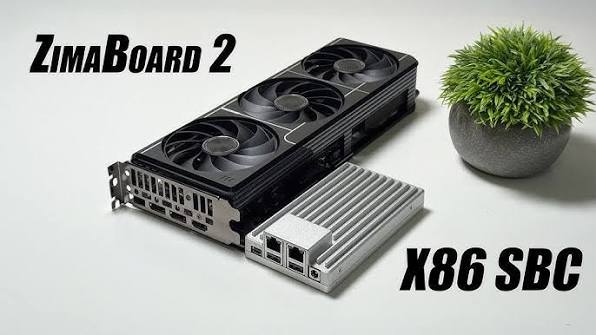
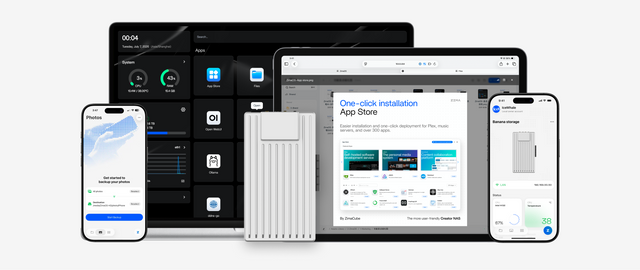
A ZimaBoard 2 Mini Home Server fits this blueprint when the user wants a compact app-first node with direct storage options and a gradual learning path. Keep important files on independently protected storage rather than relying on the boot device. When the first requirement is already several drives, large shared capacity, and storage-first recovery for multiple users, a ZimaCube 2 AI NAS is the more appropriate starting architecture.
Use a First-Month Routine That Turns Linux Into Small, Repeatable Tasks
The first month should not be measured by the number of installed services. It should be measured by whether one useful workload can be operated and recovered without guesswork. Backup testing guidance recommends restoring data and checking that the workload actually functions, because file presence alone does not prove a valid recovery. Use that functional restore test as the final gate each time the setup grows.
- Week 1: finish local access, create the daily and admin accounts, and install one service.
- Week 2: separate its user data and application state, then configure scheduled backup.
- Week 3: restore the service into a test location and document the exact recovery order.
- Week 4: add private remote access or a second service only if the first one remains understandable.
The related ZimaSpace guide on how to build a first home server around three services can be used after this first-month routine is stable. It extends the same principle from one recoverable service to a small stack with clear roles.
Someone who has never managed Linux is ready to expand when they can answer five questions without opening a tutorial: where the data lives, which account can change it, how the service starts, where its backup is stored, and how to restore it. At that point, Linux has become an operating layer rather than the main obstacle.

Recommended products


NAS & Server Setup
More to Read
A Local RAG Setup for Research Papers, Notes, and Private Documents
Keep original documents authoritative, make indexing repeatable, require citations, and separate replaceable models from private source data.
Why Are Developers Using a Gateway Node for Private DNS, VPN, and Test Apps?
A gateway node gives private apps one controlled name and access path, while compute nodes stay unexposed and replaceable.
How to Build a Reproducible App Stack With Compose Files, Secrets, and Persistent Data Separated
Keep Compose definitions portable, secrets protected, and app data independently backed up so the stack can be rebuilt on a clean host.


