
How to Build a Family Personal Cloud That Does Not Require Everyone to Learn NAS Administration


A family personal cloud succeeds when everyone can save, find, share, and restore files without learning pools, containers, permissions, or server maintenance.
The administrator still needs to understand storage, backups, updates, and recovery, but those responsibilities should not leak into ordinary household use. Family members should see a small set of familiar entry points: a private space, selected shared folders, photo upload, and a clear recovery contact. The design goal is not to remove administration; it is to concentrate it in one documented layer while daily tasks remain appliance-like.
Define the Household Jobs Before Choosing the Cloud Interface
Start with the repeated jobs the family already performs: uploading phone photos, keeping documents in one place, sharing travel files, retrieving school forms, and viewing selected albums. Each job should have a named user, an authoritative data location, and a simple success condition. Avoid beginning with a long app catalog or a feature list that nobody requested.
WIRED describes a NAS as a private cloud that can centralize backups and shared content while giving different users different access levels. That household-task-first NAS model is the correct starting point because the server exists to remove recurring work, not create another hobby for every user.
Write the first version of the personal cloud as four promises: each person has a private account, selected files can be shared intentionally, phone uploads happen with little attention, and critical data can be restored from outside the server. Everything else is optional until those promises work for several weeks.
Keep One Administrator Role and Give Everyone Else Ordinary Accounts
The family should not share the administrator login. Each person needs an ordinary account with access only to their private space and approved shared locations. Applications should also use service-specific identities rather than one unrestricted account that can read and modify every dataset.
OWASP defines least privilege as granting a user, process, or program only the permissions necessary for its intended purpose. That minimum-required-access rule keeps a lost phone, mistaken deletion, or compromised app from becoming a whole-family storage incident.
Create one protected administrator account, one recovery administrator kept separately, ordinary household accounts, and service identities for upload or media apps. Test denied actions deliberately: a child account should not alter backups, a photo app should not browse tax records, and an ordinary user should not see storage or update controls.
Use a Small Folder Model That Matches How the Family Thinks
A personal cloud becomes difficult when the folder tree reflects disks, applications, or container names instead of household tasks. Use clear top-level roles such as Private, Family Shared, Photos, Documents, and Incoming. Keep backup repositories and application state outside normal browsing paths.
WIRED’s secure NAS sharing guide explains that network storage can provide family access while separating public, shared, and private areas. That private-versus-shared folder boundary is easier for nontechnical users than asking them to understand which disk, dataset, or app volume contains their files.
| Visible family space | Who can write | Hidden admin responsibility |
|---|---|---|
| Private | One household member | Quota, backup, and account recovery |
| Family Shared | Approved family members | Permissions, versions, and conflict handling |
| Photo Upload | Phone backup service and owner | Intake, duplicate review, and storage growth |
| Archive | Selected curators | Retention, metadata, and off-site protection |
Do not expose system folders, databases, backup destinations, or cache directories as general shares. The family interface should show the information people use, while the administration interface shows the machinery that protects it.

Choose Apps That Behave Like Appliances for Ordinary Users
The family-facing app should have a stable mobile or web interface, straightforward sign-in, understandable sharing, and predictable behavior after updates. Household members should not need to know which container runs the service, which port it uses, or which filesystem is mounted behind it.
Ars Technica’s BeeStation review praised automatic phone and cloud backups because the device reduced the amount of day-to-day system administration required from the household owner. That appliance-style user experience is the usability target even when the underlying server is more flexible.
Pilot one file app and one photo workflow before adding media, notes, calendars, or automation. Record a direct local recovery address in case a friendly dashboard or proxy fails. An app is family-ready only when an ordinary user can complete the intended task after the administrator has logged out.
Decide what the family should do when the server is temporarily unavailable. Frequently used documents can remain synchronized to selected devices, while irreplaceable originals remain protected in the independent backup. A short outage should not push users toward creating uncontrolled duplicate folders or sharing administrator credentials. Write one fallback rule for local outages, one for lost passwords, and one for a failed mobile app. This turns a technical interruption into a familiar household procedure and prevents convenience workarounds from becoming permanent data paths.
Automate Backups and Make Restore Status Visible
Ordinary users should not have to remember to drag files into a backup folder. Device and photo uploads should run automatically, and the administrator should receive a useful alert when a job stops, storage fills, or a client has not checked in. The interface should distinguish uploaded, protected, and independently backed-up data.
TechTarget’s backup-testing tutorial emphasizes restoring data and checking that the resulting workload actually functions. That restore-and-function requirement prevents a green backup badge from becoming the family’s only evidence that files are safe.
Test one private file, one shared folder, and one photo album restore into a separate location. Give the family a simple recovery route: contact the administrator, identify the missing item and approximate date, and avoid creating a replacement file with the same name until the restore is complete.
Separate Remote Access From Full NAS Administration
Family members may need files while traveling, but remote access should not expose the complete management interface or require manual port forwarding for every app. Use a controlled remote-access path, multifactor authentication where supported, and ordinary user accounts that reveal only the required services.
TechRadar’s personal-cloud guide describes NAS as centralized storage for files, backups, media, and remote access, while still requiring deliberate choices around capacity and protection. That remote-access-with-storage-boundaries model is safer than treating the administration dashboard as the family portal.
Keep local access working when the remote service is unavailable. Document a direct local hostname for recovery, and do not make the same experimental DNS, authentication, or proxy stack the only route to both household files and server administration.
Design the Admin Layer So Another Adult Can Recover the System
A family personal cloud is not sustainable when one person is the only source of passwords, storage maps, backup destinations, and restart knowledge. Another trusted adult should know where the recovery notes live, how to confirm the server is online, and where the independent backup can be reached.
Backblaze’s family IT guide recommends automated backups, system updates, and a 3-2-1 strategy to reduce the amount of emergency support one person must provide. That documented family-support model is the operational layer that keeps a personal cloud from becoming a private experiment.
| Recovery question | Documented answer |
|---|---|
| Who owns administration? | Primary and recovery administrator |
| Where is family data? | Visible folder map and underlying storage roles |
| Where is the independent copy? | External or off-site backup destination |
| How does the family reconnect? | Local address, ordinary accounts, and reset path |
| When can another app be added? | After backups, restores, alerts, and permissions are proven |
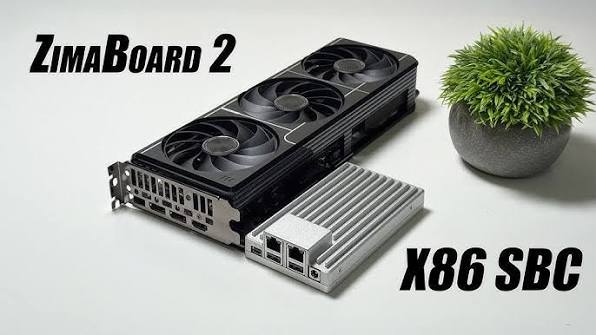
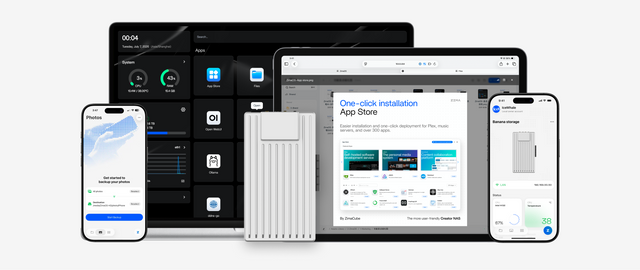
The ZimaSpace guide to choosing three first home-server services helps keep the household scope bounded. A ZimaBoard 2 Mini Home Server fits a compact personal-cloud pilot with deliberate attached storage. A ZimaCube 2 AI NAS is the clearer base when several users, integrated multi-drive storage, longer retention, and storage-first recovery are already required.
The personal cloud is family-ready when ordinary users see only simple tasks and the administrator can still explain, back up, restore, and replace every hidden layer.

Recommended products

NAS & Server Setup
More to Read
A Local RAG Setup for Research Papers, Notes, and Private Documents
Keep original documents authoritative, make indexing repeatable, require citations, and separate replaceable models from private source data.
Why Are Developers Using a Gateway Node for Private DNS, VPN, and Test Apps?
A gateway node gives private apps one controlled name and access path, while compute nodes stay unexposed and replaceable.
How to Build a Reproducible App Stack With Compose Files, Secrets, and Persistent Data Separated
Keep Compose definitions portable, secrets protected, and app data independently backed up so the stack can be rebuilt on a clean host.


