
Which Three Services Should a Beginner Install First on a Home Server?


For most beginners, the strongest first three home server services are automatic computer backup, a shared file library, and a media library. They solve three different household problems, reuse the same basic storage and account model, and remain useful even if the server never grows into a large homelab.
This is not a universal app list. The important choice is the role each service plays. Backup protects a recoverable copy. Shared files create one working location for documents used across devices. A media library turns a mostly read-only collection into an everyday service. Together, they teach storage, permissions, clients, and recovery without making the first server responsible for the whole network.
Start With Repeated Household Jobs, Not an App Catalog
A first server should remove work that already happens every week. That may be copying laptop files to an external drive, sending the same household document between devices, or searching several disks for a movie. A useful beginner guide makes the same planning move: decide what you actually want the server to do before choosing hardware or filling it with applications. That workload-first planning step prevents the first build from becoming an app collection with no clear owner, data path, or recovery plan.
Write down three repeated jobs and identify who uses each one, what data it touches, and what happens when it stops. The first three services should be independent enough that one failure does not take down the others. They should also share enough infrastructure that the server remains simple: one local network, one storage map, one account model, and one backup destination.
Once the roles are selected, the existing ZimaSpace guide on how to build a first home server around three services provides the next step: turning those roles into a stable data and recovery layout.
Install Automatic Backup First Because It Creates a Recovery Habit
The first service should usually receive scheduled backups from the computers that already contain important work. The goal is not to create a second folder that someone remembers to copy into. It is to create a predictable path from each device to a protected location on the server, with versions or dated recovery points where possible. WIRED identifies backup as one of the central reasons to build a NAS, alongside sharing and streaming; that makes automatic backup a foundational home-server role, not an optional feature added after every other app.
Keep the first backup scope narrow. Start with one computer and one folder set: documents, current projects, and irreplaceable local files. Exclude replaceable downloads and temporary caches. Confirm that the server receives new versions on schedule, then restore a small folder to a different location. Only after the restore works should another device be added.
This service teaches the most valuable lesson early: storage is not useful because files were copied once. It is useful because a specific version can be found and restored after deletion, corruption, or a failed drive.
Add Shared Files Second, but Keep Them Separate From Backups
A shared file service is for active access. Family members or personal devices open the same document, scan archive, template folder, or household record from one known location. A backup service is for recovery. Mixing the two creates ambiguity: users may edit files inside a backup destination, or assume a shared folder is protected merely because it lives on the server.
Modern personal-cloud setups are valuable because they create a centralized location for files, backups, media, and remote access, but those functions should still have different folders and permissions. Use a visible top-level boundary such as:
- Backups: written by scheduled backup jobs and restored deliberately;
- Shared: opened and edited by approved household users;
- Personal: private folders that are not visible to every account.
Test the shared service from two daily devices. Create, rename, edit, and delete a disposable file. Then confirm that one ordinary user cannot browse another user’s private folder or alter the backup destination.
Use a Media Library as the Third Service Because It Is Useful but Low Risk
A media library is a strong third service because it gives the household a visible result without becoming the authoritative copy of daily work. Most movie and music files are read far more often than they are changed. That makes them suitable for testing client access, folder organization, metadata, and network playback after backup and permissions already work.
A practical NAS media guide describes the core value as keeping a collection on one networked device so it becomes available to multiple devices around the home. For a beginner, that is more important than installing automation around the library. Start with one folder, one client, and a small test collection. Verify that the server can read the files consistently and that the client can play them without changing the originals.
Keep family videos or other irreplaceable media in the backup plan. Replaceable entertainment media may use a lighter protection policy. The media service should never be allowed to consume all free space needed by backups and shared files.
Do Not Make the First Server Responsible for DNS, Routing, or Every Smart-Home Device
Network-wide DNS, routing, authentication, camera recording, and home automation can all be valuable home server roles. They are poor default choices for the first three services because their failure can affect people who never agreed to participate in the experiment. When a DNS server cannot respond, applications may be unable to resolve the host they need, which is why DNS failure can interrupt otherwise healthy application connections.
Postpone a service when it creates one of these conditions:
- the household loses internet access when the server is rebooted;
- one admin password controls unrelated private data;
- a failed update disables lights, locks, cameras, or essential communication;
- the service must be publicly exposed before local operation has been proven;
- its data cannot be restored independently of the whole server.
Those roles belong later, after the operator has a maintenance window, a fallback path, and confidence restoring application state.
Give Each Service Its Own Data Boundary
The operating system, application state, and user data should not be treated as one undifferentiated disk. Containerized applications are replaceable, while their persistent data must survive replacement. Better Stack’s explanation of persistent data living beyond a container’s lifecycle illustrates the broader rule: the service executable and the information it owns need different recovery paths.
| Service role | Primary data | Application state | First recovery test |
|---|---|---|---|
| Automatic backup | Versioned device backups | Schedules, client identities, retention rules | Restore one deleted folder to another location |
| Shared files | Documents and household folders | Users, groups, permissions, share definitions | Recreate the share and verify access boundaries |
| Media library | Media folders | Library database, metadata, client settings | Rebuild the service while preserving the media path |
Use descriptive paths rather than application names. A folder called /data/shared remains understandable after software changes. A folder named only after a short-lived application makes the storage layout harder to interpret later.
Match the Hardware to the Service Roles, Not to an Imagined Future Lab
The first three services usually need reliable storage attachment, stable Ethernet, enough memory for a few concurrent applications, and a boot device that is not also the only copy of important data. They do not automatically require a rack, many drive bays, or a virtualization cluster. A current comparison between a home server and a NAS frames the distinction clearly: a home server favors flexible workloads, while a NAS is the easier storage-centered appliance. That flexibility-versus-storage distinction is more useful than comparing processor model numbers in isolation.
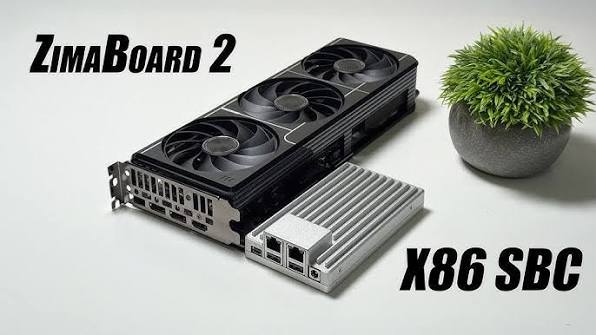
A ZimaBoard 2 Mini Home Server fits an app-first beginning when the user wants a compact compute node, direct storage attachment, and room to experiment without buying a large enclosure first.
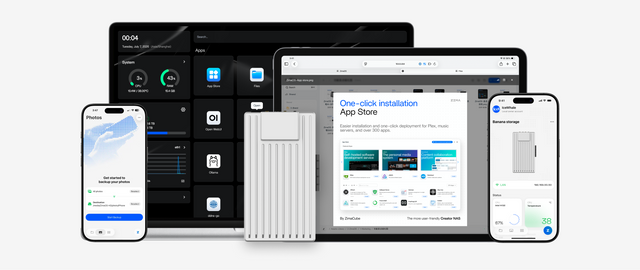
A ZimaCube 2 AI NAS is the more natural starting point when several drives, larger shared capacity, multiple household users, or storage-first recovery are already non-negotiable.
The deciding question is not which product is more powerful. It is whether the first server’s main responsibility is learning and running a few services, or protecting and serving a growing body of household data.
Install in an Order That Makes Failure and Recovery Observable
Install one service, use it for several days, and test its failure boundary before adding the next. Backup testing guidance emphasizes that a backup should be restored and the resulting workload should be checked, because the presence of backup files alone does not prove recovery. That restore-and-function validation should shape the complete first-month sequence.
- Week 1 — Backup: protect one computer, delete a test folder, and restore it.
- Week 2 — Shared files: create ordinary accounts and verify read, write, and private-folder boundaries.
- Week 3 — Media: add a small library and test playback from the devices that will actually use it.
- Week 4 — Recovery drill: export configuration, document storage paths, and prove that one service can be rebuilt without guessing.
A beginner has chosen the right first three services when each one solves a repeated job, each one has a visible data owner, and each one can fail without taking the entire household workflow with it. Backup, shared files, and media are a strong default because they create value in that order: protect first, centralize second, and add convenience third.

Recommended products

NAS & Server Setup
More to Read
A Local RAG Setup for Research Papers, Notes, and Private Documents
Keep original documents authoritative, make indexing repeatable, require citations, and separate replaceable models from private source data.
Why Are Developers Using a Gateway Node for Private DNS, VPN, and Test Apps?
A gateway node gives private apps one controlled name and access path, while compute nodes stay unexposed and replaceable.
How to Build a Reproducible App Stack With Compose Files, Secrets, and Persistent Data Separated
Keep Compose definitions portable, secrets protected, and app data independently backed up so the stack can be rebuilt on a clean host.


