
What Are the Setup Trade-Offs Between Bare Metal, Docker, and Proxmox in a First Homelab?


Bare metal, Docker, and Proxmox trade directness for portability and isolation, so the best first homelab platform depends on what must remain simple.
These options do not sit at the same layer. Bare metal describes an operating system running directly on the hardware. Docker packages applications on top of a host operating system. Proxmox turns the hardware into a virtualization host for virtual machines and system containers, and Docker may then run inside one of those guests. The setup decision is therefore about how many layers the first workloads actually need.
Compare the Layers Before Comparing the Products
A direct Linux server gives applications access to the host operating system and hardware. Docker adds application containers that share the host kernel. Proxmox adds a hypervisor and management layer, then provides virtual machines with their own operating systems and LXC system containers that share the host kernel.
WunderTech’s comparison emphasizes that Proxmox and Docker solve different problems rather than acting as interchangeable alternatives. That different-layer comparison prevents a beginner from choosing Proxmox merely to run one container or rejecting Docker because it cannot create a Windows virtual machine.
Start with the required workload types. A single Linux application, several containerized services, mixed operating systems, untrusted experiments, virtual routers, and hardware passthrough all imply different layers. The platform should be the smallest architecture that supports those requirements and a tested recovery path.
Bare Metal Minimizes Layers but Couples Changes to the Host
A bare-metal Linux installation offers a direct storage path, straightforward hardware access, and fewer management layers. It suits a dedicated appliance, a storage server, or a small app host when the owner wants one operating system and understands that host changes affect every service.
TechTarget notes that bare-metal systems avoid the resource and abstraction overhead of virtual machines and provide direct use of hardware resources. That direct-host efficiency is useful on modest hardware, but the same article also highlights the harder migration and rollback path when the physical host must be replaced.
The main trade-off is coupling. Kernel updates, driver changes, storage reconfiguration, and host failure affect all installed workloads. Bare metal remains simple only while the server has one stable role and its configuration can be rebuilt from documentation.
Docker Simplifies App Deployment but Shares the Host Kernel
Docker packages an application and its dependencies into a repeatable image while keeping persistent data outside the disposable container layer. Multiple applications can share one Linux host with less memory overhead than separate virtual machines, and a compose file can describe ports, networks, volumes, and restart behavior.
TechTarget’s container and VM comparison explains that containers share a common operating-system kernel, while virtual machines include separate guest operating systems and stronger logical isolation. That shared-kernel efficiency-and-isolation trade-off defines Docker’s place in a first homelab.
Docker is a strong default when the workloads are trusted Linux services, images already exist, and the operator wants app portability without managing several operating systems. It is a weaker fit when a workload needs a different kernel, strong isolation from neighboring services, or a hardware path that becomes difficult through container permissions.

Proxmox Adds Isolation and Flexibility at the Cost of Another Platform
Proxmox is useful when the first homelab must run several operating systems, isolate risky experiments, create virtual network appliances, or treat each workload group as an independently recoverable machine. A virtual machine carries its own guest operating system, resource allocation, disk image, and update cycle.
TechTarget’s virtualization guide explains that virtual machines isolate workloads through a hypervisor, while containers depend on a shared host operating system. That independent-guest operating-system model provides flexibility but also adds memory use, guest patching, virtual networking, and another storage layer.
Proxmox is not free complexity. The beginner must understand the host, guests, bridges, virtual disks, backups, and passthrough decisions. It earns that cost only when isolation, mixed operating systems, snapshots, or future VM workloads materially change the setup.
Storage Becomes More Abstract as Layers Are Added
On bare metal, an application can use a host filesystem directly. In Docker, persistent data is mapped through volumes or bind mounts. In Proxmox, storage may first hold a VM disk or LXC subvolume, and the guest then creates another filesystem or Docker volume inside it. Each layer can simplify management while making the physical location of data less obvious.
Better Stack’s volume guide explains that container data requiring persistence must have a lifecycle independent from the container. That persistent-data boundary becomes even more important when Docker runs inside a virtual machine because both the guest disk and the application data need a recovery design.
| Platform path | Persistent-data location | Main recovery question |
|---|---|---|
| Bare-metal app | Host filesystem | Can the host config and data be rebuilt separately? |
| Docker on Linux | Bind mount or volume on host | Are compose definitions and app state both protected? |
| VM on Proxmox | Virtual disk plus guest filesystem | Restore the whole VM or rebuild the guest and restore data? |
| Docker inside a Proxmox guest | Host storage, guest disk, then container data path | Which layer owns snapshots, backup consistency, and growth? |
A layered design is acceptable when every persistent path can be named and restored. It becomes fragile when the operator knows an app has data but cannot tell whether it lives in the Proxmox storage pool, guest virtual disk, Docker volume, or a host bind mount.
Hardware Access Can Reverse the Preferred Choice
Direct access to SATA controllers, USB radios, GPUs, network cards, and other devices is simplest on bare metal. Docker can expose host devices to a container, but the application still shares the host kernel and driver environment. A virtual machine can receive passed-through hardware, although that creates additional configuration and may bind the workload to one host.
TechTarget’s bare-metal versus VM container analysis notes that workloads needing direct hardware access may favor bare metal, while VMs provide isolation and portability at the cost of passthrough complexity. That hardware-access-versus-isolation trade-off should be tested with the actual controller, GPU, or USB device before the homelab architecture is finalized.
Do not choose passthrough because it sounds advanced. Use it when the workload needs ownership of a device and the recovery plan accounts for that dependency. A storage controller passed to one VM, for example, changes where disk health, filesystems, and backups are managed.
Maintenance and Recovery Differ More Than Daily Performance
Bare metal has fewer layers to update, but a host failure affects every service. Docker can recreate app containers quickly when definitions and persistent state are protected. Proxmox can restore or roll back complete guests, but large VM images, guest operating systems, and nested application data require more backup capacity and coordination.
TechTarget explains that containers on bare metal offer efficiency and hardware access, while VM-hosted containers add migration, isolation, and rollback advantages. That instance-versus-application recovery distinction matters more than a small benchmark difference in a first homelab.
Test the failure you are buying protection against. For bare metal, rebuild the host configuration. For Docker, recreate the stack from its definitions and restore persistent data. For Proxmox, restore one guest and confirm that its networking, storage, and internal applications function afterward.
Choose a Single Layer First, Then Add a Hybrid Only for a Real Boundary
A beginner usually learns faster with one primary operating model. Choose bare metal for one stable appliance with direct hardware or storage ownership. Choose Docker on Linux for several trusted self-hosted applications. Choose Proxmox when mixed operating systems, stronger isolation, or repeatable virtual machines are already part of the first-year plan.
GnTech’s homelab comparison distinguishes LXC system containers, Docker application containers, and Docker running inside a VM or LXC, showing that each pattern solves a different lifecycle and isolation problem. That workload-specific hybrid model is preferable to nesting layers merely because the platform makes them available.
| First-homelab requirement | Best starting route | Reason to add another layer later |
|---|---|---|
| One NAS or dedicated household appliance | Bare metal | Add containers when several apps need repeatable deployment |
| Several trusted Linux self-hosted apps | Docker on Linux | Add a VM host when isolation or another OS becomes necessary |
| Windows, virtual routers, risky testing, multiple OSes | Proxmox | Add Docker inside one guest for application stacks |
| Storage plus experimentation on one machine | Only after defining failure boundaries | Separate storage ownership from disposable lab workloads |
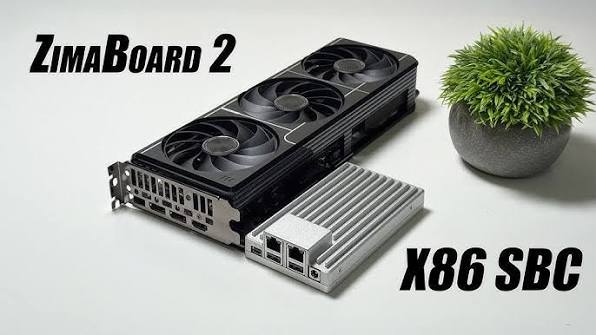
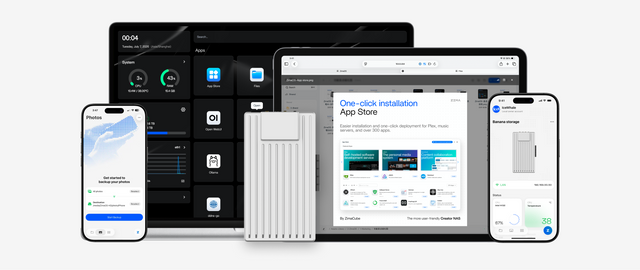
The ZimaSpace guide on choosing the first three home-server services helps determine whether one Linux app layer is sufficient. A ZimaBoard 2 Mini Home Server fits a compact bare-metal or Docker-first homelab with direct storage and PCIe expansion. A ZimaCube 2 AI NAS is the stronger base when multi-drive storage and a storage-first recovery role must remain stable beside virtualized or containerized applications.
The cleanest first homelab is not the platform with the most layers. It is the platform whose application, storage, hardware, and recovery boundaries the beginner can explain and test.

Recommended products

NAS & Server Setup
More to Read
A Local RAG Setup for Research Papers, Notes, and Private Documents
Keep original documents authoritative, make indexing repeatable, require citations, and separate replaceable models from private source data.
Why Are Developers Using a Gateway Node for Private DNS, VPN, and Test Apps?
A gateway node gives private apps one controlled name and access path, while compute nodes stay unexposed and replaceable.
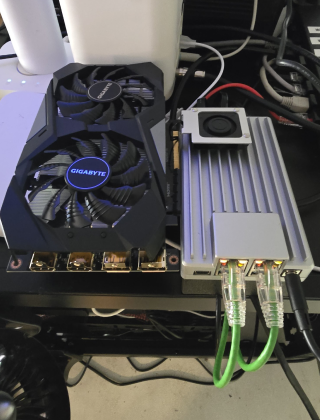
How to Build a Reproducible App Stack With Compose Files, Secrets, and Persistent Data Separated
Keep Compose definitions portable, secrets protected, and app data independently backed up so the stack can be rebuilt on a clean host.


