
Personal Server Buying Guide for Privacy-Focused Households


A privacy-focused household should buy a personal server only after defining what data it wants to protect and which parties or failures matter most. The safest default is a local-first server with individual accounts, narrow application permissions, limited internet exposure, recoverable encryption, and an independent backup. More applications or storage do not improve privacy when the household cannot explain who holds the keys, which services can reach the data, and how recovery works.
Build the Household Threat Model Before Choosing Hardware
Privacy is not one universal specification. One household may want to reduce advertising and cloud scanning, another may need separation between family members, and another may care most about theft, account compromise, or remote surveillance. The server should be selected for the most probable threats rather than for an abstract promise of total privacy.
A practical privacy threat model begins with the assets to protect, likely adversaries, consequences of failure, and the effort the user can sustain. That turns “keep everything private” into concrete buying questions about data classes, access paths, physical location, account ownership, and recovery.
The existing ZimaSpace private family cloud guide focuses on files, personal spaces, synchronization, and backup. This article starts one layer earlier: whether the server actually changes the household’s privacy boundary or merely moves cloud-like risks into a box that nobody maintains.
The first decision output should be a short threat table. List sensitive data, who should access it, who should not, whether remote access is required, and what happens if the server or administrator account is compromised. Choose the simplest architecture that addresses those defined threats without creating maintenance the household will ignore.
Separate Local Control From the Assumption of Automatic Privacy
Moving data into the home reduces dependence on a third-party storage provider, but it does not automatically protect the files from household administrators, compromised applications, weak accounts, exposed remote services, theft, or an unencrypted backup. Local control creates choices; those choices still have to be configured and maintained.
A current self-hosting responsibility guide notes that self-hosting transfers uptime, security, backup, and support responsibility to the owner. That is a useful purchase boundary: a privacy-focused service can become less safe when patches, access control, and recovery are neglected.
The ZimaSpace article on the household data hub explains why photos, documents, backups, automation state, and identity data can gradually depend on one system. The more authoritative the server becomes, the more important predictable ownership and recovery become.
Choose local hosting when the household is willing to own the required maintenance and when local control directly reduces a defined exposure. Keep some services with a privacy-focused provider when end-to-end encryption, professional operations, or external availability is more important than physical possession of the server.
Give Every User and Application the Smallest Useful Access
Individual accounts protect household boundaries better than one shared login. Applications should also receive separate identities and only the folders, devices, secrets, and network destinations needed for their job. A photo app does not need access to tax records, and a dashboard does not need write permission to the backup archive.
The ZimaSpace explanation of least-privilege application access shows how narrow permissions reduce damage after an application or account compromise. This is a buying requirement when the platform will host several third-party applications with different trust levels.
Separate adult, child, guest, and service accounts. Use read-only access for archives, write-only or contribution paths for selected uploads, and administrator credentials only for maintenance. The server interface should make those distinctions understandable enough to review after device loss, family changes, or application removal.
Choose a platform whose account, share, container, and application permissions can be audited without rebuilding the entire system. More containers are not a privacy advantage when every container mounts the same broad data path and shares the same administrator secrets.

Decide Where Encryption Keys and Recovery Keys Live
Encryption at rest can protect drives removed from the server, but the privacy boundary depends on where the decryption keys are stored. If the live server automatically unlocks the data and an application or administrator is compromised, encryption may not prevent access to files that are already mounted.
A guide to cloud encryption key custody explains that many cloud services hold the keys used to encrypt stored data. A personal server changes that custody question, but the household must still decide whether keys live on the server, on a client device, in a separate vault, or in an offline recovery record.
The ZimaSpace analysis of NAS encryption key location makes the same point: privacy ends wherever the usable keys can be reached. Client-held encryption creates a stronger server boundary but can reduce convenience and complicate sharing or automated services.
Choose the key model from the threat model. Server-held keys fit ordinary household convenience and stolen-drive protection. Client-held or separately vaulted keys fit more sensitive datasets when the users accept extra recovery work. Never choose encryption without documenting how the family restores access after a failed boot device, forgotten password, or administrator absence.
Limit Remote Access and Outbound Network Visibility
A server that remains local-only has a smaller internet exposure, but some households need remote files, photo uploads, or administration. Remote access should use a managed encrypted path, strong authentication, individual accounts, and the smallest set of reachable services rather than publishing every application directly.
A recent home NAS security guide recommends firewall controls, VPN-style access, two-factor authentication, and a secondary backup when a NAS is exposed for remote use. Those surrounding controls belong in the purchase plan rather than being treated as optional post-install work.
Outbound traffic matters too. A locally hosted application may still call external APIs, download metadata, send diagnostics, or expose DNS patterns. The ZimaSpace guide to household DNS privacy explains why a local resolver changes who can observe requests but does not remove every external dependency.
Choose local-only service paths when remote access adds little value. When remote use is necessary, prefer one auditable access layer and avoid manual port exposure for each app. The household should be able to revoke a device, review active sessions, and disable remote access without losing local availability.
Protect Privacy Without Creating One Irreplaceable Box
A privacy-focused household still needs copies outside the primary server. Fire, theft, water damage, ransomware, accidental deletion, and administrator mistakes can destroy locally controlled data. The backup must preserve confidentiality without sharing the same physical or administrative failure.
The 3-2-1 backup strategy uses three copies on two media types with one copy offsite. For sensitive data, the offsite layer should be encrypted with a key the household can recover and should not depend on the live server for every restore credential.
Back up application databases, account configuration, encryption recovery information, and the files themselves. The ZimaSpace remote access without exposure is useful when the backup or recovery administrator also needs a controlled remote path.
Choose a smaller server if that leaves enough budget and attention for an independent encrypted backup. A larger array that holds the only readable copy does not improve privacy; it concentrates household data into a more valuable single point of failure.
Match the Platform to the Privacy Workload
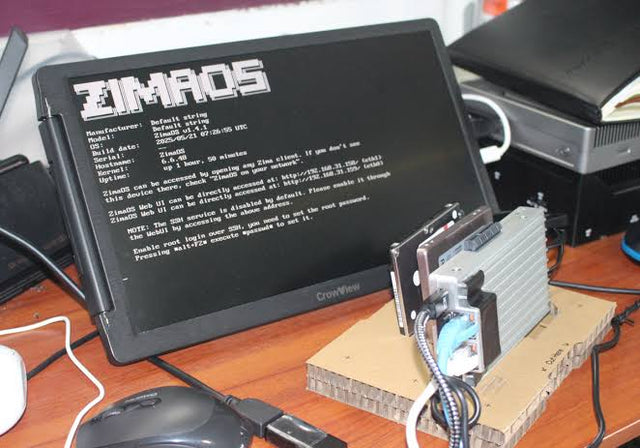
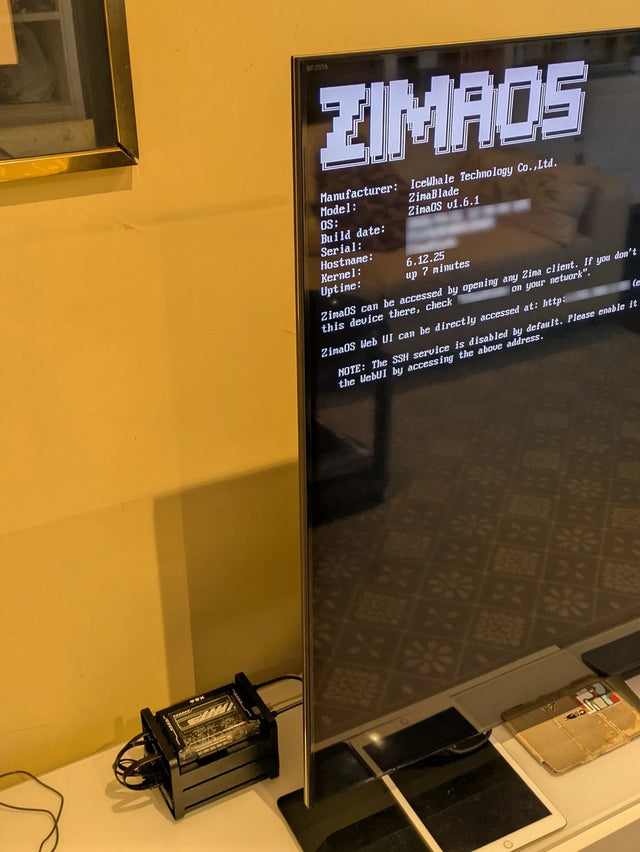
Reuse a stable old PC when the household is still testing one local service and can isolate it from important data. For a compact dedicated platform running DNS filtering, a password vault, a dashboard, or a few lightweight private services, the ZimaBlade 7700 Starter Bundle provides more headroom than the entry bundle while including memory and power.
Choose ZimaBoard 2 when integrated memory and boot storage, dual 2.5GbE, more containers, direct storage, or a first private NAS are part of the plan. The 832 model fits everyday apps and a compact file server; the 1664 model is better for more services, indexing, media, or isolated virtual machines.
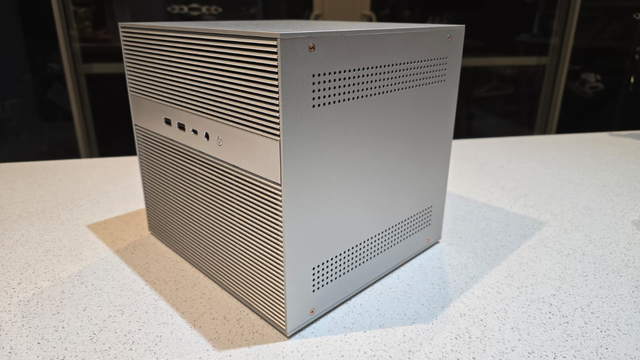
Choose ZimaCube 2 Standard only when several years of protected files, multiple household backups, an SSD application tier, or easier capacity growth already justify a multi-bay system. Storage drives are sold separately, so the encrypted backup and replacement plan still require their own budget.
Choose the least complex platform that enforces the household’s threat model. Upgrade when applications, storage, isolation, or recovery requirements cross a measured boundary—not because a larger server sounds more private. Privacy comes from understandable custody, permissions, network paths, and recovery, not from the enclosure alone.

Recommended products

Buying Guide
More to Read
Local AI Server Checklist Before Buying a GPU
A pre-purchase checklist for avoiding a fast but incompatible, under-cooled, or VRAM-limited GPU in a home AI server.
Container Server Storage Checklist Before One Large Pool
A storage design checklist that prevents one convenient container pool from becoming one shared capacity and recovery failure domain.
NAS Drive Mixing Checklist Before Combining Capacities
A pre-purchase and pre-deployment checklist for mixed NAS disks that prevents hidden capacity waste and unpredictable recovery behavior.


