
GPT-6.1 Terra Explained: Computer Use, Lower Costs, and Your Private Files


GPT-6.1 Terra brings a new cost and capability point to visual reasoning and computer use. For a home-server workflow, the important distinction is between understanding what appears on a screen and having appropriate authority to change the underlying files or accounts.
This guide separates the published event from practical implementation. It explains what the source establishes, where the evidence stops, and how a private-file workflow can be evaluated without assuming that an impressive model or a newer server removes the need for bounded access and review.
| Decision | Verified fact or practical boundary |
|---|---|
| Availability | Official release notes date the rollout to October 26, 2026. |
| Access | The model is offered through the API, ChatGPT Work and Codex; this is not a self-hosted weight release. |
| Cost | API token prices and end-to-end task cost are different measurements. |
| Data boundary | Screen contents, uploads and tool responses may disclose private information. |
| Standard API token rates at the reporting cutoff | $1 per million input tokens, $0.05 per million cached input tokens and $5 per million output tokens; API billing is separate from a ChatGPT subscription. |

What Does Computer Use Actually Change?
A computer-use model can connect a visual observation to an action: identify a field, navigate a dialog, enter information and inspect the result. That is useful when an application lacks a convenient API. It also introduces state that an ordinary text-only answer does not control. A modal dialog, delayed refresh or stale screenshot can make a seemingly reasonable click operate on the wrong document. The workflow needs a visible success condition after each meaningful change.
Consider filing an invoice from a NAS working folder into an accounting interface. Success is not merely that text appeared in the amount field. The date, currency, vendor and document identity must match, the correct account must be selected, and the saved record must be retrievable afterward. A model capability benchmark cannot guarantee that your application layout or access controls match the benchmark environment. Test with synthetic documents before using real customer or financial files.
Does a Lower Token Price Guarantee a Cheaper Workflow?
No. The official launch positions Terra as a more efficient computer-use model, but an actual task also includes reasoning length, repeated screenshots, tool calls, retries and human correction. A lower price per token may still produce a higher total if a brittle interface forces repeated attempts. Compare the cost per accepted output and the time to a verified result, rather than dividing a subscription allowance by a headline benchmark score.
Use the same input batch, success criteria and tool permissions when comparing two models. Record tasks completed correctly on the first attempt, tasks recovered after interruption and tasks requiring manual repair. Keep API billing separate from subscription access. For a household document workflow, reliable identification of duplicates and safe behavior around an existing file may matter more than shaving seconds from a clean demonstration. A fast incorrect move still creates recovery work.
How Should an Agent Access NAS Files?
Expose a task folder containing only the approved files. Use a separate account or narrowly scoped share rather than an administrator session with the entire family archive mounted. Decide whether the job may read, create, rename, overwrite or delete. Those are distinct capabilities. A workflow that needs to classify receipts does not automatically need authority to change the original documents or follow links into adjacent folders.
Have the agent write proposed results into an output area and preserve a mapping between each result and its source file. For uncertain classifications, require an explicit unresolved status rather than a confident guess. Use a test case in which the destination file already exists and another in which the connection drops after a save. The system should detect the existing result and resume safely instead of generating duplicates or overwriting a good copy.
What Should You Measure Before Trusting This Workflow?
Measure computer use at the application’s saved state. For an invoice task, compare the resulting vendor, currency, amount and attachment with a known fixture. For file organization, verify the destination path and source-to-result mapping. A screenshot of a filled form is intermediate evidence; the saved record must survive a reload and remain attached to the correct account. Count tasks that need correction separately from tasks completed correctly on the first attempt.
Include interface changes that occur in ordinary use: a confirmation dialog, a slow refresh, an existing destination file and a session that expires. The agent should recognize uncertainty and inspect the current state before retrying. Record screenshots only where the task needs them, and use synthetic private information in evaluation. An interface agent can reveal content through its visual observations even when you have not explicitly uploaded a document through a file picker.
How Do You Keep the Result Reviewable and Recoverable?
Make consequential operations traceable to a source and a visible result. Keep a small job ledger containing a source identifier, intended destination, completion state and verification result. Before retrying a partly finished job, inspect whether the destination already exists. This matters when a connection fails after the application saved successfully: blindly repeating the same action can create a duplicate invoice or a second copy with a different name.
Choose recovery actions that fit the application. Moving a working file back may be straightforward, while reversing an external submission may require a separate documented procedure. Use dedicated test accounts and disposable records during evaluation. Retain enough information to explain a change without keeping unnecessary screenshots of sensitive material. A backup of the NAS source folder cannot undo an action that the agent has already performed in a separate online account.
How Can You Test the Workflow Before Using Important Files?
The following is an editorial validation protocol, not a claim that ZimaSpace has benchmarked the service. Run it with disposable or approved test data and keep the test conditions with the result.
- Choose one bounded application task and create synthetic inputs. Define success as the correct saved state, including record identity, account and attachment, rather than a completed click sequence.
- Use a dedicated account and task folder. Specify which operations may read, create, rename or overwrite, and remove access to unrelated shares and applications.
- Record the model identifier, interface version and token rates. Keep the API bill separate from subscription access and include retries in the observed task cost.
- Exercise a duplicate and an interrupted save. Confirm the agent inspects the existing state before it repeats an action or creates another destination record.
- Reload the result and compare it with the source. Capture mismatched fields, unresolved cases and manual corrections as distinct outcomes.
- Reconcile the job ledger before increasing volume. Each accepted output should map to one input, with a clear procedure for reviewing incomplete or duplicated work.
Where Does a ZimaOS Server Fit?
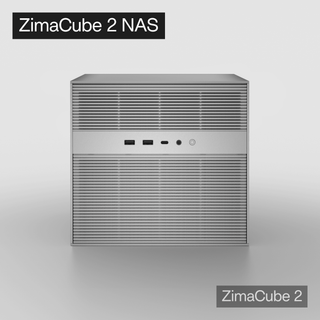
A ZimaCube 2 personal cloud NAS can provide a local storage and application layer when a project genuinely needs multiple drives, an SSD working tier or shared access to a growing archive. Choose hardware for retained source data, active services and backup policy. The product recommendation is architectural context, not evidence that this cloud model, preview service or research system runs locally on the NAS.
Separate inference from data custody. A hosted model may receive approved excerpts while the authoritative originals remain on the server. Optional local indexing, conversion or smaller-model services require their own memory and compute assessment. Keep a second recoverable copy outside the main device, and do not treat RAID or a successful upload as a complete backup strategy. A smaller existing server remains reasonable when it already meets the measured workload.
FAQ
Can GPT-6.1 Terra run directly on a ZimaCube 2?
The announced access routes are hosted products and the API; they do not establish a downloadable model for local serving. A ZimaCube 2 can store task files and results without hosting Terra inference.
What API token rates does this guide use?
At the reporting cutoff, the standard rates are $1 per million input tokens, $0.05 per million cached input tokens and $5 per million output tokens. Total task cost also depends on the request mix, retries and review effort.
What proves that a computer-use task succeeded?
Inspect the actual saved result after a reload and compare it with the source. A filled field, a successful click or the agent’s verbal confirmation alone does not establish the correct final state.
Should I expose the whole private archive to an AI tool?
Only provide the material needed for the task through an appropriately restricted account or working directory. Check what the specific service uploads, logs and retains. A private storage location does not guarantee that a connected tool keeps processing local.
When does a larger NAS become useful?
When measured source-data growth, shared access, active applications or retention requirements justify the storage topology. It does not automatically resolve model access, unsupported runtimes, network upload limits or uncertainty in a research claim.
What is the stopping condition before production use?
Stop when you cannot establish the software/model identity, input authority, required feature availability or recovery path. Resolve those conditions first, then repeat the small test. Do not compensate for missing evidence by making a more confident recommendation.
Sources and Further Reading
Reporting checked on October 28, 2026. Product availability, access plans and security advisories can change. Upstream claims are attributed; workflow recommendations and architecture examples are editorial analysis, not measurements from a ZimaSpace hardware test.
Related guide: Your AI Agent Has a Cloud Computer. Where Should Your Personal Files Live?.
Related guide: Before Connecting a Personal AI Agent: A Checklist for Files, Accounts, and Permissions.
Related guide: How to Prepare Your NAS Files for AI Agent Workflows Without Sharing Everything.

Empfohlene Produkte
Tech- und KI-HUB
Mehr zum Lesen
AI Scientific Breakthroughs: Why Verification and Reproducible Records Matter
Understand AI research: claim to evidence with verified release context, practical workflow limits, private-file handling, review steps and realistic ZimaOS storage roles.
AI Video Quality Is Improving. How Should Creators Protect Their Original Media?
Understand AI video: quality and trust with verified release context, practical workflow limits, private-file handling, review steps and realistic ZimaOS storage roles.
Google Genie 4 Explained: Interactive Worlds, Native Audio, and Creator Workflows
Understand Google Genie 4 with verified release context, practical workflow limits, private-file handling, review steps and realistic ZimaOS storage roles.


