
Computer Science Education Week: Build a Student Homelab for Coding and AI


Build a student homelab by separating daily coursework, coding services, experiments, local AI, and recovery into clear, testable roles.
Computer Science Education Week is a useful reason to move beyond one-off coding exercises and build a small system that can support an entire semester. A student homelab should provide a safe place to practice Linux, Git, containers, databases, networking, and AI without turning a primary laptop into an unstable server. It should also fit the student's room, budget, school network rules, and ability to maintain it during exams.
Define What the Student Homelab Should Teach
Start with learning outcomes, not a shopping list. A useful homelab should make a student perform repeatable technical work: connect to a Linux host, deploy an application, inspect a failed service, restore a project, control access, and explain how data moves through the system. Hardware only becomes meaningful after those actions are clear.
Choose three to five outcomes for the first semester:
- Use the Linux shell, users, groups, permissions, processes, and services.
- Keep code and configuration in version control.
- Package a web application and its dependencies in containers.
- Connect an application to a database and persistent storage.
- Operate a private service through the local network.
- Run a small local model and evaluate its output rather than accepting it automatically.
- Back up and restore a complete project environment.
A learning goal is complete only when it has a visible result. “Learn Docker” is vague. “Deploy a small web application from a versioned Compose file, update it, break it intentionally, and restore it” creates a workflow that can be tested. The same rule applies to Linux, networking, databases, and AI.
Check the Room, Network, and School Rules Before Building
A homelab in a family home can usually connect directly to a trusted router. A dorm or shared apartment may impose different limits. Residence networks can block device-to-device traffic, reject personal routers, require browser-based registration, or prohibit publicly exposed servers. The student may also lack permission to change DHCP, DNS, or firewall settings.
Record the environmental constraints before deciding where services will run:
| Constraint | Question to answer | Design response |
|---|---|---|
| Network policy | Are servers, personal routers, or inbound connections allowed? | Keep the lab local, use an approved private segment, or host it at home. |
| Space and noise | Can equipment remain on without disturbing a roommate? | Use a compact quiet node and avoid rack hardware. |
| Power | Are extension cords, high-power devices, or unattended equipment restricted? | Use an approved power path and shut down heavy compute when idle. |
| Physical access | Can other people reach the server or disconnect it? | Use account security, disk encryption where appropriate, and a safe location. |
| Maintenance time | Can the student repair the lab during exams? | Keep coursework independent from experimental services. |
The related college move-in checklist provides a broader preparation path for students who also need to organize devices, school accounts, course files, and housing restrictions. The homelab should follow those real living conditions rather than assume an unrestricted private network.
Map Coding, Infrastructure, and AI Into Separate Workload Roles
A student homelab can run several services on one machine, but the workloads should remain conceptually separate. The coding role builds and tests applications. The infrastructure role provides Git, databases, containers, name resolution, and monitoring. The AI role runs models or APIs for controlled experiments. The storage role protects course files, repositories, configuration, and results.
| Workload role | Typical tasks | Critical resource | Failure boundary |
|---|---|---|---|
| Coding workspace | Editing, compiling, testing, notebooks | Responsive CPU, memory, fast working storage | A failed experiment must not erase the repository. |
| Infrastructure services | Git, containers, database, internal web apps | Stable uptime, persistent state, predictable addressing | One service restart must not break every project. |
| Local AI lab | Inference, embeddings, API experiments, model evaluation | Memory capacity, model storage, optional GPU access | AI load must not starve coursework services. |
| Recovery storage | Repository backups, database dumps, configuration copies | Independent destination and tested restore path | It must survive loss or corruption of the lab host. |
This role map prevents a common mistake: installing every interesting application until the machine becomes difficult to understand. A service earns a place in the lab when it supports a learning outcome, has an owner, stores data in a known location, and can be removed without taking the semester's work with it.
Start With a Laptop, One Server Node, and One Backup Destination
The simplest useful topology has three roles. The laptop remains the interactive client for writing code and attending class. A separate server node runs persistent services and disposable experiments. A backup destination stores copies that are not dependent on the server's operating system.
STUDENT LAPTOP
  ├── editor, browser, terminal, course tools
  │
  └── wired or trusted Wi-Fi
          │
          ▼
  HOMELAB SERVER
  ├── Git and project services
  ├── containers and databases
  ├── development environments
  └── small local AI workloads
          │
          ▼
  INDEPENDENT BACKUP
      external drive, another system, or approved cloud copy
This arrangement keeps the laptop portable and lets the server remain consistent. It also makes failure educational rather than catastrophic: the student can rebuild the server while continuing to access course materials from the laptop. An independent beginner's account of how to start a homelab with modest hardware reinforces the value of beginning with a small, understandable system instead of buying a rack before the workflow exists.
An old laptop or desktop can be a valid first server when it supports a current operating system, stable storage, and reliable networking. Stop using it for the lab if the battery is unsafe, cooling is failing, storage errors appear, or power and noise are unreasonable for the room.
Choose an Operating Model Before Installing Applications
The operating model determines how experiments are isolated and rebuilt. A direct Linux installation offers the shortest path to shell administration, packages, users, services, and containers. A hypervisor adds virtual machines and snapshots but also creates another layer to learn and maintain. A desktop operating system can host development tools, but it is less useful when the goal is to practice server administration.
Use direct Linux when the first objectives are command-line skills, SSH, Git, Docker, databases, and small web services. Use virtualization when a course requires several operating systems, network appliances, destructive security labs, or repeatable VM snapshots. Do not add a hypervisor only because advanced homelabs use one.
Whichever model you choose, document:
- Host operating system and version
- Management address and hostname
- Administrator and student account boundaries
- Storage paths for applications and projects
- How services start after a reboot
- How the host is updated and rolled back
The operating model passes its first test when the server can reboot and return to a known state without the student manually reconstructing every service.
Build Local Networking and Identity Without Exposing the Lab
Give the server a predictable local address through a DHCP reservation or another method allowed by the network owner. Assign a readable hostname and keep a short connection sheet containing the address, management method, and service ports. The student should be able to find the lab without scanning the network or guessing old addresses.
Create a normal user account for daily work and reserve administrative access for changes that require it. Use key-based SSH where practical, protect private keys with appropriate device security, and do not reuse a shared classroom password. Each web service should have its own authentication and minimum required permissions.
Keep initial services accessible only from the trusted local network. Remote access creates a second topology involving identity, encryption, firewall policy, and recovery. Add it only when a recurring need exists, such as reaching the lab from a campus library, and use a deliberately authenticated private path rather than forwarding every service port to the internet.
Create a Reproducible Coding Workspace
A coding workspace should make a project behave consistently across the laptop and server. Keep source code in a repository, dependencies in a manifest, secrets outside the repository, and setup commands in a short README. When possible, describe the development environment with a container file, package lockfile, or automated script rather than a sequence remembered by one person.
Use a project structure that separates source, configuration, generated output, and datasets:
student-project/
  ├── src/              source code
  ├── tests/            automated checks
  ├── config/           non-secret configuration templates
  ├── data/             small approved input samples
  ├── output/           rebuildable generated results
  ├── compose.yml       service definition when needed
  ├── .gitignore        excluded secrets and generated files
  └── README.md         build, run, test, and recovery steps
Build a tiny program locally, push it to the repository, clone it into a clean server workspace, and run its tests. That exercise reveals hidden dependencies immediately. If the project only works on the original laptop, the environment is not yet reproducible.
Add Containers Only After One Application Works Natively
Containers are useful because they package an application with a defined runtime and give each service a separate network and storage boundary. They do not remove the need to understand ports, permissions, volumes, logs, or application dependencies. A student should first understand how a small application starts, then describe that process in a container definition.
Begin with one harmless service. Build it, expose it only on the local network, mount one persistent data path, inspect its logs, stop it, delete the disposable container, and recreate it from the definition. Then verify that the application state remains intact. The ZimaSpace beginner Docker homelab workflow provides a deeper path from a first container to organized Compose projects.
Do not place every experiment in one privileged container or mount the entire host filesystem into it. Give each project only the volumes and network access it requires. Disposable experiments should be easy to remove; important state should remain outside the container and inside the backup plan.
Use Git as the Source of Truth for Code and Lab Configuration
Git should protect more than assignment code. Store container definitions, configuration templates, setup scripts, diagrams, and recovery notes in repositories as well. Commit small changes with messages that explain why the change was made. A repository becomes a record of how the lab evolved, not merely a final upload before a deadline.
A private Git service can provide a useful local exercise in accounts, SSH keys, storage, backups, and web services. However, it should supplement rather than automatically replace the hosted platform required by a class. An operator's discussion of self-hosting a Git forge shows why local control can be useful for private personal projects while a public platform still serves collaboration and discovery.
For the first automated workflow, run a linter or unit test after each push. Keep the runner isolated from administrator credentials and untrusted networks. If the automation can modify the host or read unrelated repositories, its permissions are too broad for a student lab.
Add Databases and Web Services as One Complete Application Path
Instead of installing several databases for comparison, build one complete path: browser or API client, application service, database, persistent volume, logs, and backup. This teaches how data crosses service boundaries and where a failure actually occurs.
CLIENT
  │ HTTP request
  ▼
APPLICATION CONTAINER
  │ authenticated database connection
  ▼
DATABASE SERVICE
  │ persistent writes
  ▼
DATABASE VOLUME ── scheduled export ──> BACKUP DESTINATION
Create a non-administrator database account for the application. Store credentials outside version control. Test schema creation, sample data, a failed login, a database restart, and restoration from an export. Only after this path works should the student add a reverse proxy, multiple applications, or more complex orchestration.
Treat Local AI as a Bounded Experiment, Not the Foundation
The AI role should begin with a question the student can evaluate: Can a small model classify short text, explain a function, generate test cases, create embeddings, or provide a local API to an application? The goal is not to install the largest model that can start. It is to measure whether a model produces useful results within the available memory, response time, and accuracy boundary.
Model files can be large, and inference competes with containers and databases for memory and storage bandwidth. Start with a small quantized model, one user, a short context, and a limited task. A hands-on account of running local language models illustrates why software, model size, quantization, system memory, and GPU memory all affect what can run usefully on a given machine.
Use AI output as material to inspect, not an answer key. Keep the original assignment requirements, source material, tests, and human reasoning visible. Never place private course data, credentials, or other students' work into a model workflow without permission. The related private local AI homelab guide extends this path into model selection, document retrieval, access control, and maintenance.
Stop the AI experiment when it makes normal coursework services unstable, when response times prevent meaningful testing, or when the required model exceeds the available memory. At that point, move inference to a more capable desktop, add a dedicated accelerator only for a proven workload, or use an approved external resource while keeping the rest of the lab local.
Separate Course Files, Application State, Models, and Caches
Not every file deserves the same storage treatment. Course submissions, source repositories, research notes, and original datasets may be irreplaceable. Database state and Git service data are recoverable only if exported or backed up correctly. Model files, container images, package caches, and generated build output can usually be downloaded or recreated.
| Data role | Examples | Protection decision |
|---|---|---|
| Irreplaceable student work | Source code, reports, notebooks, original datasets | Version, back up automatically, and test restoration. |
| Application state | Git metadata, database volumes, service settings | Use application-aware exports or verified volume backups. |
| Reusable reference data | Course resources, approved libraries, shared examples | Keep an organized copy when replacement would be inconvenient. |
| Rebuildable large files | Model weights, package caches, container images | Document versions and download sources; back up only when justified. |
| Disposable output | Build artifacts, temporary datasets, logs, test output | Apply retention limits and exclude it from routine backups. |
This separation controls both cost and recovery time. Backing up every model and cache can crowd out the files that matter, while ignoring database state can leave a repository interface or project application impossible to restore even when the visible source code survives.
Build Recovery Into Every Student Project
A backup is useful only when it can restore the required state before a deadline. Keep at least one copy outside the homelab server. For important semester work, combine version control with a separate file backup and an off-device copy. Synchronization alone is not enough because deletion or corruption can propagate to other devices.
Test recovery at three levels:
- Restore one deleted source file from version control or backup.
- Restore one application database into a clean service instance.
- Rebuild one complete project from its repository, configuration, and documented dependencies.
Schedule the full test before midterms or final project deadlines, not during them. The ZimaSpace 3-2-1 backup strategy helps turn important projects into independent copies across different storage locations. Mirroring or RAID may improve availability after a drive failure, but neither replaces a separate backup.
Use Monitoring and Documentation as Learning Tools
Monitoring should answer a small set of operational questions: Is the host reachable? Are required services running? Is storage filling? Is memory pressure affecting normal work? Did the last backup complete? Start with the host's own logs and resource tools before deploying a large dashboard stack.
Create a one-page lab map containing hostnames, addresses, service owners, storage paths, backup destinations, and recovery commands. Add a brief change log after major upgrades. When something fails, record the symptom, evidence, cause, repair, and prevention step. This converts troubleshooting from random action into a repeatable engineering exercise.
An independent operator's review of homelab projects that teach infrastructure skills emphasizes clear naming, networking, storage, backup expectations, and version-controlled configuration. Those habits matter more to a student portfolio than the number of applications shown on a dashboard.
Follow a Four-Week Student Homelab Learning Path
Week 1: Linux, access, and recovery
- Install or reset the server operating system.
- Create normal and administrative accounts.
- Configure predictable local access and SSH.
- Document the host and restore one test file.
Week 2: Git and reproducible code
- Create a small application with tests.
- Store code, dependency manifests, and setup instructions in Git.
- Clone the project into a clean workspace.
- Run an automated lint or test job after a push.
Week 3: Containers, database, and networking
- Containerize the application.
- Add a database with a separate persistent volume.
- Expose the application only to the trusted local network.
- Back up and restore the database into a clean instance.
Week 4: Local AI and evaluation
- Choose one narrow AI task with a measurable result.
- Run a small model or local inference endpoint.
- Connect it to a simple application without exposing private data.
- Record resource use, response time, incorrect output, and stop conditions.
The learning path passes when another student can use the documentation to understand the topology, deploy the project, and recover one failed component. A complex lab that only its creator can operate is not yet a strong educational system.
When a Compact Server Becomes the Better Student Lab Host
Reused hardware is the right starting point when it is safe, supported, and reliable. A dedicated compact server becomes useful when the student needs an always-on host, wants to keep experiments off the primary laptop, or repeatedly rebuilds coding and infrastructure services. At that stage, quiet operation, x86 software compatibility, wired networking, persistent storage connections, and a clear expansion path matter more than maximum benchmark performance.
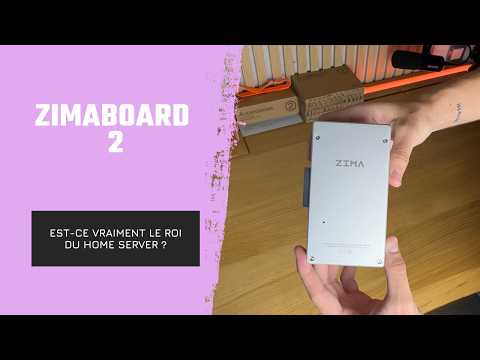
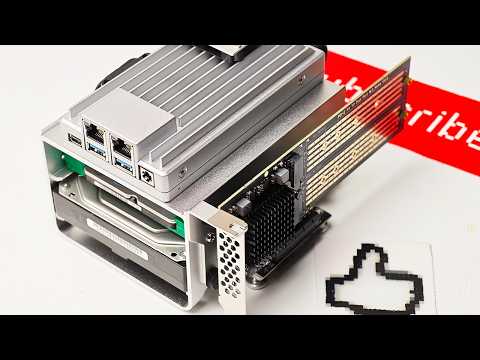
For that compact infrastructure role, a ZimaBoard 2 Mini Home Server offers an Intel N150 x86 platform, 8GB or 16GB memory configurations, dual 2.5GbE LAN, two SATA 3.0 ports, and PCIe 3.0 expansion. It can host Git, databases, containers, development services, backups, and small CPU-based AI experiments, while larger models or sustained GPU work should move to an appropriately sized accelerator or separate compute node.

The product does not replace workload planning. Choose the memory configuration, working storage, and backup destination from the projects the student will actually run. Do not purchase a GPU, multi-node cluster, or large storage array until a measured workload identifies a continuing role for it.
Expand Only When a Measured Learning Need Appears
Expansion should add a new role or remove a demonstrated bottleneck. Add faster working storage when builds, databases, or model loading are consistently storage-bound. Add memory when simultaneous required services create verified pressure. Add a second compute node when destructive experiments need isolation or AI workloads repeatedly interrupt infrastructure services. Add a larger storage system when datasets and semester archives outgrow the two-drive role.
The broader homelab hardware planning guide can support that later decision. The student lab is already sufficient when it reliably supports current coursework, one repeatable application stack, one bounded AI experiment, and a tested recovery path.
Do not expand when the reason is merely that another homelab has more nodes, faster networking, or a larger dashboard. If the new component has no named workload, data path, owner, validation test, or shutdown condition, it adds maintenance without adding education.
Student Homelab Completion Checklist
- The first-semester learning outcomes are written and testable.
- The room, power, and school network rules have been checked.
- The laptop, server, and backup destination have separate roles.
- The server has a predictable local address and documented access path.
- Normal users and administrative permissions are separated.
- One project can be cloned, built, tested, and deployed from its repository.
- Containers use explicit networks and persistent data paths.
- Database state can be exported and restored.
- The local AI task has resource, privacy, accuracy, and stop boundaries.
- Coursework, application state, models, caches, and backups are separated.
- At least one complete project has been rebuilt from documentation.
- Future expansion requires a measured recurring need.
Student Homelab FAQ
Is a homelab useful for computer science students?
Yes, when it supports defined practice in Linux, networking, Git, containers, databases, deployment, security, or recovery. It is less useful when it becomes a collection of applications that the student cannot explain, reproduce, or restore.
Can a student build a homelab with an old laptop?
Yes. An old laptop can run Linux, Git, containers, small databases, and lightweight web services if its storage, cooling, battery, and network connection remain safe and reliable. Replace it when hardware faults or unsupported software make the learning environment unstable.
How much RAM does a beginner student homelab need?
Size memory from the required concurrent workload rather than a universal number. A few small containers need much less memory than several virtual machines or a local language model. Measure normal use and leave enough headroom for the operating system, updates, and recovery operations.
Can I run a homelab in a college dorm?
Only if residence policies allow the equipment and network behavior. Ask whether servers, personal routers, device-to-device connections, and inbound access are permitted. When they are not, keep the server at home or use an approved isolated local arrangement.
Do I need a GPU for a student AI homelab?
No. A student can learn inference APIs, prompting, embeddings, evaluation, and application integration with a small CPU-compatible model. A GPU becomes relevant when a measured model, response-time target, or course project exceeds the CPU and memory boundary.
Should students use containers or virtual machines?
Use containers for lightweight application packaging and repeatable services. Use virtual machines when the exercise requires a separate operating system, stronger isolation, kernel-level work, network appliances, or destructive security testing. Many first labs need containers but not a full VM cluster.
Should a student self-host Git instead of using GitHub or GitLab?
A private Git service is a valuable infrastructure exercise, but it should not replace the platform required for class submissions or collaboration. Keep an independent backup or mirror so a failed homelab does not make a project inaccessible before a deadline.
How can a student access the homelab away from home?
Use an authenticated private access method approved by the network owner. Remote access should expose only the required services and should have a documented recovery path. Do not forward every management or application port directly to the public internet.
What student homelab projects look good in a portfolio?
Choose projects that demonstrate a complete engineering path: documented requirements, version-controlled code, automated tests, deployment, permissions, monitoring, backup, and recovery. A small service that can be rebuilt and explained is stronger evidence than a large dashboard copied from a tutorial.
How do I keep a homelab from interfering with schoolwork?
Keep graded files and required tools on the laptop or another dependable path, separate experiments from persistent services, schedule updates away from deadlines, and maintain an independent backup. The lab should be disposable enough to rebuild without blocking an assignment.

Recommended products

Zima Campaign Hub
More to Read

How Giorgio Cappello Di Paglia Tests Gaming Like It Is 1997 on ZimaBoard 2
Giorgio Cappello Di Paglia uses ZimaBoard 2 and Batocera to ask whether modern players can still adapt to games designed like those released in...
How YOTECH Evaluates ZimaBoard 2 as a Compact Home Server
YOTECH examines ZimaBoard 2 as a compact home-server platform, covering its aluminum passive-cooling enclosure, included cables, optional fan, metal drive rack, SATA storage, dual...
How Arthur From Hobby Support Runs Home Network Services on ZimaBoard 2
Arthur from Hobby Support Int. assembles a ZimaBoard 2 home server with SATA storage, active cooling, and PCIe expansion, then explores how ZimaOS simplifies...


