
What Is the Immich Data Path, and When Does It Matter?


The Immich data path connects clients, processing services, database records, and media storage; it is not simply the folder containing photos.
A home server can accept a phone upload quickly while opening the resulting photo slowly, even when both actions use the same app. Those actions cross different dependencies and may read different files. Mapping the operation first helps explain why a faster network link, another ML machine, or a relocated directory might change one experience without improving the others.
The Upload Path Ends Before Every Feature Is Ready
The upload path begins with a client that can access the selected original and ends with the server accepting the asset and its associated state. Authentication, transfer conditions, writable media storage, and application recording all participate. Background preparation then creates outputs needed by other features, so the end of transfer is not the end of processing.
A private phone backup needs verification beyond a finished counter: representative originals should open from the server with expected dates and content. That check distinguishes a remote library copy from a photograph the mobile device is merely displaying locally. It also prevents a local cached image from disguising an incomplete server-side operation.
Name the endpoint when timing this path. Seconds until upload acceptance, seconds until a preview opens, and seconds until semantic retrieval succeeds measure different outcomes. A result labeled only upload speed cannot establish when the whole household collection becomes browsable, searchable, or independently protected.
Background Work Uses More Than the ML Endpoint
After acceptance, media workers prepare derivatives and other services supply analysis results. The branches share assets and application state, but they do not all run inside the machine-learning service. This matters when a server owner tries to improve performance by moving only one container to another machine.
Remote thumbnail processing requires a different dependency arrangement from a remote ML endpoint. A maintainer discussion explains that additional server workers need access to the media filesystem and supporting services. Its experimental configuration is not a safe public-network recipe; the architectural point is that thumbnail work has more shared-state dependencies than an isolated inference request.
Therefore, relocating ML can reduce local inference work without relocating original reads, derivative writes, or database queries. The remaining stages can set the new limit. A complete map identifies which machine performs each operation and which persistent state it must access, rather than treating offload as an all-purpose acceleration switch.
A Search Request Follows a Different Read Path
A search begins with a user request rather than a new original. Depending on the search mode, the server evaluates metadata, a visual representation, and the current access scope. Matching asset identifiers lead to media responses that still require reachable files. A successful database lookup and a successfully displayed photograph are separate steps.
Relational and vector queries can work together instead of treating visual similarity as the entire search. An engineering example built around Immich combines asset records, metadata, and embeddings. Its historical database extension is not current installation guidance, but the example demonstrates why ownership and other filters belong alongside similarity rather than after an unrestricted file search.
This distinction explains a useful observation: fast text results with slow image appearance point toward a later delivery or decode stage. Slow result selection with quickly loading known assets points earlier. Neither observation proves a cause alone, but each limits which part of the data path deserves measurement next.

A Mount Name Can Hide Another Network Hop
A container directory can look local while its backing storage is reached through another host or a userspace filesystem. The visible pathname describes where the application accesses data, not the physical latency, consistency behavior, or failure domain behind it. Mount mappings must therefore be interpreted alongside the actual storage service.
An Immich deployment using S3QL reported sensitivity to filesystem operations crossing userspace and a network connection. The operator placed compute and object storage close together to reduce that exposure. This is evidence about one explicitly remote storage design, not a claim that Immich natively stores every installation directly in S3.
The local-path explanation stops being sufficient when a dependency beyond the host participates in ordinary reads. Network outages, remote service delays, or mount failures can then interrupt work even if the application container remains healthy. A green process status cannot guarantee that every downstream file operation still reaches its destination.
Draw the Path Before Interpreting a Bottleneck
For each household action, write the starting client, required service, persistent state, and completion signal. Upload needs an accepted original; timeline browsing needs the expected display assets; semantic search needs usable representations and authorized lookup; recovery needs the protected originals and corresponding application state. These are overlapping paths, not interchangeable success checks.
The distinction between a remote ML endpoint and additional media workers is especially useful when choosing what to observe. If the proposed change moves inference only, measure inference completion separately from database response and thumbnail delivery. Otherwise, a faster substep may be credited with an improvement that the user-facing path never actually receives.
Use the map to select one test: a known upload, a known original download, a fixed query, or an isolated recovery check. Record which edge failed or slowed, then stop expanding the investigation once the evidence identifies the responsible dependency. The value of a data-path model is precise scope, not a larger diagram for its own sake.

Recommended products

Tech & AI HUB
More to Read
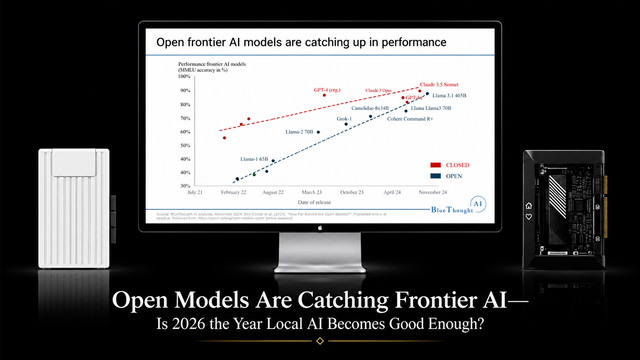
Open Models Are Catching Frontier AI—Is 2026 the Year Local AI Becomes Good Enough?
Open models are getting good enough for more local AI workloads, while frontier cloud models remain useful for the hardest reasoning and agent tasks.
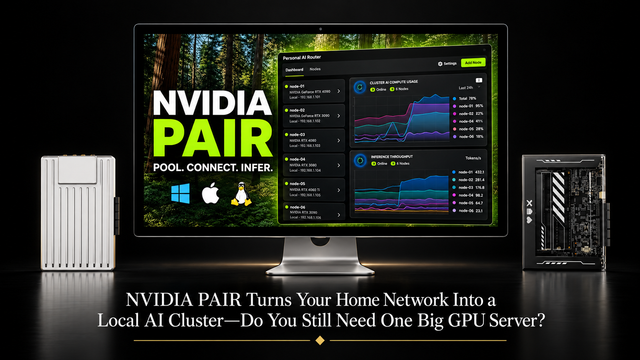
NVIDIA PAIR Turns Your Home Network Into a Local AI Cluster—Do You Still Need One Big GPU Server?
NVIDIA PAIR spreads local AI requests across multiple PCs, making compute more elastic while one home server can keep data and state persistent.
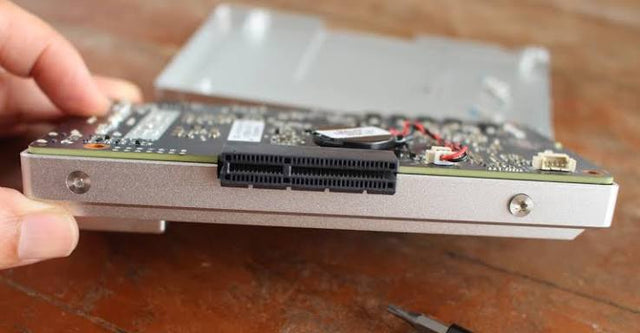
Why Does Immich Feel Faster on LAN Than on Remote Connections?
LAN requests usually take a shorter, lower-latency path. Remote access adds WAN capacity limits and may add DNS, TLS, proxy, VPN, or relay hops.


