
Why Do SMB File Changes Reach an Incremental Indexer in Bursts?


SMB file changes can reach an incremental indexer in bursts because writes and notifications are cached, coalesced, queued, and delivered across several boundaries.
An application may save files steadily while its SMB client holds writes under a lease, the server records directory changes, and the watcher waits on a long-lived notification request. The indexer can then debounce repeated events, scan a directory after overflow, or resume after reconnect. Each layer preserves eventual change while altering when individual events become visible downstream.
Client Caching Separates the Save Time From Server Visibility
SMB leases and opportunistic locks let clients cache reads, writes, or handles when sharing conditions permit. The application’s save can complete against a local cache before all data and metadata have been flushed to the server.
Microsoft’s description of SMB client caching explains that oplocks improve performance by allowing local buffering while coordinating access with the server. A lease break or close can flush several modifications together. This distinction remains visible during later household testing.
Editors also save through temporary files, rename, and replace operations rather than one in-place write. One human action may therefore create multiple protocol events, while multiple quick edits may collapse into one final server state.
CHANGE_NOTIFY Reports Directory Activity Through Bounded Requests
An SMB watcher issues a CHANGE_NOTIFY request for a directory and waits for the server to return changes or an error. The response has a finite buffer; rapid activity can fill it, and the client must issue another request after processing the batch.
The SMB protocol documentation for SMB change notifications defines completion filters, output buffers, cancellation, and notification behavior. These mechanics naturally deliver a list of changes rather than a perfectly timed stream of single edits. The intermediate result must remain inspectable before automation follows.
If the buffer overflows, the watcher may learn only that changes occurred and rescan the directory. Disconnects and reconnects create another blind interval that must be reconciled from current filesystem state. That boundary should be measured separately under realistic operating conditions.
The Indexer Intentionally Debounces and Batches Expensive Work
Immediate parsing after every write would read half-written files and repeatedly embed the same document. Indexers commonly wait for a quiet period, deduplicate paths, bound concurrency, and batch database or vector-index commits. The practical consequence appears when several sources compete for limited context.
Operational documentation for SMB notification observation shows how SMB2 CHANGE_NOTIFY requests can be watched and interpreted at directory scope. An indexer layered above that interface still chooses its own scheduling and stability rules. This dependency should remain explicit in the final interface.
The failure boundary is treating burst delivery as data loss. Burstiness is acceptable when every final file version is indexed within the freshness target. Missing renames, overflow without rescan, or a permanently stale path is a correctness failure and needs sequence-aware reconciliation.

Trace One Edit From SMB Flush to Index Commit
Generate timestamped create, append, rename, replace, and delete operations at slow and rapid rates. Record application save, client flush, server close, lease break, CHANGE_NOTIFY response, overflow, reconnect, watcher queue, debounce deadline, parser start, content hash, and active index commit.
Compare event processing with incremental change capture. Force a notification overflow and network reconnect, then verify that reconciliation discovers the same final filesystem state as a clean continuous run. The result must therefore be checked against the original evidence.
Pass when bursts preserve final-state correctness and meet the declared freshness window. Tune debounce and batch size only after separating client flush delay, SMB notification delay, rescan time, and indexer backpressure; faster polling cannot repair a broken reconciliation path.

Recommended products

Tech & AI HUB
More to Read
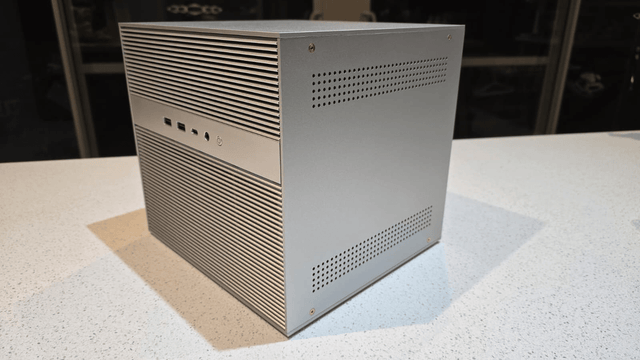
Why Does OCR Miss Faint Text After a PDF Is Recompressed?
Learn how PDF recompression changes faint pixels, why viewers can hide the loss, and how to test resolution, contrast, codec, and OCR preprocessing.
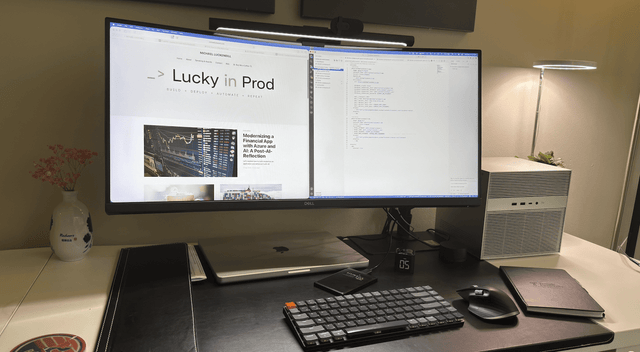
Why Does Local AI Latency Oscillate With a Home Server Fan Curve?
See how heat, fan control, clock limits, sensor lag, and workload timing create periodic local AI latency—and how to prove the relationship.
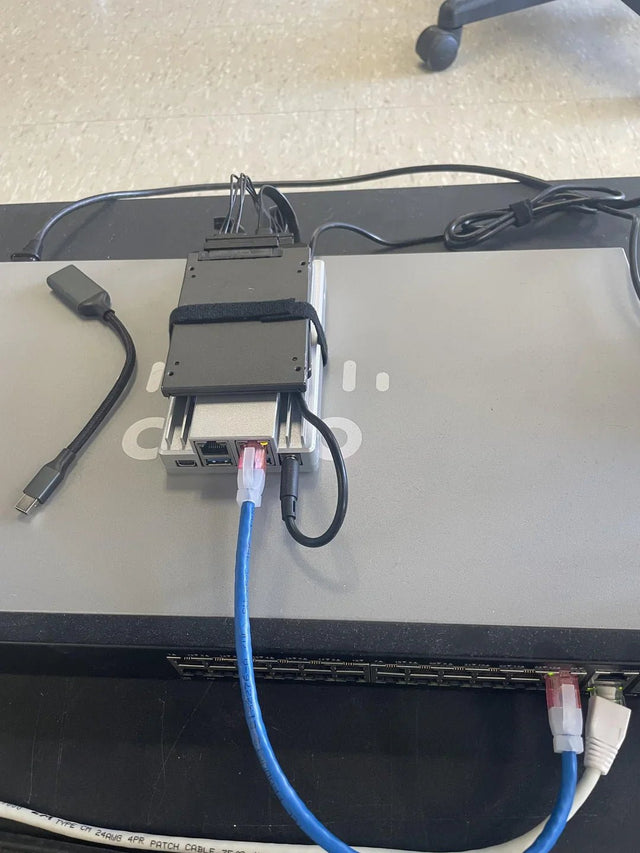
Why Does Media Indexing Heat a NAS More Than a Sequential Backup?
Learn why small-file I/O, codecs, thumbnails, metadata, databases, and AI inference create more component-wide heat than sequential copying.


