
Why Does Media Indexing Heat a NAS More Than a Sequential Backup?


Media indexing can heat a NAS more than sequential backup because it activates CPU, storage, memory, databases, and accelerators with less idle time.
A backup often reads large extents in order and writes them in order, allowing disks, caches, and DMA engines to work efficiently. Media indexing opens many files, reads headers and scattered frames, decodes codecs, computes hashes, generates thumbnails, updates databases, and may run face or object models. Lower total throughput can therefore consume more power per processed byte.
Metadata Walks and Small Files Replace Efficient Sequential I/O
Indexers traverse directories, stat entries, open files, read small regions, close them, and update progress records. Mechanical disks seek between metadata and content; SSDs handle randomness better but still execute more commands and controller work per useful byte.
The small-file metadata overhead study shows why small-file workloads become dominated by metadata operations rather than bulk transfer. That contrast explains how an indexer can keep the storage stack busy without approaching sequential bandwidth. This distinction remains visible during later household testing.
A backup may also scan metadata, but once it selects a large file it can stream long extents. Read-ahead and queue merging work well, reducing CPU wakeups and device overhead for each gigabyte moved. The intermediate result must remain inspectable before automation follows.
Media Decoding and Derived Assets Add Compute to Every File
Reading bytes is only the start. Photo orientation, RAW decoding, video keyframe seeking, audio probing, perceptual hashing, thumbnail scaling, and transcoding exercise vector units and codecs, while AI classification can use an iGPU, GPU, or neural accelerator.
The media indexing jobs project documents a media-analysis pipeline that extracts metadata and creates thumbnails before higher-level recognition. It illustrates why searchable media requires work absent from a byte-for-byte backup. That boundary should be measured separately under realistic operating conditions.
Decoded images are much larger than compressed files and create memory traffic. Database and thumbnail writes also turn a read-heavy scan into a mixed workload that prevents disks and processors from settling into one efficient operating mode.
Heat Reflects Power Distribution, Cooling, and Duration
Temperature is not a direct work counter. The same watts can produce different sensor readings depending on fan curves, drive placement, enclosure airflow, ambient temperature, and whether CPU and disks heat the chassis at the same time.
A review of server power and thermal measurement explains how server power becomes heat that cooling systems must remove. Component utilization and airflow therefore matter more than transfer-rate graphs alone. The practical consequence appears when several sources compete for limited context.
The failure boundary is concluding that indexing is less efficient from one temperature sensor. A backup may move far more data and consume more total energy while holding a lower peak temperature. Compare energy, duration, component power, and work completed.

Compare Energy per Indexed and Backed-Up Gigabyte
Run indexing and backup separately from the same thermal baseline. Record wall power, CPU package power, accelerator use, disk activity, IOPS, throughput, temperatures, fan speed, files processed, bytes read and written, thumbnails, hashes, database commits, and model inferences.
Map indexer stages with media indexing workflow, then repeat with thumbnails, video probing, and AI jobs disabled one at a time. Preserve file set, ambient temperature, enclosure, and cache state across comparisons. This dependency should remain explicit in the final interface.
Report joules per file and per source gigabyte alongside peak temperature. If random metadata dominates, batch and schedule scans; if decode or AI dominates, cap workers; if airflow dominates, improve cooling without mistaking a lower temperature for less computation.

Recommended products

Tech & AI HUB
More to Read
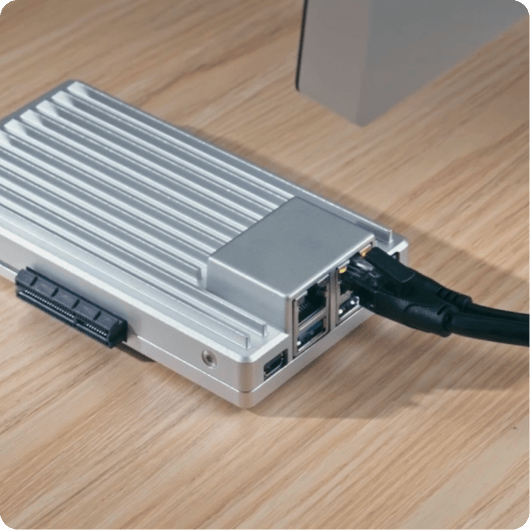
Why Do SMB File Changes Reach an Incremental Indexer in Bursts?
See how SMB write caching, leases, CHANGE_NOTIFY, buffer overflow, reconnect, and indexer batching reshape steady edits into bursty ingestion events.
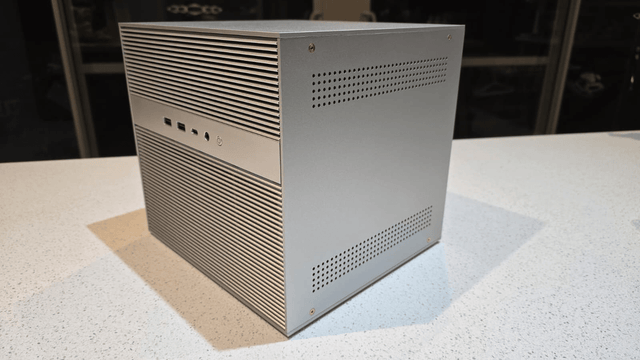
Why Does OCR Miss Faint Text After a PDF Is Recompressed?
Learn how PDF recompression changes faint pixels, why viewers can hide the loss, and how to test resolution, contrast, codec, and OCR preprocessing.
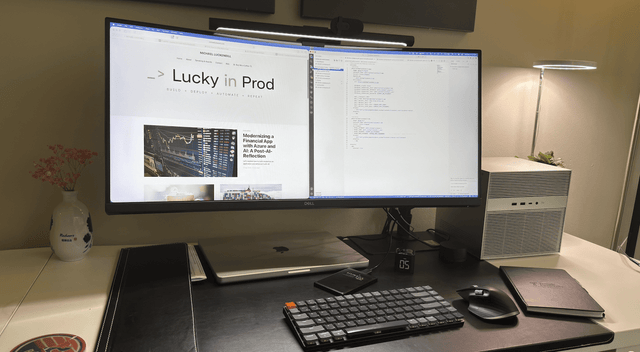
Why Does Local AI Latency Oscillate With a Home Server Fan Curve?
See how heat, fan control, clock limits, sensor lag, and workload timing create periodic local AI latency—and how to prove the relationship.


