
What Are the Practical Limits of Home Assistant on Consumer Hardware?


Home Assistant runs well on consumer hardware until sustained compute, memory pressure, storage latency, integration delays, or recovery time exceed the household target.
There is no universal entity or automation ceiling because a thousand quiet entities may cost less than a few camera streams, noisy sensors, or blocking cloud integrations. Modern mini PCs can provide ample headroom for ordinary local control, yet consolidation changes the result: databases, media, voice, AI, backups, and cameras all compete with Core. The practical limit is therefore an observed service boundary, not a product-class label.
Ordinary Event-Driven Control Is Usually Modest
Lights, switches, climate entities, schedules, and selective sensors spend much of their time waiting. Their work arrives in short bursts, allowing an efficient consumer CPU to return to idle when integrations avoid blocking calls.
Households reporting more than one hundred devices provide evidence that large household device counts can remain workable, while also showing that device mix and integrations matter more than a headline count.
The baseline changes with event rate. A rapidly updating power meter or broad template can create more work than dozens of dormant switches, so inventory size should never be treated as a direct CPU formula.
Storage Often Becomes the First Persistent Bottleneck
Recorder writes, history queries, retention maintenance, logs, and backups need consistent latency. Slow flash, a nearly full SSD, or a busy shared volume can delay the event loop indirectly even while CPU and memory graphs appear comfortable.
A hardware recommendation analysis emphasizes storage reliability and workload sizing, supporting the view that storage and workload sizing includes I/O characteristics rather than processor cores alone.
More RAM can improve caching but cannot make a failing device durable. The hardware boundary is crossed when queue depth and control latency rise together during ordinary Recorder or backup work.
Cameras, Voice, and AI Create a Different Workload Class
Video decoding, object detection, speech recognition, synthesis, and language models perform sustained or bursty compute far beyond a typical automation. They may also need accelerators, large memory allocations, and continuous network or storage bandwidth.
Measured comparisons between Raspberry Pi and NUC installations show why complete-system workload should include the complete system and its attached services rather than rely on nominal processor power.
These features can be separated onto another host while Home Assistant retains orchestration. That design preserves low-latency control when a heavy inference or media job saturates its own machine.

Operational Limits Appear Before Absolute Failure
A server may still respond while dashboards lag, history queries time out, updates take too long, backups overlap, or restarts exceed the acceptable outage. Thermal throttling and memory swapping can make those symptoms intermittent.
A consumer-hardware comparison frames Raspberry Pi and mini-PC choices around workload, expansion, and efficiency, illustrating that conditional hardware limits is conditional rather than one permanent device ranking.
The model stops at software defects and external outages. A broken integration, cloud rate limit, or radio interference can violate service targets without exhausting consumer hardware, so capacity claims require correlated resource saturation.
Define and Exercise the Household Limit
Set targets for p95 local-action latency, dashboard load, restart duration, backup completion, free-space reserve, and recovery time. Measure them during the busiest ordinary hour plus an update, backup, and one intentionally unavailable dependency.
The observable capacity limits lists signs that the current server has been outgrown, translating resource graphs into user-visible and recovery consequences.
Keep the hardware while every target passes with headroom. Separate one heavy service when it alone causes failure; add storage or memory when the correlated resource is limiting; replace the host only when the core workload repeatedly misses targets after configuration noise is controlled.

Recommended products

Tech & AI HUB
More to Read
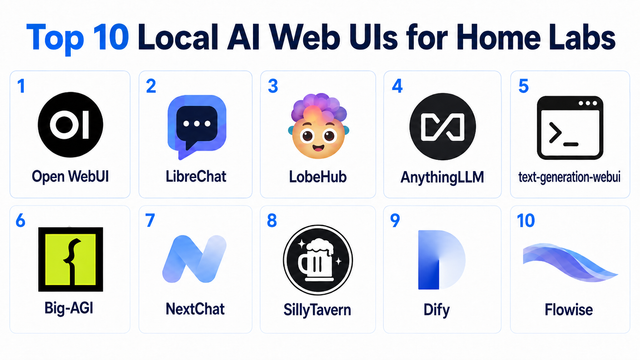
Top 10 Local AI Web UI for Home Labs In 2026
Compare 10 self-hosted local AI web UIs for home labs, covering Ollama support, RAG, agents, multi-user access, setup effort, and ideal use cases.
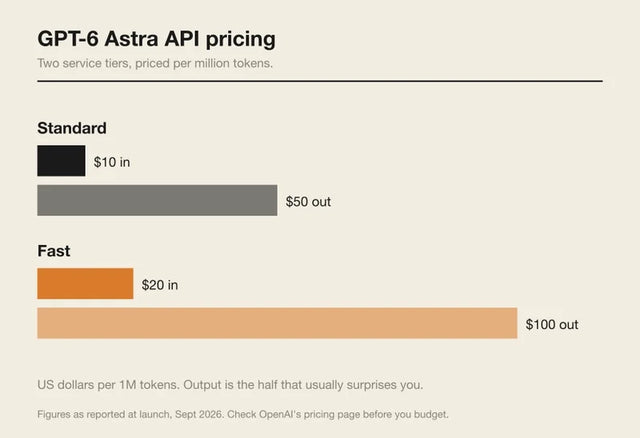
How Much Does GPT-6 Astra Cost Over Time? When Cloud AI Makes Sense vs Local AI
A practical GPT-6 Astra cost guide covering token usage, long-term AI workloads, cloud vs local tradeoffs, and why hybrid AI infrastructure matters.
GPT-6 Astra vs Local AI: Which Parts of an Agent Should Stay on Your Home Server?
GPT-6 Astra can stay in the cloud while your home server keeps files, memory, RAG, tools, permissions, and durable agent state local.


