
Why Does a Home Server Feel Quieter at Night Even at the Same Fan Speed?


A home server can feel quieter at night because perceived loudness depends on ambient masking, room activity, attention, and sound spectrum—not fan RPM alone.
A fan may remain at 900 RPM from afternoon to midnight, yet its sound seems to fade after appliances stop and doors close. The acoustic output may be similar, but the listener, background spectrum, and transmission path have changed. An RPM counter measures rotation, not the complete sound reaching an ear at a particular listening location.
Background Sound Changes What the Ear Can Separate
One sound can make another less audible when their frequencies overlap. Daytime HVAC, traffic, conversation, and appliances may mask broadband fan noise, while a very quiet room can expose tones. Night can feel quieter overall yet make one whine more noticeable, so the direction is not universal.
An acoustics explanation describes auditory masking as one sound raising the hearing threshold for another. Perception depends on the masker’s level and spectrum, not only the fan source.
Attention also changes judgment. During active daytime tasks, steady noise may fade from awareness; in a quiet bedtime context, a small tonal component can become salient. Conversely, closing a room or moving farther away at night can make the server subjectively quieter despite unchanged RPM.
Equal RPM Does Not Guarantee Equal Acoustic Output
Fan sound depends on blade loading, turbulence, bearings, inlet restriction, and vibration transmitted to panels. Air density and nearby airflow can shift slightly, while disks or power-supply fans may change independently. A single motherboard RPM value observes only one rotating component.
A discussion of sound spectrum explains that pleasantness and audibility depend on frequency content as well as overall level. Two sounds with similar measured level can be judged differently.
Room boundaries matter too. Open doors, curtains, soft furnishings, and listening position alter reflection and transmission. A few decibels at the listener can occur without any change in the reported fan speed, especially when a cabinet or wall blocks the direct path.
Where Perception Is Not the Whole Explanation
The masking explanation fails if a microphone at a fixed position shows a repeatable level or spectrum change. Temperature control may hold one fan steady while another fan, disk, coil, or workload changes. Bearings can also produce intermittent tones at constant speed.
Guidance on background noise levels notes that background levels must be measured when evaluating a quieter source. Subjective comparison alone cannot separate source change from environment change.
The mechanism also stops applying when the monitoring timestamp and listening time are not aligned. An averaged RPM value can hide short ramps, and “same speed” may refer to a target rather than actual tachometer samples. Noise is not automatically explained by the visible fan metric.

Record Sound and Context at the Same Position
Place a calibrated or consistent microphone at one fixed listening position and record one-minute samples by day and night. Log fan tachometers, temperatures, CPU and disk activity, door state, HVAC, and background level. Compare one-third-octave or spectral plots as well as overall level.
Run a repeatable home server workload load to hold server heat production steady while comparing room conditions. Do not change fan curves during the trial.
If fan-band sound stays constant but background falls, the masking context changed. If a tone or level moves with another device, identify that source. If only subjective ratings change, repeat blind samples at matched playback level before modifying cooling based on perception alone.

Recommended products

Tech & AI HUB
More to Read
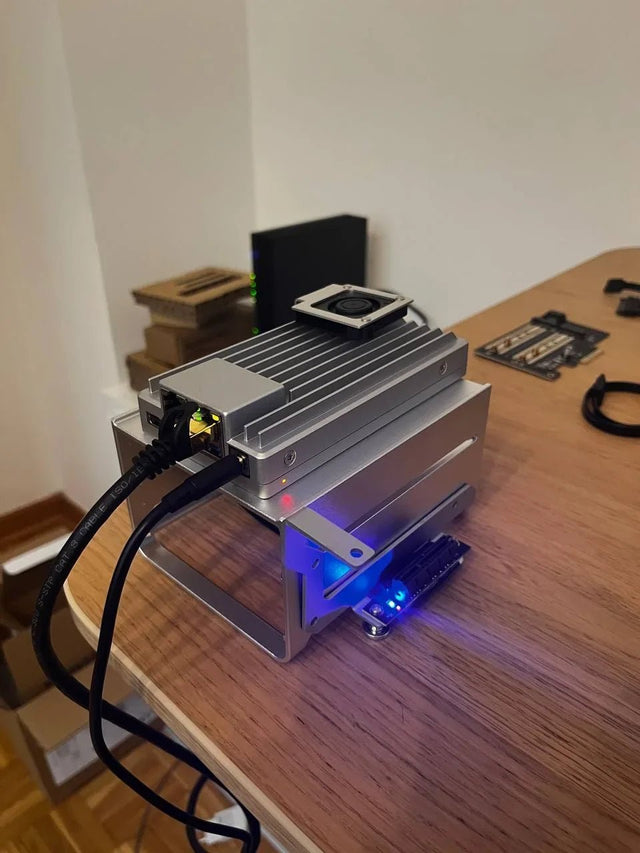
Why Does Local AI Heat Feel Different in an Open Shelf Than in a Closed Cabinet?
Trace heat generation, air exchange, and recirculation across open and enclosed placements, then measure the variables that distinguish them.
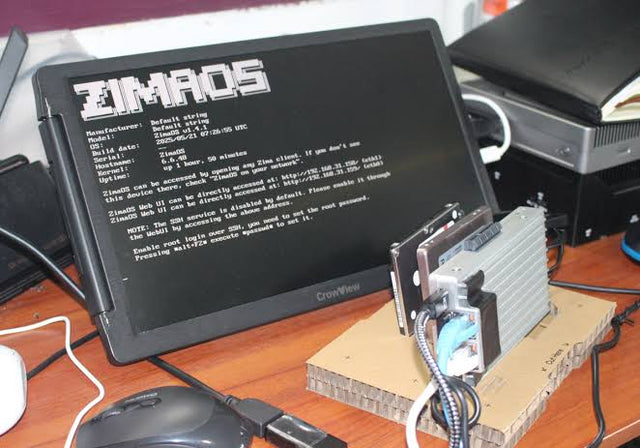
Why Do Deduplicated Backups Look Smaller Than Their Restore Footprint?
See how deduplication changes stored bytes but not restored meaning, why sparse and compressed files complicate totals, and how to size a restore test.
Why Does Storage Usage Look Different Between the NAS UI and the Filesystem?
Learn what each storage number measures, why valid totals diverge, and how to reconcile capacity without deleting data based on the wrong counter.


