
What Causes Gaps in NVR Events While Continuous Recording Still Works?


NVR event gaps occur because continuous recording and AI event generation follow separate pipelines with different streams, queues, thresholds, and failure modes.
A home NVR may save uninterrupted camera footage while its event timeline skips a person, car, or package. Recording can remux the camera stream directly, whereas detection decodes frames, applies motion gating, runs inference, tracks objects, and writes event metadata. Any overloaded or filtered stage can lose the event without damaging the stored video used for later review.
Recording Can Succeed Without the Detection Stream
Many NVRs record a high-resolution stream while analyzing a lower-resolution substream. The main stream can remain healthy when the detect stream drops, changes resolution, lacks keyframes, or fails to decode. This distinction remains visible during later household testing.
A description of the separate NVR pipelines separates camera input, decoding, detection, and recording roles. The signature is complete clips paired with errors or frame loss on the analysis input only. The intermediate result must remain inspectable before automation follows.
If later playback of the recorded interval contains the object, that proves capture but not live detector access. Compare stream-specific frame counters rather than one camera-online indicator. That boundary should be measured separately under realistic operating conditions.
Motion, Inference, and Tracking Can Suppress an Event
Motion masks, zones, object filters, confidence thresholds, sampling rates, busy accelerators, and full inference queues can prevent a candidate from becoming a tracked event. Brief or stationary objects are most sensitive to timing. The practical consequence appears when several sources compete for limited context.
The object detector scheduling architecture shows how detector scheduling and device choice sit between decoded frames and accepted object results. The diagnostic signature is decoded frames without timely detections or tracks. This dependency should remain explicit in the final interface.
Replay the same clip offline through the frozen detector. If offline detection succeeds, live scheduling or gating is responsible; if it fails identically, visual conditions and model thresholds are stronger causes. The result must therefore be checked against the original evidence.
Event Metadata Can Be Lost After Detection Succeeds
An object may be detected and tracked while event creation, thumbnail generation, database commits, message delivery, or retention cleanup fails. The recording remains because its writer uses another queue and storage object. This distinction remains visible during later household testing.
The event metadata retention configuration distinguishes recording retention from event retention and alert or detection categories. This demonstrates why an absent timeline entry does not imply missing media bytes. The intermediate result must remain inspectable before automation follows.
The failure boundary is intentional filtering: a detection outside the required zone or below dwell time is not a pipeline gap. Verify the declared event rule before classifying the missing timeline item as data loss.

Follow One Missing Event Through Parallel Pipelines
For a known gap, record main and detect stream frames, decode errors, motion score, masks, zones, detector submissions, queue delay, inference result, track ID, event-state transition, database commit, thumbnail write, message publication, and recording segment timeline.
Use recording versus event analysis to confirm why recording and analysis are intentionally separated. Replay the stored clip offline, then compare live and offline outputs without changing thresholds. That boundary should be measured separately under realistic operating conditions.
Repair the earliest missing transition: detect stream, gate, inference, track, or metadata commit. Do not infer detector health from continuous recording, and do not lower thresholds when the event was detected but lost downstream. The practical consequence appears when several sources compete for limited context.

Recommended products

Tech & AI HUB
More to Read
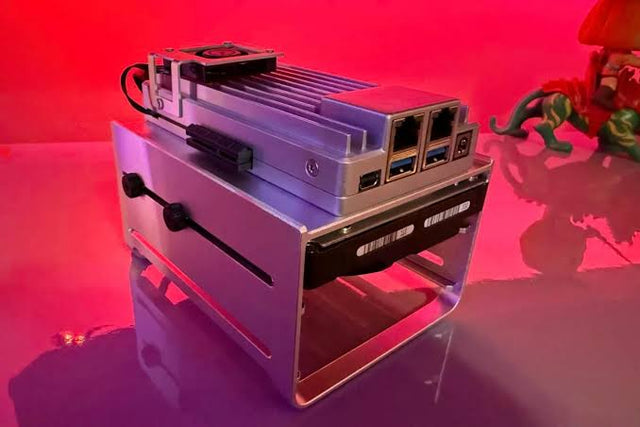
What Causes an AI Agent Planner to Repeat Steps It Already Completed?
Trace repeated planner steps through state persistence, completion evidence, tool-result parsing, context retention, retries, replanning, and stop conditions.
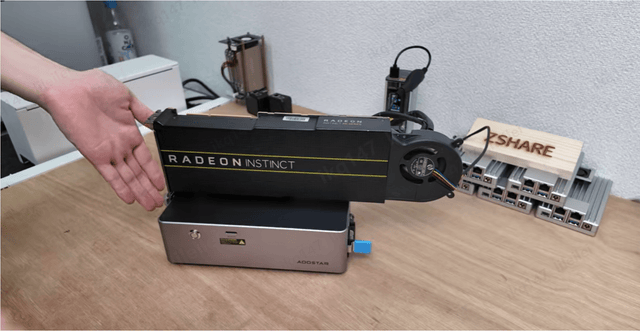
What Causes Permission Errors Only Inside AI Agent Subprocesses?
Compare parent and child identity, filesystem view, environment, capabilities, security policy, and executable path to diagnose subprocess-only denial.
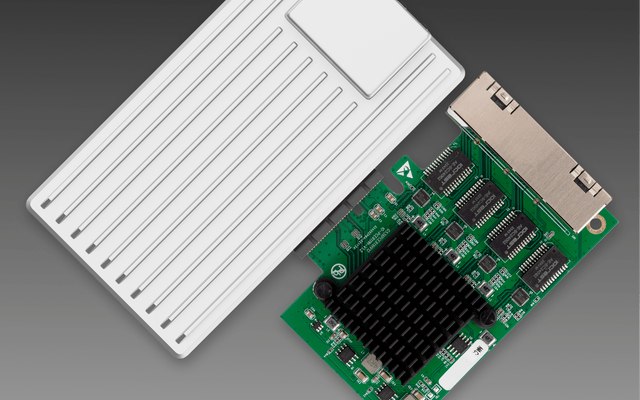
What Causes CPU Saturation When Hardware Transcoding and Video AI Run Together?
Trace CPU saturation across codec offload, pixel conversion, frame copies, AI preprocessing, audio, subtitles, storage, and process scheduling.


