
How Do Filesystem Change Notifications Drive Incremental AI Indexing?


Filesystem notifications drive incremental AI indexing by converting local file events into queued document updates instead of rescanning the entire NAS repeatedly.
When a household PDF is saved, the operating system can report creates, writes, moves, closes, or deletes almost immediately. An indexer normalizes those noisy events, waits for the file to stabilize, resolves its identity and permissions, then schedules parsing and embedding. The notification is a trigger, not proof that the final document is ready or that no event was missed.
Kernel Events Identify Candidate Paths and Operations
Filesystem watchers subscribe to directories and receive events when entries are created, modified, moved, closed, or removed. The indexer maps those operations to ingest, refresh, rename, or tombstone jobs rather than reading every file on every cycle.
A practical explanation of filesystem event stream describes supported event types and important limitations, including network filesystems and changes that may not surface locally. The event stream is therefore a low-latency hint tied to a particular filesystem view.
A write can emit several notifications, and temporary files may be renamed into place. Scheduling expensive OCR on the first event wastes work and can index incomplete bytes. This distinction remains visible during later household testing.
Debouncing and Stable Identity Convert Noise Into One Update
A queue coalesces repeated writes within a time window, checks that size and modification state have settled, then fingerprints content. Rename cookies, inode identity, or hashes help connect an old path with a new path without treating the file as unrelated content.
An filesystem watch design overview explains why earlier notification designs required costly descriptors and affected unmount behavior. Modern watchers reduce that overhead, but large trees still need explicit watch management and overflow handling. The intermediate result must remain inspectable before automation follows.
Path identity alone is insufficient on a shared NAS because names can be reused and files replaced atomically. The job should carry content identity, observed version, and source event position so stale work cannot overwrite a newer index record.
Overflow and Remote Changes Require Reconciliation
Event buffers can overflow, watchers can restart, and SMB or NFS changes made by another client may arrive late, coalesce, or remain invisible to a local watcher. A durable cursor or change journal helps where available, but periodic inventory remains necessary.
Microsoft’s account of cross-platform change notifications shows that operating systems expose analogous change mechanisms while behavior depends on the filesystem boundary. Cross-platform indexers must normalize semantics rather than assume every watcher reports identical operations. That boundary should be measured separately under realistic operating conditions.
The failure boundary is using notifications as a complete source of truth. After overflow, downtime, mount replacement, or remote mutation, only a reconciliation scan against durable file identity can prove the index and NAS agree.

Test the Event Pipeline With a Mutation Matrix
Perform create, append, rapid multi-save, atomic replace, rename, move across watched directories, delete, permission change, temporary-file save, watcher restart, queue overflow, and remote SMB edit while recording event order and job state. The practical consequence appears when several sources compete for limited context.
Compare the observed bursts with SMB indexing event bursts. Verify that each final file version produces one current indexed document, old paths become tombstoned, and missed events are repaired by reconciliation. This dependency should remain explicit in the final interface.
Tune debounce from actual application save patterns, not one editor. Preserve a periodic scan and durable job ledger so low-latency notifications improve freshness without becoming the only mechanism protecting index correctness. The result must therefore be checked against the original evidence.

Recommended products

Tech & AI HUB
More to Read
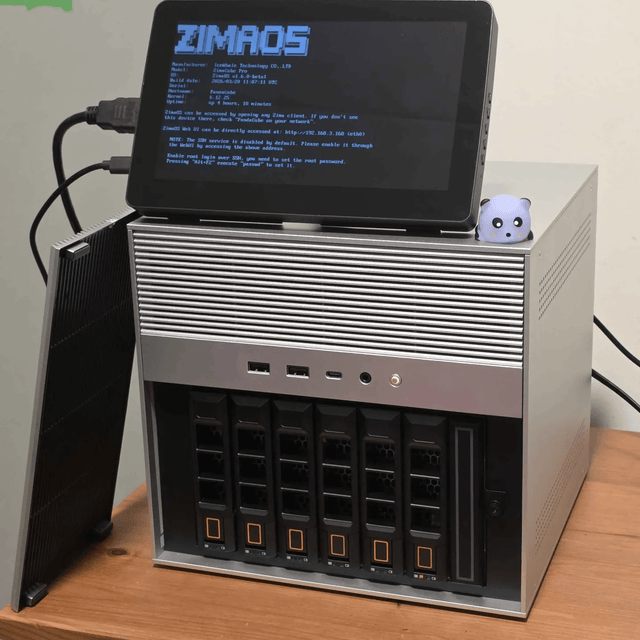
What Is Embedding Drift, and When Does a Private Search Index Need Rebuilding?
Decode model, preprocessing, corpus, and query drift; distinguish monitoring from incompatibility; and decide when a private index needs rebuilding.

What Is Tokenizer Compatibility, and Why Can It Break Model Switching?
Decode vocabulary identity, special-token semantics, chat templates, cached tokens, adapters, and compatibility checks for local model switching.
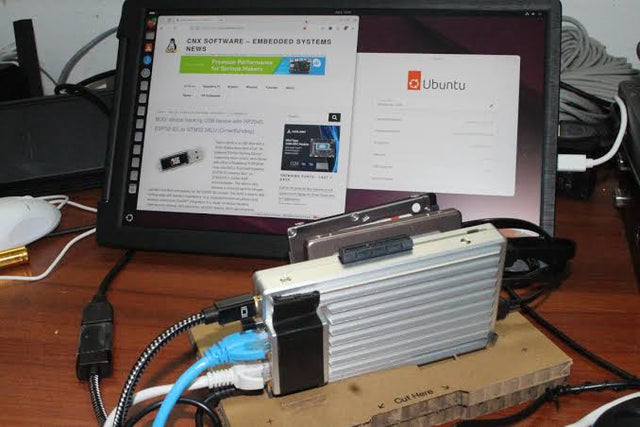
What Is Model Residency, and When Should a Local AI Service Keep Weights Loaded?
Decode weight residency, cache levels, cold starts, eviction, multiplexing, memory pressure, and when a home AI service should stay warm.


