
AI Video Quality Is Improving. How Should Creators Protect Their Original Media?


A University of Hong Kong study released on October 26 argues that the safety and risk-control capabilities of the evaluated video models lag behind their creation performance. The useful lesson for a creator is to assess visual quality, factual integrity and the handling of original media as separate dimensions.
This guide separates the published event from practical implementation. It explains what the source establishes, where the evidence stops, and how a private-file workflow can be evaluated without assuming that an impressive model or a newer server removes the need for bounded access and review.
| Decision | Verified fact or practical boundary |
|---|---|
| Evidence | HKU reports an assessment of more than ten mainstream video models. |
| Scope | Study conclusions apply to its evaluated tasks and model versions, not every future system. |
| Creator decision | High visual quality does not establish consent, authenticity or fitness for a client deliverable. |
| Storage role | Keep original footage, transformation records and reviewed exports recoverable. |

What Does the Study Actually Establish?
The university’s report describes a gap between generation capability and risk-control performance across its evaluated models. That is a reason to examine the study design, task coverage and model versions, not to assign an unsupported safety score to a service the study did not test. Distinguish the university’s findings from your own production acceptance criteria and avoid treating a ranking as an approval to publish any output.
A professional workflow has several separate questions. Does the output follow the requested style? Does it preserve the identity and actions of the source? Is the team allowed to upload and transform the source material? Can viewers distinguish a reconstruction from a record of an actual event? A model may succeed at one and fail at another. Reviewing only color, motion and sharpness leaves those failures invisible.
Why Should Originals and Generated Versions Be Stored Separately?
An original camera file is a source record; a generated variant is a transformation. If both share the same ambiguous filename or an editor overwrites the source, a later reviewer may be unable to establish what changed. Keep originals immutable to ordinary editing accounts, place generated work in a separate directory and retain an association between each export and its inputs.
For a family archive, this prevents a restored or animated version from quietly replacing the historical recording. For a client project, it helps explain exactly which image or voice was changed and which version was approved. A storage snapshot is useful for recovery, but it does not itself prove provenance or consent. Combine recoverable copies with a clear project manifest, rights records and a human decision about where synthetic material may be used.
What Should You Check Before Uploading Private Footage?
Inspect the service’s current retention, training-use, deletion and account-access terms. Obtain the permissions required for the particular project rather than assuming ownership of a storage device gives authority over every person represented in the footage. Restrict the upload folder to the selected assets, and review whether audio, embedded metadata or background documents reveal information that the visible subject does not.
After processing, inspect the full output rather than only a thumbnail or highlight. Check identity continuity, inserted speech, labels, dates and transitions that could create a misleading sequence. Record unresolved questions and keep an approval state distinct from an export state. A file can be technically ready for download while still being unapproved for publication, and automation should not collapse those two stages into one button.
What Should You Measure Before Trusting This Workflow?
Build a review checklist around the intended publication. For an interview reconstruction, inspect identity, speech and sequence of events. For a product clip, inspect labels, physical features and any implied performance claim. For a family restoration, check whether the generated version might be mistaken for an untouched historical record. These questions differ from motion smoothness or visual appeal, so record them as separate review dimensions.
Retain the test’s limits. A study of particular models and tasks can motivate scrutiny without establishing a universal score for every service. In your own evaluation, record the tool/version, source assets, requested transformation and reviewer observations. Count an unresolved identity or rights issue as unresolved rather than blending it into an aesthetic average. A beautiful result does not supply missing authorization or evidence about what actually happened.
How Do You Keep the Result Reviewable and Recoverable?
Make the archive distinguish the camera original, generated candidate, reviewed export and published version. Preserve the association between each derivative and its source, including relevant editing instructions and approval notes. If content credentials are supported, retain them and verify what they actually attest to. A provenance record can describe an asset’s history without proving that its depicted event is truthful or that every use is authorized.
Treat publication as a separate state transition from export. Require the responsible person to approve the exact media and accompanying description before it leaves the project workspace. Keep the original and approved version recoverable independently of the editing service. If an error is found later, you should be able to identify which delivered version is affected, reconstruct the transformation and locate the source without relying on an expiring cloud session.
How Can You Test the Workflow Before Using Important Files?
The following is an editorial validation protocol, not a claim that ZimaSpace has benchmarked the service. Run it with disposable or approved test data and keep the test conditions with the result.
- Define the media’s intended use and audience. Identify whether generated changes could alter a viewer’s understanding of a person, statement, event or product.
- Confirm the selected assets may be uploaded and transformed. Check current service terms and remove unrelated audio, metadata or background material where appropriate.
- Preserve the untouched original and create a working copy. Record input identifiers, the visible tool/version and requested transformation.
- Review the full output for identity, speech, labels and event sequence. Record visual quality separately from factual, consent and publication questions.
- Approve the exact export and accompanying description. Keep unapproved candidates distinct from deliverables and apply appropriate disclosure for the actual use.
- Retain a source-to-publication record and test recovery. Verify that the team can locate the original, accepted derivative and approval decision after the service session ends.
Where Does a ZimaOS Server Fit?
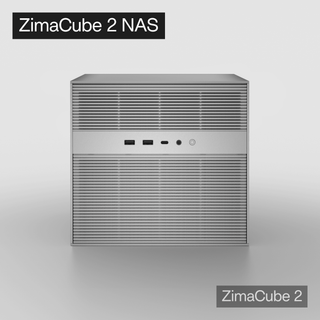
A ZimaCube 2 personal cloud NAS can provide a local storage and application layer when a project genuinely needs multiple drives, an SSD working tier or shared access to a growing archive. Choose hardware for retained source data, active services and backup policy. The product recommendation is architectural context, not evidence that this cloud model, preview service or research system runs locally on the NAS.
Separate inference from data custody. A hosted model may receive approved excerpts while the authoritative originals remain on the server. Optional local indexing, conversion or smaller-model services require their own memory and compute assessment. Keep a second recoverable copy outside the main device, and do not treat RAID or a successful upload as a complete backup strategy. A smaller existing server remains reasonable when it already meets the measured workload.
FAQ
Does the HKU finding apply to every video model?
The report concerns the models, versions and tasks it evaluated. Its findings should not be converted into an unsupported safety rating for an untested service or future release.
Does a NAS snapshot prove a video is authentic?
A snapshot can help recover a stored version. It does not by itself establish consent, factual truth or provenance. Keep source relationships, relevant rights records and review decisions as well.
Should a generated restoration replace the original recording?
Preserve the original and store the generated version as a derivative with a clear association. That keeps the historical source available and makes the transformation understandable to later viewers or reviewers.
Should I expose the whole private archive to an AI tool?
Only provide the material needed for the task through an appropriately restricted account or working directory. Check what the specific service uploads, logs and retains. A private storage location does not guarantee that a connected tool keeps processing local.
When does a larger NAS become useful?
When measured source-data growth, shared access, active applications or retention requirements justify the storage topology. It does not automatically resolve model access, unsupported runtimes, network upload limits or uncertainty in a research claim.
What is the stopping condition before production use?
Stop when you cannot establish the software/model identity, input authority, required feature availability or recovery path. Resolve those conditions first, then repeat the small test. Do not compensate for missing evidence by making a more confident recommendation.
Sources and Further Reading
Reporting checked on October 28, 2026. Product availability, access plans and security advisories can change. Upstream claims are attributed; workflow recommendations and architecture examples are editorial analysis, not measurements from a ZimaSpace hardware test.
Related guide: A Family Photographer's Setup for Phone Photos, Camera RAW Files, and Finished Albums.
Related guide: How to Separate Client Work, Personal Photos, and Long-Term Archive on One Server.
Related guide: The Photo Archive Setup That Survives a Laptop Replacement.

Recommended products
Tech & AI HUB
More to Read
AI Scientific Breakthroughs: Why Verification and Reproducible Records Matter
Understand AI research: claim to evidence with verified release context, practical workflow limits, private-file handling, review steps and realistic ZimaOS storage roles.
Google Genie 4 Explained: Interactive Worlds, Native Audio, and Creator Workflows
Understand Google Genie 4 with verified release context, practical workflow limits, private-file handling, review steps and realistic ZimaOS storage roles.
MAI Image 2.7 Explained: AI Photo Editing and a Recoverable Creative Workflow
Understand MAI Image 2.7 Preview with verified release context, practical workflow limits, private-file handling, review steps and realistic ZimaOS storage roles.


