
AI Scientific Breakthroughs: Why Verification and Reproducible Records Matter


OpenAI’s October 26 research announcement describes new mathematical, computer-science and physics results, alongside different approaches to external examination. The important distinction is between producing an argument, checking a formal artifact and reaching a shared scientific understanding of what has been established.
This guide separates the published event from practical implementation. It explains what the source establishes, where the evidence stops, and how a private-file workflow can be evaluated without assuming that an impressive model or a newer server removes the need for bounded access and review.
| Decision | Verified fact or practical boundary |
|---|---|
| Announcement | OpenAI describes results in harmonic analysis, computational complexity and quantum field theory. |
| Release strategy | The company describes different external collaboration and release arrangements for the three areas. |
| Evidence boundary | A company announcement is not a substitute for independent specialist examination. |
| Practical lesson | Preserve claims, source artifacts, verification conditions and review history separately. |

What Was Announced, and What Still Needs Examination?
OpenAI presents the materials as raw research output that academic communities can investigate, explain and contextualize. Its account distinguishes public AI-produced artifacts from external collaborations and cases where materials are being held while collaborators develop a release strategy. Report those stages separately. A reader should be able to tell whether a sentence describes a company claim, an available proof artifact or an independent conclusion.
The announced topics include local smoothing and related conjectures, a claimed refutation of the Exponential Time Hypothesis, and results concerning quantum field theory. They are not interchangeable claims about ordinary software performance. In particular, a claim about ETH should not be rewritten as proof that P equals NP or that a practical application suddenly becomes fast. Translating a theoretical result into usable algorithms and implementations requires additional work.
Does Formal Verification Mean Every Scientific Question Is Settled?
A formal proof checker can establish that an artifact follows from the definitions and assumptions encoded in its environment. That is a powerful and specific result. It does not eliminate the need to inspect whether those definitions represent the intended informal problem, whether imported assumptions are appropriate, or how the result connects to prior work. Preserve the exact dependency versions and verification commands so that another researcher can examine the same object.
For an AI-assisted research project, separate the generated explanation from the machine-checkable artifact and from the human interpretation. A plausible narrative may omit a condition that is explicit in a formal statement. Conversely, a checked lemma may be correct but narrower than a headline suggests. The review process should connect these layers rather than using the existence of one layer to silence questions about the others.
What Can a Small Team Learn About Research Records?
Keep a claim ledger: the statement being investigated, supporting artifacts, assumptions, attempted checks, failures and reviewer conclusions. Store original source files and derived summaries with explicit version identifiers. When an AI assistant revises a conclusion, preserve why it changed instead of replacing the earlier record without explanation. This makes disagreement productive because reviewers can locate the exact premise or artifact they need to inspect.
A local data server can host that evidence collection and its backup, but it does not reproduce the frontier model’s training or turn a home device into a scientific compute cluster. Use the actual task to size local hardware: source repositories, document search, notebook environments, artifact storage and test jobs are distinct workloads. Preserve a portable verification environment or dependency manifest so the project remains examinable after a workstation or hosted model changes.
What Should You Measure Before Trusting This Workflow?
Begin with the exact statement under examination. Record the mathematical assumptions, claimed conclusion and artifact that is supposed to support it. Separate a company announcement, an informal argument, a machine-checkable proof and an independent expert assessment in the evidence ledger. Those are different forms of evidence with different limits. A claim can be important enough to examine without being established by the announcement itself.
For an available formal artifact, record the repository revision, toolchain and dependencies, then attempt the documented check in a clean environment. Preserve the command and result, including failures. Where the material is not available, state that limitation instead of implying independent reproduction. Checking an artifact is a specific exercise: understanding its relation to the intended problem and the literature still requires appropriate subject expertise.
How Do You Keep the Result Reviewable and Recoverable?
Keep claims versioned as carefully as source code. A revised statement may narrow an assumption or change the interpretation of a result. Preserve the earlier version, the reason for revision and the artifact corresponding to each claim. Link reviewer comments to the exact statement they address. This avoids a common failure in collaborative research: criticism of one version being answered with a different version without an explicit record of the change.
Archive a portable verification record where rights and release conditions allow it. Include the dependency manifest, commands, non-secret configuration and observed result, with a backup outside the active workspace. Document resources that cannot be redistributed or may become unavailable. A local server can retain this evidence and support small test jobs, but the ability to store a proof artifact is different from reproducing the model or research process that generated it.
How Can You Test the Workflow Before Using Important Files?
The following is an editorial validation protocol, not a claim that ZimaSpace has benchmarked the service. Run it with disposable or approved test data and keep the test conditions with the result.
- Copy the exact claim into a versioned ledger. Retain its source, date, assumptions and qualifications rather than replacing it with a broader headline.
- Classify supporting material. Distinguish announcements, explanations, accessible artifacts, formal checks and independent examination; mark unavailable evidence explicitly.
- Pin the artifact and verification environment. Record repository and dependency versions and the documented commands without placing credentials in the shared record.
- Attempt the available check and retain the output. Separate an environment failure, a failed verification and an interpretation dispute instead of describing all three as the same result.
- Seek relevant specialist examination. Connect comments to the precise statement and artifact, including questions about definitions and the relationship to prior work.
- Archive the claim-to-evidence mapping. Restore the record in a separate workspace and confirm another reviewer can identify what was checked and what remains unresolved.
Where Does a ZimaOS Server Fit?
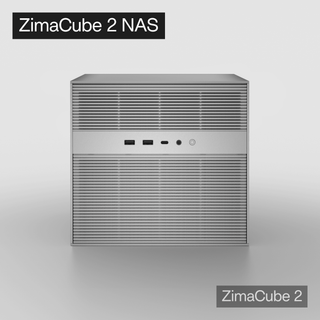
A ZimaCube 2 personal cloud NAS can provide a local storage and application layer when a project genuinely needs multiple drives, an SSD working tier or shared access to a growing archive. Choose hardware for retained source data, active services and backup policy. The product recommendation is architectural context, not evidence that this cloud model, preview service or research system runs locally on the NAS.
Separate inference from data custody. A hosted model may receive approved excerpts while the authoritative originals remain on the server. Optional local indexing, conversion or smaller-model services require their own memory and compute assessment. Keep a second recoverable copy outside the main device, and do not treat RAID or a successful upload as a complete backup strategy. A smaller existing server remains reasonable when it already meets the measured workload.
FAQ
Does the ETH claim mean P equals NP?
No. The announced claim about the Exponential Time Hypothesis must be reported in its own terms. It should not be rewritten as a proof that P equals NP or as immediate evidence of a fast practical application.
What does a successful formal check establish?
It establishes a specific relationship between an artifact and its encoded definitions, assumptions and verification environment. Interpreting the statement and connecting it to the intended scientific problem still require examination.
Can a home server reproduce these research results?
It may store artifacts or run checks whose documented resource requirements it meets. That does not imply it can reproduce frontier-model training, the original discovery process or every computational part of the announced work.
Should I expose the whole private archive to an AI tool?
Only provide the material needed for the task through an appropriately restricted account or working directory. Check what the specific service uploads, logs and retains. A private storage location does not guarantee that a connected tool keeps processing local.
When does a larger NAS become useful?
When measured source-data growth, shared access, active applications or retention requirements justify the storage topology. It does not automatically resolve model access, unsupported runtimes, network upload limits or uncertainty in a research claim.
What is the stopping condition before production use?
Stop when you cannot establish the software/model identity, input authority, required feature availability or recovery path. Resolve those conditions first, then repeat the small test. Do not compensate for missing evidence by making a more confident recommendation.
Sources and Further Reading
Reporting checked on October 28, 2026. Product availability, access plans and security advisories can change. Upstream claims are attributed; workflow recommendations and architecture examples are editorial analysis, not measurements from a ZimaSpace hardware test.
Related guide: Local RAG for Researchers: How Evidence Packages Change Claim Review.
Related guide: How to Keep Recoverable Copies of Files Used by Your AI Agent.

Recommended products
Tech & AI HUB
More to Read
AI Video Quality Is Improving. How Should Creators Protect Their Original Media?
Understand AI video: quality and trust with verified release context, practical workflow limits, private-file handling, review steps and realistic ZimaOS storage roles.
Google Genie 4 Explained: Interactive Worlds, Native Audio, and Creator Workflows
Understand Google Genie 4 with verified release context, practical workflow limits, private-file handling, review steps and realistic ZimaOS storage roles.
MAI Image 2.7 Explained: AI Photo Editing and a Recoverable Creative Workflow
Understand MAI Image 2.7 Preview with verified release context, practical workflow limits, private-file handling, review steps and realistic ZimaOS storage roles.


