
Why Are Developers Moving CI Runners, Registries, and Test Databases Off Their Laptops?


Teams move these services off laptops to make builds repeatable, shared dependencies reachable, test state disposable, and delivery independent of one developer’s battery or workspace.
The server is not a larger laptop. A CI runner executes untrusted project instructions, a registry stores supply-chain artifacts, and a test database holds mutable state. Combining them can be efficient for a small team only when identities, networks, storage, secrets, quotas, and recovery are separated by role.
Start With the Workflow Failure
Laptop-hosted CI fails when the owner sleeps, travels, changes networks, closes the lid, or needs local CPU and memory. A local registry disappears with that machine, while a test database accumulates state that only one developer understands.
Continuous integration depends on frequent, automated verification that everyone can see. Martin Fowler’s continuous integration practices emphasize automated self-testing builds and visible results—properties that are hard to guarantee on an occasionally available laptop.
Move a role only after naming the failure it solves: queue delay, environment drift, image distribution, shared integration state, or laptop contention.
Separate the Runner Trust Boundary
Treat CI jobs as code execution. Use ephemeral containers or virtual machines where practical, avoid mounting the host Docker socket into untrusted jobs, and assign narrowly scoped credentials per repository or pipeline.
Put build workspace and caches in quotas. A failed job must not fill the server root filesystem or read registry credentials unrelated to its project.
Define runner labels by trust and capability. Do not send pull-request code from an unknown contributor to a runner that can reach production secrets or the home network.
Make the Registry a Durable Distribution Role
Store the registry data and configuration on persistent storage with authentication, TLS on untrusted paths, retention rules, and garbage-collection windows. Separate immutable release tags from disposable branch images.
Back up configuration, metadata, and any artifacts that cannot be rebuilt. If images are reproducible from source, document the rebuild time and preserve the source, build definitions, and external dependencies instead of backing up every cache layer.
Monitor capacity before cleanup. Registry garbage collection can be I/O intensive and may require a maintenance state depending on the implementation.

Keep Test Databases Disposable but Representative
Give each pipeline or branch an isolated database name, schema, container, or VM. Seed it from versioned fixtures or a sanitized dataset, run migrations automatically, and destroy it after the retention window.
Never copy production secrets or unredacted personal data into the test role. Limit network reach so a compromised job cannot pivot from the test database to unrelated services.
Persist only the logs and artifacts needed to diagnose failed tests. Long-lived mystery databases recreate the laptop problem on a larger machine.
Build the Small-Team Server Topology
Use separate service accounts, container networks, volumes, quotas, and backup rules for runner, registry, and database roles. This NAS and Docker platform guide helps decide whether containers or virtual machines should provide the isolation.
Place the management interface on a restricted network. Expose the registry and CI UI only to the team or through an authenticated access layer. Record updates, ownership, and rollback for every service.
Test a runner recreation, registry restore or rebuild, database reseed, full-disk condition, and server reboot. Developers should still be able to work locally while the shared services recover.
Final Setup Check
The move is successful when builds run without a specific laptop, environments are recreated from versioned definitions, registry artifacts have a retention and recovery plan, test databases are isolated and disposable, and no runner holds broader secrets than its job requires.

Recommended products

NAS & Server Setup
More to Read
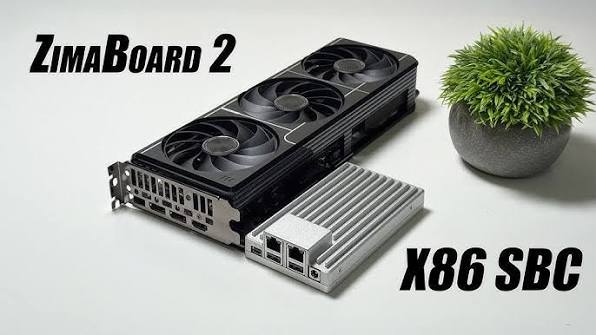
A Local RAG Setup for Research Papers, Notes, and Private Documents
Keep original documents authoritative, make indexing repeatable, require citations, and separate replaceable models from private source data.
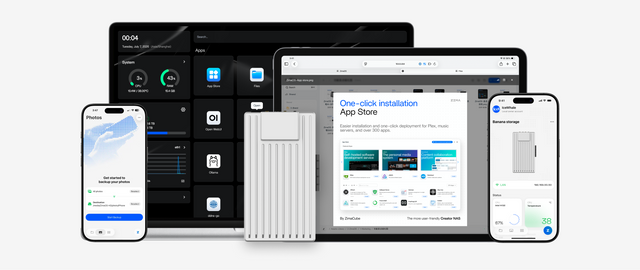
Why Are Developers Using a Gateway Node for Private DNS, VPN, and Test Apps?
A gateway node gives private apps one controlled name and access path, while compute nodes stay unexposed and replaceable.
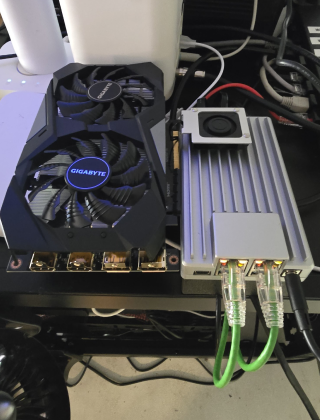
How to Build a Reproducible App Stack With Compose Files, Secrets, and Persistent Data Separated
Keep Compose definitions portable, secrets protected, and app data independently backed up so the stack can be rebuilt on a clean host.


