
A Local RAG Setup for Research Papers, Notes, and Private Documents


Build local RAG around an authoritative document library, a repeatable indexing pipeline, and cited answers; treat models and vector indexes as replaceable derived assets.
For papers, notes, and private documents, the hard work is not only running a model. The setup must extract text consistently, preserve source identity, refresh changed files, restrict access, and recover from the originals. Begin with one user and one collection, then expand only after citation quality and reindexing are measurable.
Separate Authoritative Sources From Derived Assets
Keep original PDFs, text notes, office documents, and metadata in a normal file library with backups and stable identifiers. The extractor output, chunks, embeddings, and vector index can be regenerated and should live in separate paths.
Record source path, document hash, modified time, extraction version, and permission label with each indexed item. That metadata lets the pipeline detect changes and lets an answer point back to a human-readable source.
Never use the vector database as the archive. If the index cannot be deleted and rebuilt without data loss, the storage roles are mixed.
Build a Controlled Import and Extraction Queue
Create an inbox for new material rather than scanning every private folder with broad permissions. Validate file type, malware policy, size, duplicate hash, and extraction result before promoting a document into the indexed library.
A hands-on local RAG guide demonstrates the pipeline from document loading through retrieval and response. Use that document-to-retrieval pipeline as a functional baseline, then add your privacy and recovery controls.
Flag scanned PDFs, tables, equations, and handwritten notes for separate extraction tests. Silent empty text is worse than an explicit import failure because it creates false confidence in search coverage.
Choose Chunking and Retrieval by Question Type
Research papers benefit from section-aware chunks that retain title, authors, page, and heading. Short notes may work better as whole entries. Private records may need smaller permission-scoped units so retrieval cannot cross an access boundary.
Create a test set of real questions with known source passages. Compare whether retrieval returns the correct document and passage before judging the language model's prose.
A second independent build guide emphasizes PDFs, notes, and documentation as distinct sources. Its mixed-document RAG workflow is useful for designing that representative test set.

Require Citations and a Safe Failure Mode
The interface should show source title, page or note identifier, and a short retrieved context for every factual answer. A user must be able to open the original and verify the claim.
Set a relevance threshold and instruct the system to say that the collection lacks enough evidence when retrieval is weak. A fluent uncited answer should be treated as a failed query, not a helpful approximation.
Separate conversation history from the document library and define retention. Sensitive prompts can reveal as much as the indexed sources, so back up or delete them according to a deliberate policy.
Place Compute, Storage, and Recovery Deliberately
Keep source documents on protected storage, run extraction and embedding where temporary copies are controlled, and place the model on the device that meets memory and latency needs. These roles may share one machine initially without sharing one data path.
Back up originals, metadata, import rules, test questions, and configuration. Rebuilding embeddings is often preferable to backing up a large derived index, but only if model and embedding versions are recorded.
Use the ZimaSpace explanation of a private AI assistant on NAS storage to decide whether storage and inference should stay together. Then perform a clean reindex and verify the citation test set before importing the full library.
Final Setup Rule
The setup passes when originals remain authoritative, indexing can be repeated, weak retrieval fails safely, and every answer can lead a user back to a cited source. Split compute from storage when model upgrades or multi-user access would otherwise widen the private data boundary.

Recommended products

NAS & Server Setup
More to Read
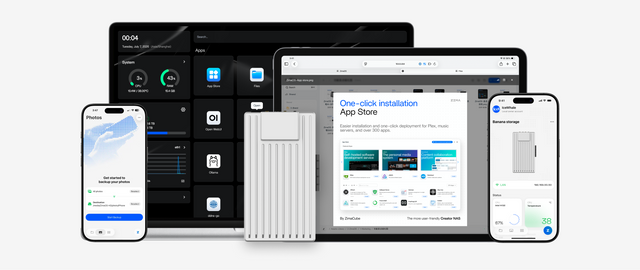
Why Are Developers Using a Gateway Node for Private DNS, VPN, and Test Apps?
A gateway node gives private apps one controlled name and access path, while compute nodes stay unexposed and replaceable.
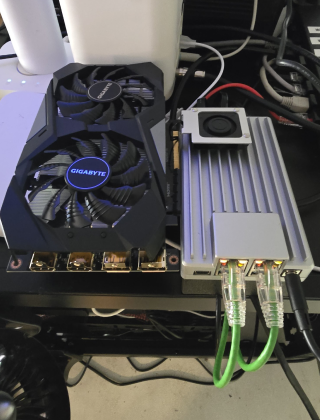
How to Build a Reproducible App Stack With Compose Files, Secrets, and Persistent Data Separated
Keep Compose definitions portable, secrets protected, and app data independently backed up so the stack can be rebuilt on a clean host.
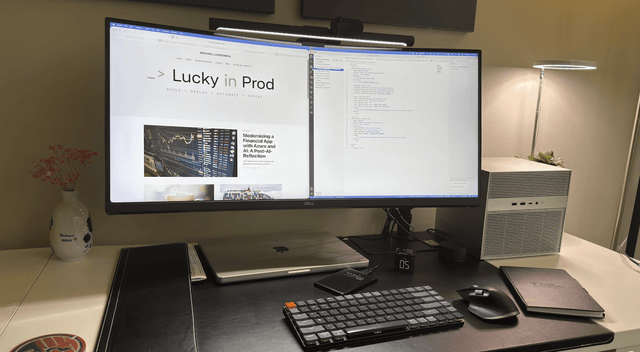
Should a Developer Keep Databases on the Compute Node or the Storage Node?
Decide where developer databases belong by separating active database files from backups, dumps, replicas, and bulk project data.


