
Where to Place a Plex Server for Better Cooling, Cabling, and Maintenance


Place a Plex server where airflow, ambient temperature, network cabling, drive access, and maintenance clearance remain acceptable during sustained workloads, not just where the box fits.
A closet, shelf, rack, office, or living-room cabinet can all work, but each changes cooling, noise, cable length, dust, and serviceability. Treat placement as a topology constraint: the server must stay reachable by a reliable network path and remain easy enough to power down, open, clean, and recover when a drive or cable needs attention.
Measure the Physical Constraints First
Record ambient temperature, enclosure clearance, intake and exhaust paths, nearby heat sources, and the noise tolerance of the room. A placement that forces recirculated hot air can turn efficient hardware into a loud or throttled server.
Real home-server deployments show that trapped cabinet heat can raise fan demand, so placement and airflow must be tested under sustained load rather than judged at idle; that is the baseline to establish for physical Plex server placement.
Route Power, Network, and Storage With Clear Roles
The server needs a stable power path, a reliable network link, and serviceable storage connections. Keep the critical network path simple and avoid cable routes that make a drive replacement or power-cycle require dismantling unrelated equipment.
If the media disks live in the same chassis, placement must account for drive vibration and airflow. If storage is separate, prioritize a reliable wired path between compute and storage and document which node owns Plex app data versus bulk media.
Balance Cooling Against Noise and Access
Moving the server farther away can reduce perceived noise but increase cable complexity and make maintenance inconvenient. Hiding it inside furniture can improve appearance while raising temperature and dust accumulation.
When measuring physical Plex server placement, nAS selection should weigh noise, ports, software, and sustained performance rather than treating bay count or peak speed as the only decision axis.

Validate the Location With a Sustained Workload
Run several representative streams or a transcode plus a library task for long enough to reach thermal equilibrium. Check temperatures, fan speed, noise at the listening position, network stability, and whether cables or power adapters become warm or strained.
At the failure boundary for physical Plex server placement, long-duration NAS testing shows that real multi-service workloads can combine Plex, containers, and large write volumes, making sustained behavior more useful than a single synthetic benchmark.
Move or Split the Topology When Constraints Conflict
If storage noise is the only problem, separating compute from bulk drives can be cleaner than over-damping the whole enclosure. If cabling is the problem, move the network or switch closer rather than relying on unstable wireless links for the server.
A media-server hardware layout is easier to evaluate when compute, app data, media storage, and network roles are written down separately.
- Measure ambient temperature and airflow clearance
- Prefer a stable wired server network path
- Leave room to replace drives and reach power
- Run a sustained thermal and noise validation test

Recommended products

NAS & Server Setup
More to Read
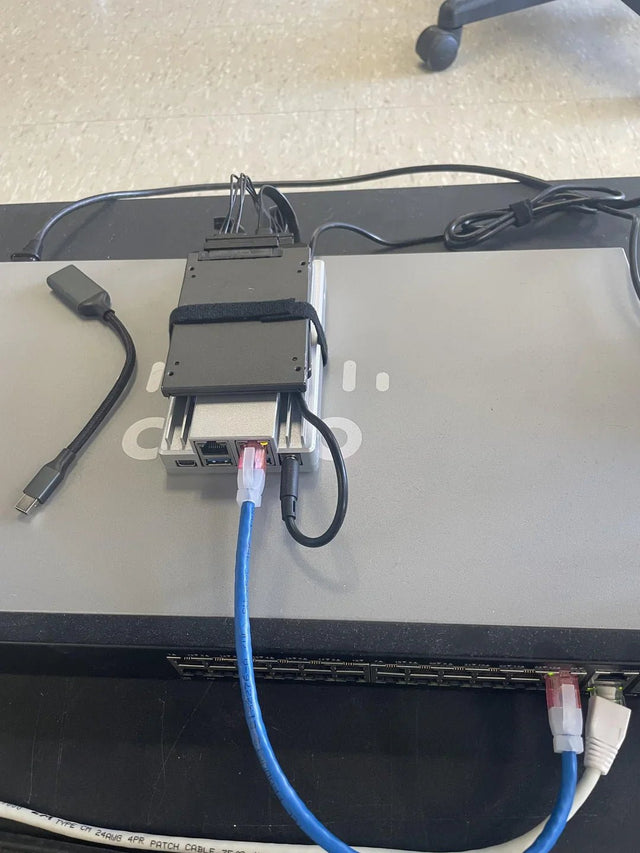
How AI-Like Analysis and Automation Change Jellyfin Storage and Compute Needs
Automation and adjacent AI analysis add scans, derived data, CPU/GPU work, cache, scratch space, and background scheduling beyond ordinary Jellyfin playback.
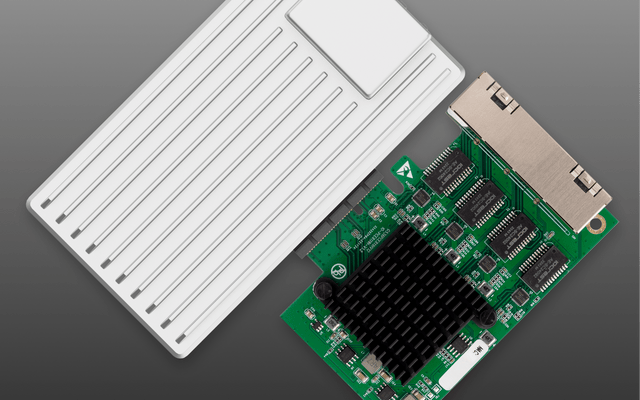
How to Integrate Jellyfin Into a Small Apartment or Rental Network
Build a rental-friendly Jellyfin network around stable local addressing, minimal wiring, quiet hardware, CGNAT-aware remote access, and reversible changes.
How Many Users and Background Jobs Should One Jellyfin Host Support?
Treat Jellyfin users and background jobs as one shared workload budget; capacity ends when playback latency, queues, or resource pressure becomes repeatable.


