
How to Size a Plex Home Server for Multiple Simultaneous Streams


Size a multi-stream Plex server from the household’s playback mix first: Direct Play, software transcoding, hardware transcoding, remote bandwidth, and subtitle behavior place very different loads on the host.
The system should be built around the peak combination that actually occurs, not around the total number of family members. One four-user household may Direct Play everything over a wired LAN, while another may require several simultaneous remote conversions; those scenarios need different compute and network roles even with the same user count.
Turn “Four Users” Into a Real Workload
List the peak simultaneous sessions and classify each by likely playback mode, source resolution, remote or local access, and subtitle needs. That turns an ambiguous user count into a repeatable workload the server can be sized and tested against.
The server chooses among Direct Play, Direct Stream, and transcoding according to client compatibility and stream requirements, which changes the resources each session consumes; that is the baseline to establish for multi-stream Plex sizing.
Assign Compute, Storage, and Network Roles
Compute handles conversion when the client cannot take the source; app-data storage keeps the library responsive; media storage supplies sequential reads; the network carries the resulting streams. None of those roles should be sized from a single CPU benchmark.
Keep the critical path simple: stable local app data, media storage with enough sustained throughput, and wired server networking. Add hardware acceleration when the conversion workload justifies it, but do not treat it as a substitute for upload bandwidth or compatible clients.
Use the Weakest Link as the Sizing Gate
For remote users, upload bandwidth may set the ceiling before compute does. For several software transcodes, CPU can dominate. For a large shared host, background jobs can make storage latency or CPU scheduling the limiting segment even when individual components look fast on paper.
When measuring multi-stream Plex sizing, a tested Intel N100 system handled multiple hardware transcodes at modest CPU load, showing why codec support and acceleration can matter more than a broad CPU label.

Validate With the Peak Combination, Not One Stream
Run the planned sessions together and record which streams Direct Play or transcode, then measure CPU/GPU load, network throughput, memory pressure, and disk latency. The setup passes only when the required combination remains stable for long enough to expose thermal and scheduling limits.
At the failure boundary for multi-stream Plex sizing, a resource-by-resource bottleneck check should look at utilization, saturation, and errors across CPU, memory, network, and storage instead of relying on one average metric.
Scale Only When You Can Name the New Role
If the first limit is conversion capacity, add or upgrade the compute/accelerator role. If storage management or drive expansion becomes the problem, add a storage role. If shared services create interference, a second application host may be cleaner than replacing every component in one box.
A first Docker media-server setup is easier to evaluate when compute, app data, media storage, and network roles are written down separately.
- Classify each peak stream by playback mode
- Measure remote upload separately from LAN speed
- Test the full simultaneous workload
- Add capacity only at the measured limiting role

Recommended products

NAS & Server Setup
More to Read
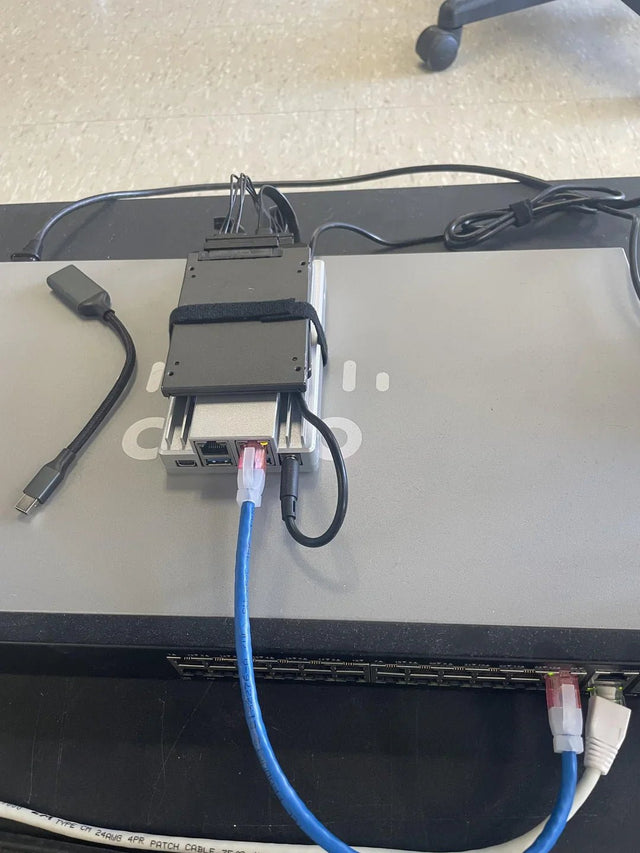
How AI-Like Analysis and Automation Change Jellyfin Storage and Compute Needs
Automation and adjacent AI analysis add scans, derived data, CPU/GPU work, cache, scratch space, and background scheduling beyond ordinary Jellyfin playback.

How to Integrate Jellyfin Into a Small Apartment or Rental Network
Build a rental-friendly Jellyfin network around stable local addressing, minimal wiring, quiet hardware, CGNAT-aware remote access, and reversible changes.
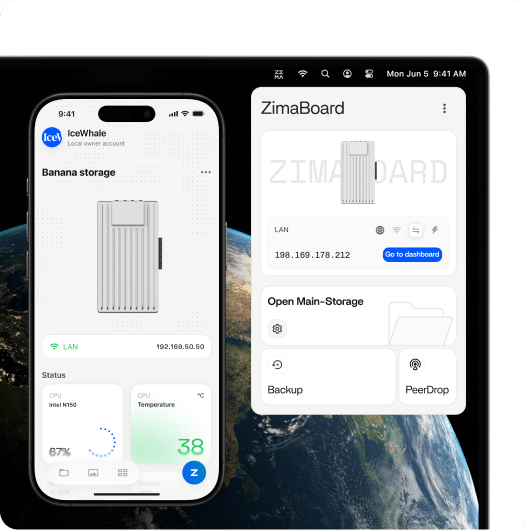
How Many Users and Background Jobs Should One Jellyfin Host Support?
Treat Jellyfin users and background jobs as one shared workload budget; capacity ends when playback latency, queues, or resource pressure becomes repeatable.


