
How to Balance Jellyfin Performance, Power Use, and Recovery


Balance Jellyfin performance, power use, and recovery by sizing for the hardest repeatable playback path while separating durable state from rebuildable work.
A server that streams smoothly but cannot be restored is incomplete, and a low-power box that falls back to software transcoding can waste more energy during every session. Start with the household workload, assign compute, storage, network, and backup roles, then validate the design under real playback and restart conditions.
Define the performance path before buying headroom
Record direct-play clients, expected transcodes, subtitle burn-in, HDR tone mapping, remote bitrate, and concurrent background jobs. The limiting path is the slowest required stage: media read, decode, conversion, encode, network delivery, or client capability.
Run the hardest expected session alone, then add concurrent streams one at a time. A practical utilization, saturation, and error check helps distinguish high use from a queue that has no service margin.
Use power as a topology constraint
Compare idle draw, sustained transcode draw, drive spin-up behavior, and cooling noise rather than CPU names alone. Hardware acceleration can lower CPU work, but only when the client path and codec combination actually use it. Keep the application database and transcode cache on fast local storage so a remote disk does not force a high-power wait.
Choose the smallest compute node that passes the measured peak with a documented margin. If storage capacity is the main growth driver, separate a low-power Jellyfin host from a storage node instead of running a large all-in-one system continuously.
Separate data roles so recovery does not compete with playback
Keep configuration and database state, irreplaceable media, rebuildable cache, backup copies, and recovery media as different roles. A mirror improves availability but is not an independent backup. Schedule backup and library maintenance outside the busiest playback window when their I/O would otherwise compete.
Test a clean restore of application state and a rebuild from the deployment definition. A data-role map keeps a recoverable database separate from disposable cache.

Validate the three-way trade-off
Pass the design only when representative playback stays within the latency and dropped-frame boundary, idle and sustained power fit the environment, and a fresh backup can restore the service. Expand by adding a storage or transcode role when a measured workload crosses the margin. Stop when the only proposed upgrade is speculative capacity with no new workload or recovery requirement.

Recommended products

NAS & Server Setup
More to Read
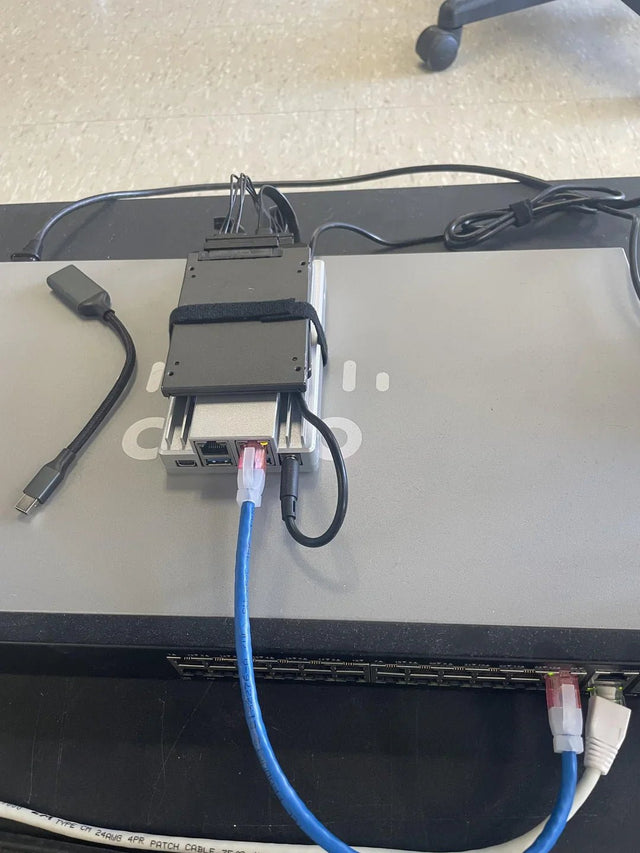
How AI-Like Analysis and Automation Change Jellyfin Storage and Compute Needs
Automation and adjacent AI analysis add scans, derived data, CPU/GPU work, cache, scratch space, and background scheduling beyond ordinary Jellyfin playback.
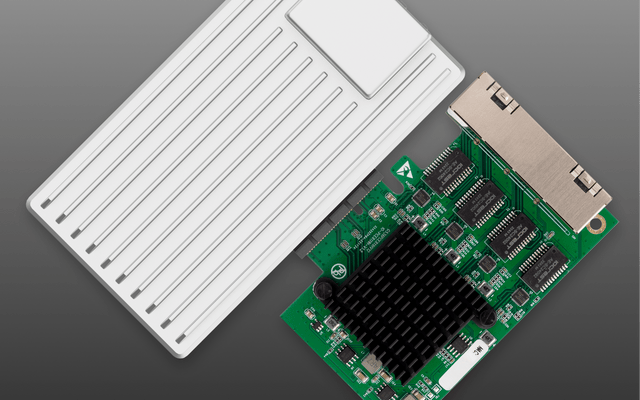
How to Integrate Jellyfin Into a Small Apartment or Rental Network
Build a rental-friendly Jellyfin network around stable local addressing, minimal wiring, quiet hardware, CGNAT-aware remote access, and reversible changes.
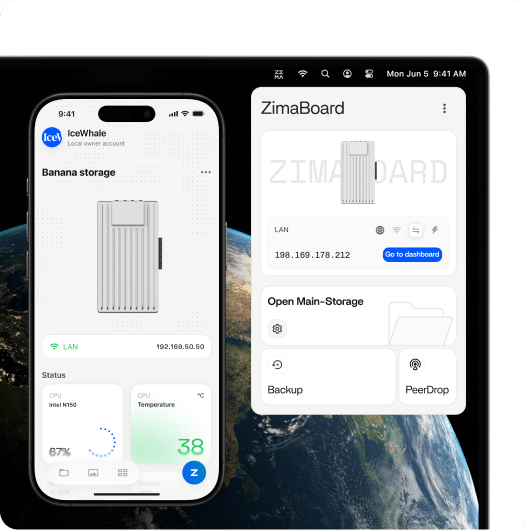
How Many Users and Background Jobs Should One Jellyfin Host Support?
Treat Jellyfin users and background jobs as one shared workload budget; capacity ends when playback latency, queues, or resource pressure becomes repeatable.


