
What Changes When a First Home Server Becomes a 24/7 Household Appliance?


A first home server becomes a household appliance when other people expect its services to remain available without understanding or managing the underlying system.
The hardware may not change on that day, but the operating contract does. Reboots need notice, updates need rollback, accounts need boundaries, storage warnings need alerts, and power loss needs a recovery path. The server stops being a private experiment that can disappear for an evening and becomes shared infrastructure whose failures interrupt backups, files, media, automations, or remote access.
Success Changes From “It Runs” to “It Stays Available”
An experimental server succeeds when an application launches and the operator learns something. A household appliance succeeds when users can reach the service at the expected time, data remains consistent, and routine maintenance does not create surprises. The difference is an operating standard, not merely a faster processor.
TechTarget’s monitoring guide explains that availability depends on observing applications, services, interfaces, infrastructure, and trends rather than checking whether a machine is powered on. That availability-over-power-state view applies at home once a failed file share or backup service matters even though the server itself still responds.
Define the appliance promise in plain language: which services should work every day, how long an outage is acceptable, who needs notice, and which fallback remains available. This prevents every installed app from silently inheriting the same 24/7 expectation.
Services Need Different Criticality and Failure Boundaries
A media library can usually wait through an evening repair. A household DNS service, automation controller, backup target, or shared work folder may have a shorter acceptable outage. Treating them as one stack means one update or full disk can interrupt every role at once.
A beginner mini-PC server guide recommends choosing the real workload before hardware because storage, application hosting, and experimentation create different requirements. That workload-first classification becomes more important after the server gains household users.
| Service tier | Example role | Required boundary |
|---|---|---|
| Essential | Automation control, DNS, current work files | Fallback, short maintenance window, tested restart |
| Protective | Device backups, file versions, monitoring | Alert on failure and documented restore path |
| Convenience | Media, dashboards, download tools | May tolerate planned downtime |
| Experimental | New containers, VMs, test databases | Cannot modify essential data or networking |
The ZimaSpace article on choosing the first three home-server services provides a natural starting boundary. Split roles when their users, data value, or maintenance tolerance no longer match.
Accounts and Permissions Become Household Policy
The owner’s administrator account should not be the credential everyone uses for shared files, media, or mobile access. Household users need named accounts and only the folders or services required by their role. Applications also need restricted identities rather than unrestricted access to the whole storage pool.
Linux Handbook explains that file access is determined through user, group, and other permissions. That role-based permission model turns access control into a repeatable policy instead of a collection of exceptions created after someone opens the wrong folder.
Create one protected admin path, ordinary household accounts, service-specific identities, and a documented recovery owner. Test denied actions as deliberately as successful ones: a media app should not alter backups, a guest should not browse private folders, and an ordinary account should not change system settings.

Updates Become Scheduled and Reversible Maintenance
A personal lab invites immediate updates and experiments. A household appliance needs a maintenance window, a recent backup, a rollback path, and a short validation checklist. The question changes from “Is a new version available?” to “Can this change be reversed before users need the service again?”
TechTarget’s server maintenance checklist recommends defining routine maintenance windows and including software, logs, hardware, and testing rather than waiting for a failure. That planned-maintenance discipline is what separates a 24/7 appliance from a machine that is merely left powered on.
Before an update, export configuration, record current versions, confirm free space, and protect application databases. Afterward, restart the service, connect from a normal household account, open representative data, and verify the backup job. Delay unrelated changes until the first one has completed a normal usage cycle.
Monitoring Replaces Memory and Occasional Dashboard Checks
The operator cannot be expected to notice every failed backup, full filesystem, stopped container, rising temperature, or unavailable share by opening several dashboards each day. A household appliance needs alerts that point to an action before users discover the problem.
TechTarget’s server-monitoring guide identifies availability, performance, processes, storage, networks, and logs as distinct areas to watch. That multi-layer monitoring model supports a small but useful home checklist: service reachability, disk health, capacity, backup completion, temperature, and certificate or update expiry where relevant.
Give the server a stable local hostname and reserved address so clients and alerts refer to one identity. Notify only on conditions that require attention, and include the affected service, current value, expected threshold, and first recovery action. A permanent stream of low-value warnings teaches the household operator to ignore the appliance.
Set thresholds around consequences rather than round numbers. Capacity alerts should leave enough time to expand storage, temperature alerts should reflect the enclosure’s normal loaded range, and backup alerts should distinguish one delayed run from a broken recovery chain. The message should arrive before the household workflow fails, not after users report it.
Power Loss and Reboots Need Predictable Recovery
A brief outage can interrupt writes, stop databases abruptly, or leave the server powered off after electricity returns. The system needs a clean-shutdown plan, documented firmware restart behavior, and a startup order that brings storage online before dependent applications.
TechRadar’s UPS guide notes that even short power cuts can make servers unreachable or corrupt data, while battery power can provide time for a safe shutdown. That controlled-shutdown window is more important than trying to run every household service for hours.
Test one planned shutdown and one cold restart. Confirm that disks mount correctly, essential services start automatically, the server returns at the same local address, and alerts resume. Keep the router or a basic fallback independent when the server provides DNS, automation, or other infrastructure that could otherwise block its own recovery.
The Appliance Boundary May Require More Than One Server Role
One box remains appropriate while its services share similar uptime, storage, and maintenance needs. It becomes the wrong design when storage repair takes down automation, experiments can fill the family-data pool, network maintenance removes remote access, or one reboot interrupts every household dependency.
ServeTheHome’s compact-server project shows how a small dedicated node can be planned around memory, storage, and networking for a defined server role. That role-specific dedicated-node model supports separating stable infrastructure from storage-heavy or experimental workloads without building a large rack.
| Observed conflict | Likely split | Reason |
|---|---|---|
| Storage rebuild interrupts automation | Automation node + storage NAS | Different maintenance windows |
| Experiments compete with family services | Stable appliance + lab node | Different failure tolerance |
| Router or DNS testing removes access | Gateway role + application server | Recovery must not depend on the failed service |
| Several users and drives require stronger recovery | Storage-first NAS + optional compute node | Data ownership has become the primary role |
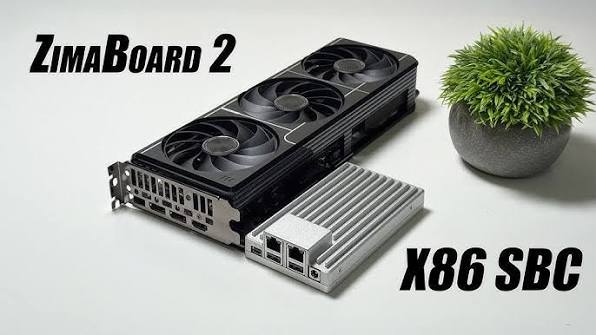
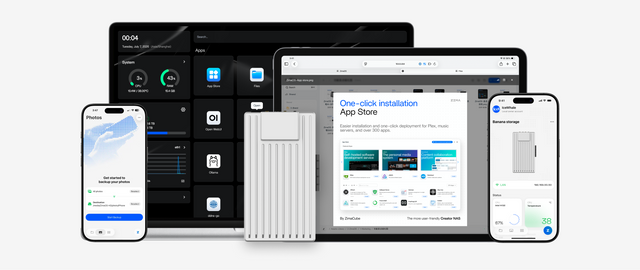
A ZimaBoard 2 Mini Home Server fits a fixed, compact service role when app hosting, networking, or automation should remain separate from larger storage maintenance. A ZimaCube 2 AI NAS is the more natural household appliance when integrated multi-drive storage, shared access, snapshots, and storage-first recovery define the system.
A first server becomes an appliance when its owner can maintain or replace any one layer without forcing the household to understand how the entire system was assembled.

Recommended products

NAS & Server Setup
More to Read
A Local RAG Setup for Research Papers, Notes, and Private Documents
Keep original documents authoritative, make indexing repeatable, require citations, and separate replaceable models from private source data.
Why Are Developers Using a Gateway Node for Private DNS, VPN, and Test Apps?
A gateway node gives private apps one controlled name and access path, while compute nodes stay unexposed and replaceable.
How to Build a Reproducible App Stack With Compose Files, Secrets, and Persistent Data Separated
Keep Compose definitions portable, secrets protected, and app data independently backed up so the stack can be rebuilt on a clean host.


