
How to Evaluate New Jellyfin Features Before Changing Home-Server Architecture


Do not redesign a Jellyfin server for a feature name; redesign only when its measured resource or dependency path changes.
This guide is for home operators assessing upgrades such as richer playback processing, remote access, expanded libraries, automation, plugins, or additional clients. The key dependency is not release novelty but where work now runs, what state it changes, which devices it needs, and what must recover together. Keep a simple host when the existing topology preserves margin; split roles only after a repeatable constraint appears.
Translate the Feature Into a Workload Path
Write the path from user action to result before changing hardware. A playback-related feature may touch client compatibility, media reads, decode, filters, encode, temporary storage, and network delivery. A library feature may touch metadata state, thumbnails, database writes, and background scanning. A remote-access feature adds an ingress, identity, certificate, and upload path.
The broad component map in this Jellyfin homelab guide helps expose why installation, storage layout, transcoding, clients, remote access, and maintenance are different architecture relations. Name only the relations the proposed feature actually changes.
Classify the New Demand Before Buying Compute
Assign the feature to one or more resource classes: interactive CPU, media engine, memory, sequential media I/O, random application-state I/O, temporary writes, local network, internet upload, or background time. Then measure the current path while the feature runs with the household's normal concurrent workload.
A feature that raises random metadata I/O may benefit from moving application state to SSD without changing media storage. One that adds a supported transcode path may need accelerator access rather than more general CPU cores. The architecture discussion in this media-server storage and GPU design guide is transferable because it separates configuration, media, cache, GPU work, network exposure, and backup roles.
Separate Interactive Playback From Background Work
Library scans, image generation, analysis, backups, and imports can tolerate delay; playback startup and real-time transcoding cannot. Schedule delay-tolerant work outside peak viewing first. If the job still disrupts playback, give it an explicit CPU, I/O, or accelerator budget before moving it to another host.
Separation becomes architectural when two required workloads repeatedly contend for the same indivisible resource or need different restart schedules. A second container on the same host can clarify lifecycle and limits, but it does not create another GPU engine, storage queue, or uplink. Move the worker only when the network and shared-data path do not introduce a worse bottleneck.

Map Persistent State and Temporary Data
Identify what must survive a container replacement: configuration, user state, playback history, metadata, plugin state, and any external database. Keep reproducible cache and transcode segments separate from irreplaceable state. Media files should remain a distinct storage role with their own protection policy.
For each new feature, record whether it adds persistent data, how quickly that data changes, and whether a consistent backup needs a pause or application-aware step. Do not expand one generic backup job until it becomes impossible to restore within the required time. Architecture changes when recovery order or restore time changes, not merely when another directory appears.
Decide Whether the Feature Needs a New Service Boundary
Keep the feature inside the existing Jellyfin service when it shares the same lifecycle, trust boundary, and resource envelope. Create a neighboring service when it has a different update cadence, credential set, exposure path, failure behavior, or maintenance window. Place it on another node only when physical isolation or capacity justifies the added network dependency.
A maintainable Compose pattern groups components that restart together while exposing shared networks deliberately. This homelab Compose layout guide shows how separate definitions, environment files, and a proxy network can make those boundaries reproducible without pretending they eliminate shared-host contention.
Recheck Network and Device Access
Features involving hardware acceleration require the service to reach the correct device and the host to provide a compatible path. Features involving remote users require upload margin, stable name resolution, and an ingress design. Features that distribute work across nodes require predictable access to media and state; a remote worker can stall if its shared-storage path is slower than local processing.
Build a small matrix of client, media type, path, and expected result. Test a direct-play case, a conversion case, a remote case, and the heaviest background overlap you plan to allow. The ZimaSpace analysis of Jellyfin limits on consumer hardware provides the next step for identifying which resource loses sustained margin first.
Use a Three-Level Change Rule
Choose tuning when the current host has capacity and the feature only needs scheduling, paths, permissions, cache placement, or resource limits. Choose logical separation when lifecycle, credentials, or observability differ but the same host still has physical margin. Choose physical separation or stronger hardware when a required workload repeatedly saturates a shared resource and reversible tuning cannot restore margin.
For every proposed change, define the observable trigger and the rollback. Examples include transcode speed falling below real time, storage latency rising during scans, upload losing bitrate reserve, or restores missing the recovery target. Without that evidence, retain the smaller design.
Validate the Architecture With the Feature Enabled
Capture a baseline, enable one feature change, and replay the same client and background-work mix. Compare playback start time, dropped or buffered sessions, CPU or media-engine load, memory pressure, storage latency, network utilization, temperatures, logs, and backup duration. Test a restart and one restore of the new state path.
Accept the feature when the service meets its workload and recovery targets with reserve. Revert when it adds an unowned dependency, an unprotected state path, or unexplained contention. Expand the architecture only after the same failing relation appears in repeated tests; that rule keeps feature growth from turning a clear home server into an accidental distributed system.

Recommended products

NAS & Server Setup
More to Read
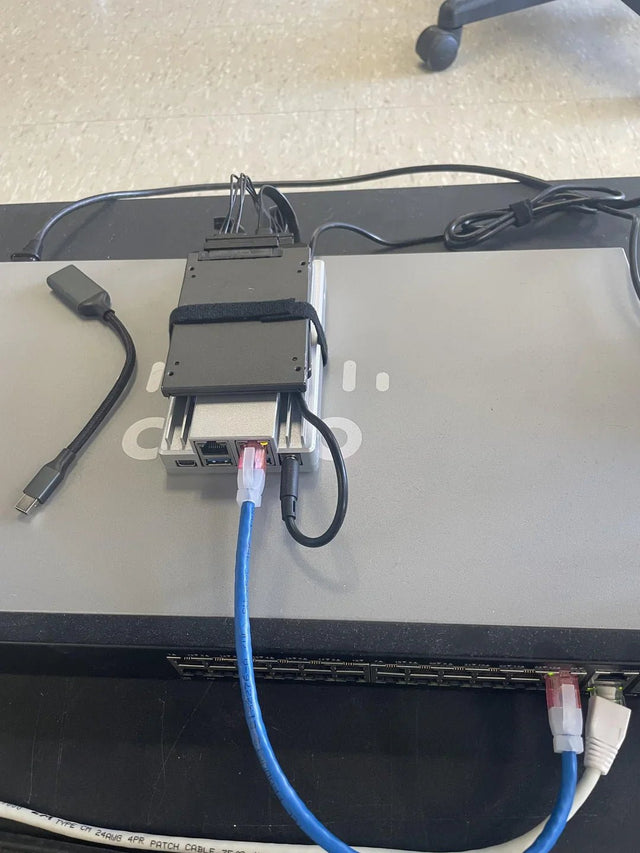
How AI-Like Analysis and Automation Change Jellyfin Storage and Compute Needs
Automation and adjacent AI analysis add scans, derived data, CPU/GPU work, cache, scratch space, and background scheduling beyond ordinary Jellyfin playback.
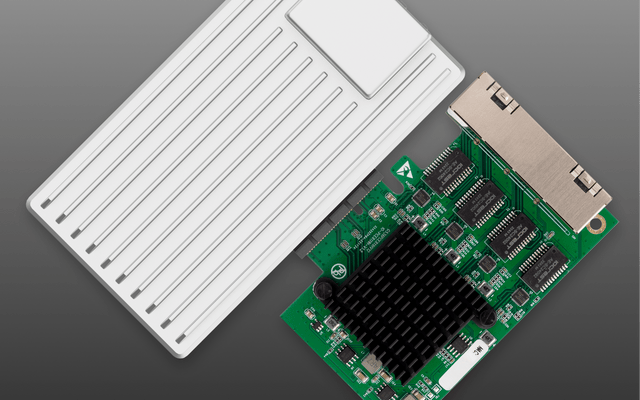
How to Integrate Jellyfin Into a Small Apartment or Rental Network
Build a rental-friendly Jellyfin network around stable local addressing, minimal wiring, quiet hardware, CGNAT-aware remote access, and reversible changes.
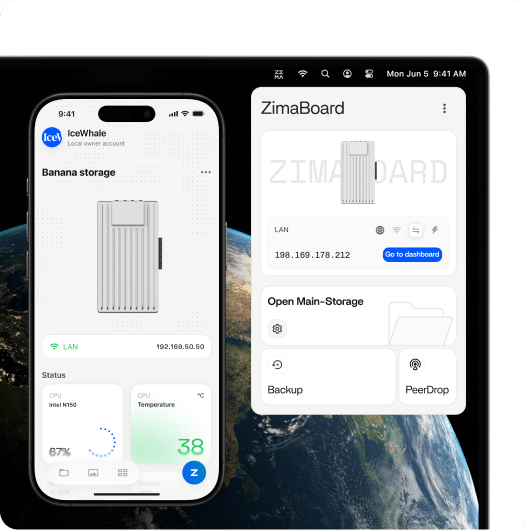
How Many Users and Background Jobs Should One Jellyfin Host Support?
Treat Jellyfin users and background jobs as one shared workload budget; capacity ends when playback latency, queues, or resource pressure becomes repeatable.


