
NAS Drive Mixing Checklist Before Combining Capacities


Mix NAS drive capacities only after the exact models, recording methods, health, pool rules, spare plan, and rebuild window all pass a written compatibility check.
Identify Every Drive by Full Model Number
Record model, firmware, capacity, interface, sector format, RPM, cache, workload rating, warranty status, and recording method. Family names are not enough because one line can contain both suitable and unsuitable variants.
A practical NAS drive selection framework puts CMR, workload rating, and cost per usable terabyte ahead of brand assumptions.
- Confirm CMR or SMR for the exact SKU.
- Check 512e or 4Kn compatibility with the controller and OS.
- Record power-on hours and error counters for reused disks.
- Verify enclosure height, interface, and power requirements.
Calculate Capacity With the Actual Pool Rules
Enter the exact capacities into the layout you plan to use. Mirrors and traditional parity groups may reduce larger members to the smallest member's usable size, while other systems can combine capacities differently.
Calculate usable space after parity, filesystem overhead, snapshot reserve, and free-space margin. Do not compare the sum printed on drive labels with the storage target.
Pass only when the mixed set reaches the target without wasting enough capacity to erase the savings. Otherwise buy a smaller matched group or redesign the topology.
Reject the Slowest Recovery Member
| Check | Pass condition | Reject when |
|---|---|---|
| Recording method | CMR for active parity workload | SMR or unknown |
| Health | Stable SMART history | Pending or uncorrectable sectors |
| Performance | Rebuild fits recovery window | One disk extends rebuild beyond target |
| Thermals | All drives stay inside enclosure limit | One model overheats the bay |
| Spare | One available disk can restore redundancy | No compatible replacement path |
Independent testing found extreme resilver differences between SMR and CMR under the same array workload. The slowest member defines how long the pool remains exposed.
Do not use a lightly tested desktop drive as the unknown variable in a pool that holds irreplaceable data. Reuse is most defensible for replaceable data with verified backup.

Plan the Spare and Replacement Sequence
Choose a cold spare large enough to replace any member whose failure would break the layout. If different groups require different minimum sizes, document which spare covers which group.
Decide whether the next replacement preserves the mixed design or begins a migration to matched capacities. Without that rule, each failure becomes a rushed architecture decision.
Check power, SATA or SAS ports, drive trays, and cooling at the final drive count. A compatible disk is not deployable if the enclosure cannot support it.
Use a Buy, Reuse, or Rebuild Gate
Buy a mixed replacement only when it preserves usable capacity, recovery time, and future expansion. Reuse an existing disk only when its health and workload fit are documented.
Rebuild matched when several disks are near retirement, spare sizes have fragmented, or the pool wastes a material share of new capacity. Then use the small-file SMB workflow to validate application performance after the storage change.
Pass on the plan if it lacks an independent backup and one successful restore. Disk compatibility can protect availability; it cannot recover deleted or corrupted data by itself.
Final Takeaway
Buy only when every hard requirement passes in the real room and network; otherwise wait, narrow the design, or choose a simpler platform.

Recommended products

Buying Guide
More to Read
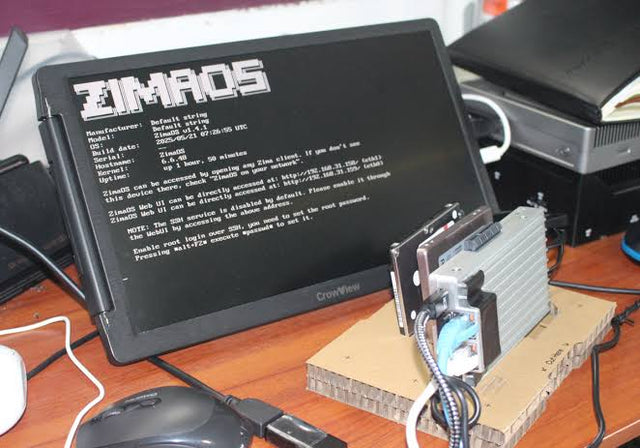
Local AI Server Checklist Before Buying a GPU
A pre-purchase checklist for avoiding a fast but incompatible, under-cooled, or VRAM-limited GPU in a home AI server.
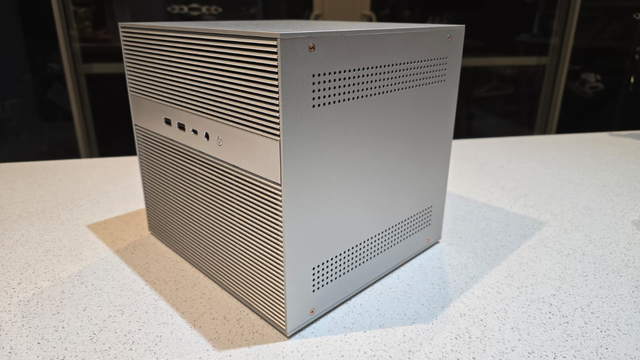
Container Server Storage Checklist Before One Large Pool
A storage design checklist that prevents one convenient container pool from becoming one shared capacity and recovery failure domain.
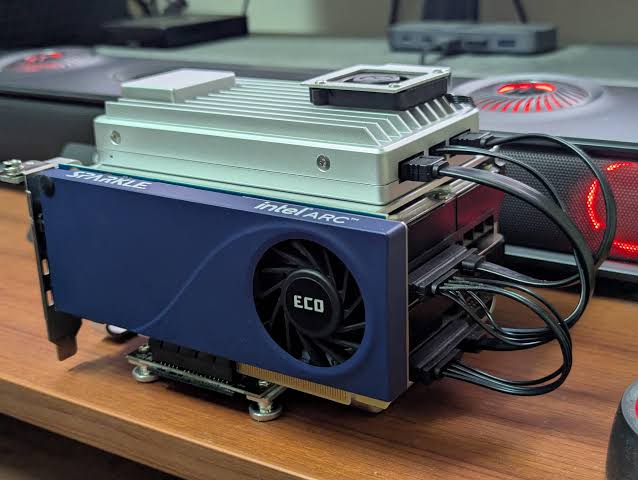
Used Server Buying Checklist for a Quiet Home Lab
A practical pre-purchase screen for used homelab hardware that prioritizes acoustics, energy, serviceability, and recoverable ownership.


