
2026 AI Agent Skills for Researchers


Quick Answer
The best AI agent skills for researchers are not just generic abilities like “summarize papers” or “help with literature review.” The most useful skills are reusable research workflows that help an AI agent search papers, read PDFs, manage citations, compare methods, identify research gaps, analyze datasets, build figures, audit claims, and prepare manuscripts with traceable evidence.
For most researchers, a strong 2026 skill stack should include research-hub for organizing the research workflow, literature-triage-matrix for comparing papers, gap-to-topic for evaluating research gaps, research-design-helper for framing research questions, Zotero MCP or zotero-skills for library access, paper-search-mcp for paper discovery, arxiv-mcp-server for arXiv workflows, PDF/XLSX/DOCX document skills for file handling, and academic-writing-skills for claim-evidence review and manuscript revision.
If you are comparing reusable skills by role, research stage, or use case, the AI Agent Skill Finder can help you decide which skills belong in your research workflow.
What Are AI Agent Skills for Researchers?
An AI agent skill is a reusable package of instructions, rules, scripts, examples, and references that teaches an AI agent how to complete a specific workflow. In the Agent Skills specification, a skill is usually a folder that contains a SKILL.md file and may include supporting scripts, references, and assets.
For researchers, this structure is especially useful because research work is procedural. A good researcher does not only read papers. They search, screen, annotate, compare, extract methods, track claims, find contradictions, design experiments, analyze data, create figures, and defend conclusions. A skill can turn these repeated steps into a stable workflow that an AI agent can follow.
AI Agent Skills vs Literature Review Tools
Literature review tools help you collect, search, or summarize papers. Agent skills are different. A literature review tool might help you find papers. A research skill can tell the agent how to compare those papers by method, dataset, limitation, finding, and citation relevance.
This distinction matters because researchers rarely need one more summary. They need synthesis: What do the papers agree on? Where do they disagree? Which method is outdated? Which dataset is reused too often? Which claim is well supported? Which gap is real enough to become a research question?
AI Agent Skills vs Zotero, Obsidian, and NotebookLM
Zotero, Obsidian, and NotebookLM are useful research tools, but they are not the same as agent skills. Zotero manages references and PDFs. Obsidian helps build connected notes. NotebookLM can summarize and reason over selected sources. A skill can orchestrate how an agent uses these tools together.
For example, a skill can instruct the agent to search for papers, import metadata, create per-paper notes, produce a triage matrix, verify a NotebookLM-style brief against source bundles, and then generate a gap dossier. The tools store or retrieve information; the skill defines the research procedure.
AI Agent Skills vs MCP Servers
MCP servers give agents access to external tools or data sources. Skills tell agents when and how to use that access. This is important for researchers because MCP can connect an agent to Zotero, arXiv, Semantic Scholar, filesystem folders, local databases, and lab notes.
A Zotero MCP server can expose a library. A skill can define how the agent should search it, which fields to extract, how to cite papers, when to create notes, and when not to modify the library. The safest research workflow uses MCP for access and skills for judgment.
Why Researchers Need Agent Skills in 2026
Researchers already have many AI tools. The problem is not access to AI. The problem is reliability. A research assistant that produces a confident but unsupported answer is worse than no assistant at all. Researchers need workflows that preserve provenance, separate evidence from interpretation, and make uncertainty visible.
This is where AI agent skills are useful. A skill can require the agent to cite source files, separate direct findings from inferred claims, label weak evidence, maintain a claim-evidence table, and refuse to draft conclusions that are not supported by the available literature or data.
Researchers Need Synthesis, Not Just Summaries
A paper summary is useful only at the beginning. The real work begins when you compare many papers at once. A researcher needs to know how methods differ, which findings replicate, which assumptions are shared, and where the literature is thin.
A skill such as literature-triage-matrix is valuable because it pushes the agent to produce a structured comparison instead of isolated summaries. For a systematic or scoping review, that structure is more useful than another paragraph of generic explanation.
Research Workflows Require Provenance and Citation Discipline
Research writing needs evidence discipline. A claim should be connected to a source, a figure should trace back to data, and a conclusion should not quietly exceed what the evidence supports. This is where skills like paper-memory-builder and academic-writing-skills become useful.
Instead of asking the agent to “make this sound academic,” a researcher can ask it to audit claims, flag unsupported statements, identify overclaims, and prepare reviewer responses based on actual manuscript changes.
Private Drafts, Unpublished Data, and Lab Notes Need Boundaries
Researchers often work with sensitive material: unpublished manuscripts, internal lab notes, grant drafts, clinical data, interview transcripts, experimental results, and proprietary datasets. AI agent skills should define clear boundaries around what can be read, summarized, exported, or sent to external services.
For researchers who want to keep drafts, datasets, and paper libraries closer to their own hardware, a private storage base such as ZimaCube 2 AI NAS can support local research archives and private AI workflows, while skills define how an assistant should interact with those files.
Top AI Agent Skills for Researchers
1. research-hub
research-hub is part of a broader AI research skills catalog that maps research work into stages such as literature discovery, gap analysis, research design, project planning, validation, visualization, manuscript drafting, and reviewer response.
Best for: end-to-end research workflow orchestration, literature discovery, paper organization, research project memory.
Why it matters: most researchers do not need a single isolated AI trick. They need a pipeline that carries evidence from discovery to writing without losing context. research-hub is useful because it treats research as a staged workflow rather than a one-off chat session.
2. literature-triage-matrix
literature-triage-matrix is useful when a researcher has a set of papers and needs to compare them by method, data, claim, limitation, and relevance. It is especially valuable for early-stage PhD work, scoping reviews, grant proposals, and systematic review preparation.
Best for: paper comparison, review matrices, method mapping, literature synthesis.
Why it matters: researchers often get stuck not because they cannot find papers, but because they cannot organize what the papers collectively say. A triage matrix helps convert reading into structure.
3. gap-to-topic
gap-to-topic helps turn a candidate research gap into a more disciplined topic decision. A useful research gap should pass several checks: Is it actually open? Would solving it make a contribution? Is it feasible with the available data, time, methods, and supervision?
Best for: dissertation planning, proposal topics, thesis framing, early research design.
Why it matters: many weak research topics sound interesting but fail on feasibility or contribution. A gap evaluation skill helps the agent challenge the idea before the researcher invests months of work.
4. research-design-helper
research-design-helper is useful after the researcher has a candidate gap and needs to frame a research question, mechanism, hypothesis, method, validation plan, and risk profile.
Best for: research question framing, study design, validation planning, methodology discussion.
Why it matters: an AI agent should not jump from “interesting topic” to “write the paper.” Research design requires disciplined reasoning about variables, assumptions, identification, controls, limitations, and failure modes.
5. Zotero MCP and zotero-skills
Zotero MCP connects a Zotero research library with AI assistants through the Model Context Protocol. It can help an agent discuss papers, summarize items, analyze citations, extract PDF annotations, and search through a researcher’s library.
Best for: citation library access, PDF annotation retrieval, library search, bibliography workflows.
Why it matters: Zotero is already where many researchers store papers. A Zotero-connected agent can work with the researcher’s actual library instead of relying only on web search or manually uploaded PDFs.
6. paper-search-mcp
paper-search-mcp is a research-oriented MCP and CLI project for searching and downloading academic papers from sources such as arXiv, PubMed, and bioRxiv. It can also be used as a Claude Code skill with a CLI interface.
Best for: paper discovery, PDF retrieval, source-aware literature search, research assistant workflows.
Why it matters: researchers need discovery workflows that are transparent about source quality, access limits, and metadata completeness. A paper search skill or MCP server can help standardize that first stage.
7. arxiv-mcp-server
arxiv-mcp-server gives AI assistants a way to search, access, download, and locally store arXiv papers through MCP. It is especially relevant for AI, machine learning, physics, mathematics, computer science, and quantitative fields where arXiv is central.
Best for: arXiv search, preprint discovery, local paper storage, early literature scanning.
Why it matters: arXiv moves quickly. A research agent that can search and retrieve papers programmatically is more useful than one that only answers from stale memory. Researchers should still treat paper text as untrusted input and avoid letting paper content trigger unrelated tool actions.
8. Semantic Scholar MCP Workflows
Semantic Scholar MCP Server provides MCP access to paper search, author information, citation networks, reference tracking, and recommendations using Semantic Scholar data.
Best for: citation graph exploration, author discovery, related-work expansion, reference tracing.
Why it matters: literature review is not only keyword search. Citation networks help researchers move backward to foundational work, forward to newer citations, and sideways to adjacent methods or debates.
9. PDF Skill
The PDF skill is useful for reading, extracting, splitting, merging, OCR processing, and manipulating PDF files. For researchers, this matters because papers, scanned articles, forms, and supplementary materials often arrive as PDFs.
Best for: PDF extraction, table extraction, OCR, scanned papers, supplementary documents.
Why it matters: research agents often fail when the source is trapped in a PDF. A dedicated PDF skill helps the agent choose the right extraction path and avoid treating every PDF as plain text.
10. XLSX Skill
The XLSX skill is useful when the primary input or output is a spreadsheet, CSV, TSV, or tabular file. It can support data cleaning, formula checks, formatting, charting, and spreadsheet generation.
Best for: lab spreadsheets, survey exports, screening matrices, data cleaning, statistical tables.
Why it matters: many research workflows still depend on spreadsheets. A spreadsheet skill helps the agent preserve formulas, avoid hardcoded values, clean messy rows, and keep the file usable for collaborators.
11. DOCX Skill
The DOCX skill is useful for creating, editing, reading, and restructuring Word documents, including reports, manuscript drafts, comments, tracked changes, headings, and formatted deliverables.
Best for: manuscript drafts, advisor reports, reviewer response documents, grant drafts, structured memos.
Why it matters: many research outputs still move through Word. A document skill helps the agent treat DOCX as a structured format rather than a blob of text.
12. Scientific Agent Skills
Scientific Agent Skills is a broad research skill collection covering scientific libraries, databases, analysis workflows, visualization, experimental design, statistical power, bioinformatics, cheminformatics, medical imaging, geospatial analysis, laboratory automation, and scientific communication.
Best for: domain-specific scientific workflows, Python package guidance, analysis pipelines, lab and data science tasks.
Why it matters: a researcher in genomics, chemistry, medicine, physics, geospatial science, or statistics may need more than generic literature tools. Domain-specific skills can teach an agent how to use specialized packages and databases more reliably.
13. academic-writing-skills
academic-writing-skills is useful for manuscript revision, claim-evidence review, journal formatting, reviewer response, banned-word audits, and reducing unsupported academic overclaiming.
Best for: manuscript revision, claim audit, reviewer response, journal submission preparation.
Why it matters: researchers should not use AI only to make text sound more polished. A better use is to make the manuscript more defensible: every claim should have evidence, every limitation should be clear, and every reviewer response should map to an actual revision.
14. skill-creator
The skill-creator skill is useful when a lab, research group, or individual researcher wants to build a custom skill from scratch or improve an existing skill.
Best for: custom lab workflows, grant review rubrics, experiment checklists, internal writing standards, data handling rules.
Why it matters: every lab has local conventions. A custom skill can encode how your group names files, manages data, formats figures, handles citations, writes limitation sections, or prepares weekly research updates.
How to Build a Researcher Skill Stack
Start With Literature Discovery and Triage
The first layer should help you find, store, and compare papers. Use paper-search-mcp or arxiv-mcp-server for discovery, Zotero MCP for your existing library, and literature-triage-matrix for structured comparison.
The goal is not to collect more PDFs. The goal is to turn papers into a usable map of methods, findings, limitations, datasets, and open questions.
Add Evidence Tracking Before Manuscript Drafting
Do not start with manuscript generation. Start with evidence tracking. Before asking an agent to draft a section, ask it to create a claim-evidence table, identify unsupported claims, and separate source-backed statements from interpretation.
This is where paper-memory-builder and academic-writing-skills become valuable. They help prevent the common AI writing problem where the text sounds polished but the claims are vague, inflated, or weakly supported.
Use Local Storage for Sensitive Research Assets
Researchers should be careful with unpublished work, confidential datasets, clinical materials, interview transcripts, grant drafts, and lab notebooks. Skills should define what can be uploaded, what must stay local, what requires anonymization, and what should never be sent to external services.
A safe research workflow should separate public literature search from private data analysis. Public papers can often be searched online. Drafts, data, and internal notes may need local storage, local RAG, or a private AI workspace.
Conclusion
The best AI agent skills for researchers in 2026 are not generic “paper summary” prompts. They are reusable workflows that help researchers move from literature discovery to synthesis, from synthesis to research design, from design to evidence tracking, and from evidence to defensible writing.
A practical research skill stack should include paper discovery, Zotero access, PDF extraction, literature triage, gap evaluation, research design, spreadsheet handling, domain-specific scientific skills, claim-evidence auditing, and manuscript revision.
The key difference is simple: AI tools can help you read faster, but AI agent skills can help you research more systematically.
FAQ
What are the best AI agent skills for researchers?
The best starting skills are research-hub, literature-triage-matrix, gap-to-topic, research-design-helper, Zotero MCP or zotero-skills, paper-search-mcp, arxiv-mcp-server, PDF/XLSX/DOCX document skills, Scientific Agent Skills, and academic-writing-skills.
Are AI agent skills the same as literature review tools?
No. Literature review tools help search, store, screen, or summarize papers. AI agent skills define reusable workflows for how an agent should compare papers, track evidence, evaluate gaps, design studies, and prepare manuscripts.
Can AI agent skills help with Zotero?
Yes. Zotero-related MCP servers and skills can help an agent search a library, retrieve metadata, inspect notes, extract annotations, analyze citations, and organize references. Researchers should still back up their Zotero library before allowing any write actions.
Which skills are best for systematic reviews?
For systematic or scoping reviews, the most useful skill categories are paper search, screening support, literature triage matrices, evidence extraction, citation tracking, spreadsheet handling, and claim-evidence auditing.
Can researchers use AI agent skills with local files?
Yes. Researchers can use skills with local PDFs, spreadsheets, Word documents, notes, and datasets. For sensitive research assets, local storage and permission boundaries are especially important.
Do AI agent skills replace human judgment in research?
No. A skill can make a workflow more systematic, but it should not replace researcher judgment. Researchers still need to verify sources, inspect methods, check statistics, evaluate bias, and decide whether a claim is justified.
How should researchers avoid hallucinated citations?
Use skills that require source-grounded outputs. Ask the agent to cite exact papers, separate evidence from interpretation, mark uncertainty, and avoid adding references that were not found in the library or search source.
Can a lab create its own custom research skills?
Yes. A lab can create custom SKILL.md packages for literature review standards, figure formatting, grant checklists, experiment logs, data anonymization, weekly research updates, or reviewer-response workflows.

Recommended products

Tech & AI HUB
More to Read
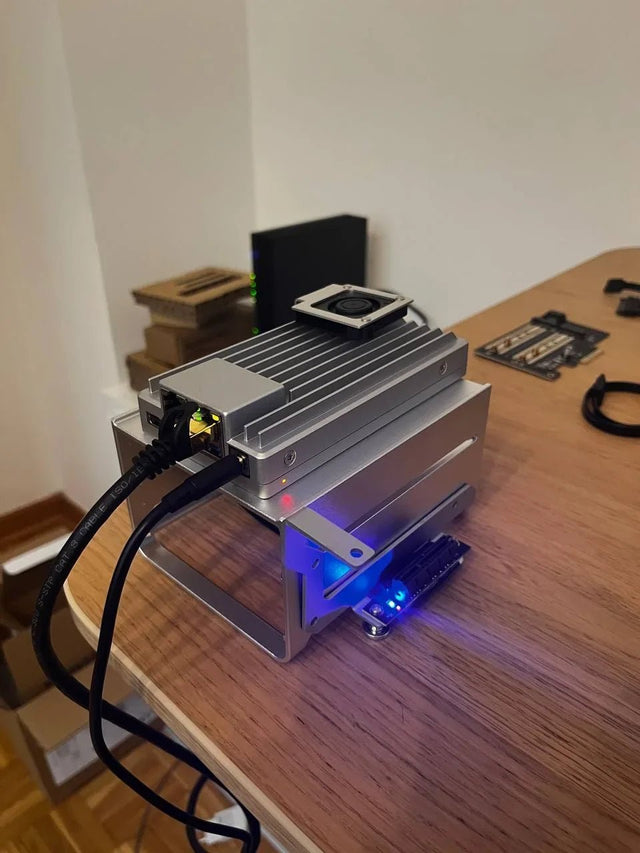
Why Does Local AI Heat Feel Different in an Open Shelf Than in a Closed Cabinet?
Trace heat generation, air exchange, and recirculation across open and enclosed placements, then measure the variables that distinguish them.
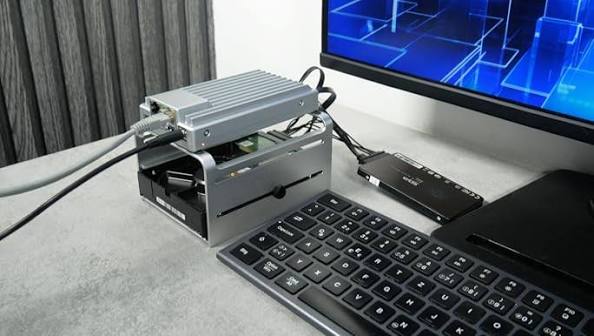
Why Does a Home Server Feel Quieter at Night Even at the Same Fan Speed?
Understand why unchanged fan speed does not guarantee unchanged perceived loudness and how to separate masking, room conditions, and real acoustic change.
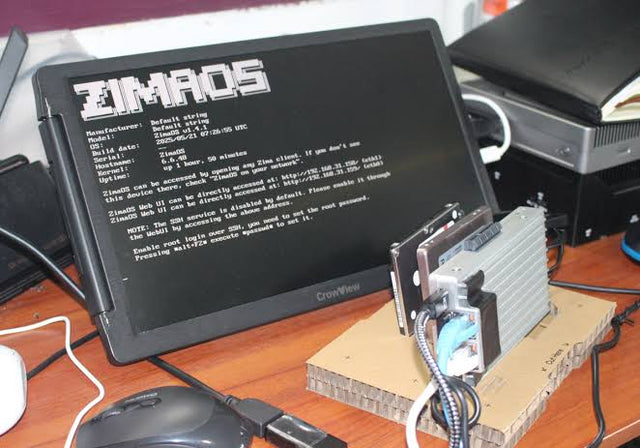
Why Do Deduplicated Backups Look Smaller Than Their Restore Footprint?
See how deduplication changes stored bytes but not restored meaning, why sparse and compressed files complicate totals, and how to size a restore test.


