
MAI Image 2.7 Explained: AI Photo Editing and a Recoverable Creative Workflow


Microsoft launched MAI Image 2.7 as an image-editing preview on October 27. For photographers and small studios, the practical opportunity is controlled revision of an existing asset. The equally important requirement is keeping enough source material and edit history to reverse a visually convincing mistake.
This guide separates the published event from practical implementation. It explains what the source establishes, where the evidence stops, and how a private-file workflow can be evaluated without assuming that an impressive model or a newer server removes the need for bounded access and review.
| Decision | Verified fact or practical boundary |
|---|---|
| Release | The official announcement is an editing preview, not a claim that every generation feature is available. |
| Access | Microsoft names MAI Playground, Arena and Artificial Analysis as places to try editing. |
| Generation | The launch says text-to-image generation is coming later. |
| Workflow | Preserve originals, instructions and accepted output versions separately. |

What Is New in This Editing Preview?
The announcement emphasizes edits that require control of scene relationships: relighting, changing text or symbols, restoring assets and altering style while preserving a coherent composition. These tasks should be evaluated differently from generating a plausible picture from scratch. A product image can look attractive while changing a label, connector or physical dimension that was supposed to remain exact.
Treat the vendor-reported ranking as an indication of evaluation performance rather than a universal quality promise. The relevant question for a business is whether the model preserves the constraints of its own assets. Test a label with small text, a reflective object, a partially occluded component and a scene with a fixed camera angle. Keep the failed outputs as well as the successful ones, because selective comparison can hide the edits that create the most expensive review burden.
How Do You Compare Edits Without Losing the Original?
Create an immutable source folder and a separate session folder for experiments. Record which original, mask or reference was used, the instruction, the date and the service/model label visible in the interface. Save outputs with versioned filenames and a small manifest. The model name alone is insufficient evidence if a service changes a preview behind the same interface.
Review preservation and intended changes separately. For example, if the task is to replace a background, check both the new background and the unchanged product silhouette, printed words, color and geometry. A single overall aesthetic score can conceal a wrong serial number. Where contractual accuracy matters, compare against the source at native resolution and involve the person responsible for the actual product, not only the person choosing the most appealing edit.
Can You Put the Preview Into an Automated Local Pipeline?
Do not infer API access, weights, resolution limits or commercial deployment terms from the existence of a browser demo. The official launch describes where the editing preview can be tried and says generation will follow. Before designing a production pipeline, verify the documented interface, permissions, terms and availability for the exact version. A manual experiment and a reliable unattended service are different deployment products.
A NAS remains useful regardless of where the edit is computed: it can store originals, working copies, approval records and delivered versions. It does not make a cloud editor run locally, and private storage does not prevent disclosure when an operator uploads an image to the service. Separate upload-approved assets from restricted client work so that a convenient shared folder does not silently become permission to submit every file to an external model.
What Should You Measure Before Trusting This Workflow?
Score the requested change separately from preservation of the source. For a background replacement, review the new scene and then inspect the product’s silhouette, label, ports and reflections. For a relighting task, check whether exposure and shadow changes also altered material color or small printed information. A single preference score can reward a more attractive image while overlooking a commercially significant change to the depicted object.
Use a fixed set of representative originals and written edit instructions. Include small text, repeated patterns, thin edges and a difficult reflective surface. Compare outputs at the same display size and at native resolution, with the original available beside them. Record rejected variants as well as the selected image. The useful business measurement is the proportion of edits accepted after review and the effort needed to repair them, not the appeal of one best-case sample.
How Do You Keep the Result Reviewable and Recoverable?
Keep each editing session as a branch from an unchanged source. Save the original identifier, reference images or mask, instruction and returned file together in a manifest. Label whether an output is exploratory, approved or delivered. A filename such as final-new-2 does not reliably convey that state to another collaborator. The approval record should identify the actual accepted asset rather than only the folder where candidates were stored.
Retain a separate recoverable copy of originals and accepted deliverables. Where output metadata is incomplete, store your own record without implying it is a cryptographic authenticity certificate. Before archiving a finished job, restore a sample source and its accepted derivative into a separate folder and confirm that their relationship is understandable. If the preview service later changes, the saved record should still explain what was submitted, requested and approved.
How Can You Test the Workflow Before Using Important Files?
The following is an editorial validation protocol, not a claim that ZimaSpace has benchmarked the service. Run it with disposable or approved test data and keep the test conditions with the result.
- Select upload-approved originals and define the exact edit. List properties that must remain unchanged, including labels, geometry and colors that identify the real product.
- Create a versioned session folder. Record original and reference identifiers, the instruction, visible service/model label and date without overwriting the source.
- Try the preview through a documented access route. Verify any API or automation claim separately rather than assuming a browser demonstration exposes a production interface.
- Review intended changes and preserved details separately. Inspect native-resolution text, thin edges and product features in addition to overall visual quality.
- Retain the rejected and accepted variants with their review status. Record why a candidate failed so that a later comparison does not silently exclude difficult cases.
- Archive the approved deliverable and restore a sample project record. Confirm another person can locate the original and understand which transformation was accepted.
Where Does a ZimaOS Server Fit?
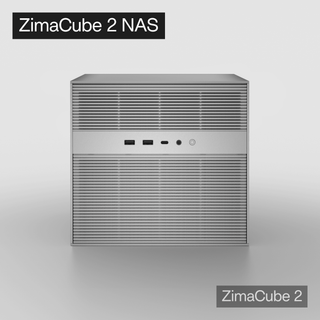
A ZimaCube 2 personal cloud NAS can provide a local storage and application layer when a project genuinely needs multiple drives, an SSD working tier or shared access to a growing archive. Choose hardware for retained source data, active services and backup policy. The product recommendation is architectural context, not evidence that this cloud model, preview service or research system runs locally on the NAS.
Separate inference from data custody. A hosted model may receive approved excerpts while the authoritative originals remain on the server. Optional local indexing, conversion or smaller-model services require their own memory and compute assessment. Keep a second recoverable copy outside the main device, and do not treat RAID or a successful upload as a complete backup strategy. A smaller existing server remains reasonable when it already meets the measured workload.
FAQ
Is MAI Image 2.7 available for text-to-image generation?
The cited launch is an image-editing preview and says text-to-image generation will follow. Check the current product status before designing a workflow around generation.
Does the preview announcement establish an API or local deployment?
No. Verify the documented interface, availability and terms for the exact version. The existence of an editing demo does not establish downloadable weights or an unattended production API.
What is the most useful quality check for product edits?
Check both the requested change and preservation of the real product. Small labels, geometry, ports and color can be wrong even when the edited scene looks convincing.
Should I expose the whole private archive to an AI tool?
Only provide the material needed for the task through an appropriately restricted account or working directory. Check what the specific service uploads, logs and retains. A private storage location does not guarantee that a connected tool keeps processing local.
When does a larger NAS become useful?
When measured source-data growth, shared access, active applications or retention requirements justify the storage topology. It does not automatically resolve model access, unsupported runtimes, network upload limits or uncertainty in a research claim.
What is the stopping condition before production use?
Stop when you cannot establish the software/model identity, input authority, required feature availability or recovery path. Resolve those conditions first, then repeat the small test. Do not compensate for missing evidence by making a more confident recommendation.
Sources and Further Reading
Reporting checked on October 28, 2026. Product availability, access plans and security advisories can change. Upstream claims are attributed; workflow recommendations and architecture examples are editorial analysis, not measurements from a ZimaSpace hardware test.
Related guide: Creator NAS Buying Guide for Freelance Photographers.
Related guide: The Photo Archive Setup That Survives a Laptop Replacement.
Related guide: How to Separate Client Work, Personal Photos, and Long-Term Archive on One Server.

Rekommenderade produkter
Teknik- och AI-hubb
Mer att läsa
AI Scientific Breakthroughs: Why Verification and Reproducible Records Matter
Understand AI research: claim to evidence with verified release context, practical workflow limits, private-file handling, review steps and realistic ZimaOS storage roles.
AI Video Quality Is Improving. How Should Creators Protect Their Original Media?
Understand AI video: quality and trust with verified release context, practical workflow limits, private-file handling, review steps and realistic ZimaOS storage roles.
Google Genie 4 Explained: Interactive Worlds, Native Audio, and Creator Workflows
Understand Google Genie 4 with verified release context, practical workflow limits, private-file handling, review steps and realistic ZimaOS storage roles.


