
ZimaBlade vs Radxa ROCK 5B+: x86 SATA Server or Edge-AI SBC?
A role-based comparison between a compact x86 board with native SATA and PCIe and the revised RK3588 ROCK 5B+ with dual NVMe, wireless, cellular, and edge-AI I/O.
Updated September 21, 2026
ZimaBlade 7700 vs Radxa ROCK 5B+ 16GB: Verdict and Best Use Cases
Start with the direct answer, then use the scenario matrix to see which NAS fits each workload.
A compact x86 storage server
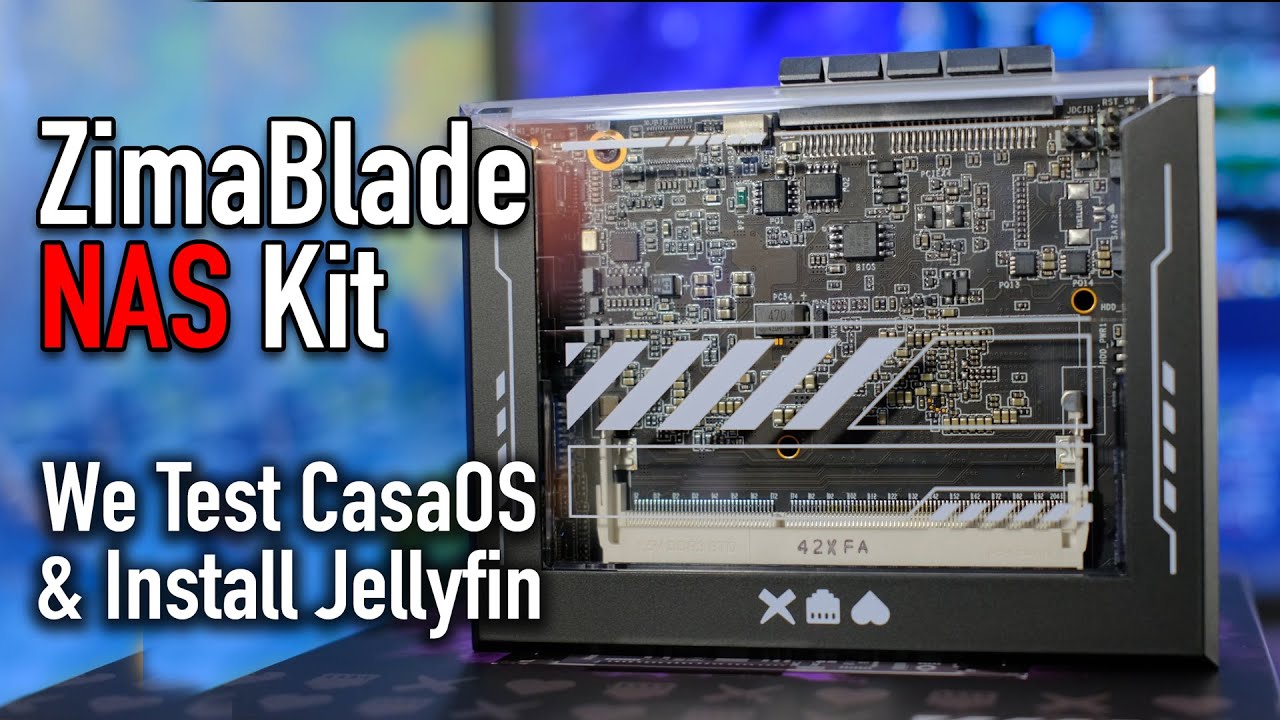
The ZimaBlade product page uses an Atom x7-E3950, supports up to 16GB DDR3L SO-DIMM memory, includes 32GB eMMC, and exposes two SATA ports, Gigabit Ethernet, USB, Mini DisplayPort, and a PCIe 2.0 x4 slot. It is built around small NAS, Docker, network-service, and maker-server roles.
A connected RK3588 edge platform
ROCK 5B+ uses RK3588 with four Cortex-A76 cores up to 2.4GHz and four Cortex-A55 cores up to 1.8GHz, 4/8/16/32GB LPDDR5 options, onboard eMMC options, microSD, two M.2 M-key sockets for PCIe 3.0 x2 NVMe, an M.2 B-key 4G path, Wi-Fi 6, 2.5GbE, a 6-TOPS NPU, and camera/display I/O.
| Use Case | Better Choice | Why |
|---|---|---|
| Two-drive SATA NAS | ZimaBlade | Native SATA and the eMMC boot device avoid converting an NVMe connector. |
| Dual-NVMe Arm appliance | ROCK 5B+ | Two M-key sockets provide a compact all-flash layout. |
| Dual wired networking | ROCK 5B+ | Its 2.5GbE plus wireless and cellular options suit connected edge nodes; ZimaBlade has one 1GbE port. |
| x86-only service image | ZimaBlade | Architecture compatibility is the decisive gate. |
| 4G field gateway | ROCK 5B+ | The B-key modem path and SIM support are built into the revised platform. |
| Standard PCIe card | ZimaBlade | Its PCIe 2.0 x4 slot is a more direct add-in path. |
ZimaBlade 7700 vs Radxa ROCK 5B+ 16GB Specifications
The main table compares the closest standard configurations only, so higher-end SKUs do not distort the baseline comparison.
| Specification | ZimaBlade | Radxa ROCK 5B+ |
|---|---|---|
| CPU architecture | x86-64 | Arm64 |
| Processor | Intel Atom x7-E3950, 4 cores, up to 2.0GHz | RK3588: 4 × A76 up to 2.4GHz plus 4 × A55 up to 1.8GHz |
| Memory | DDR3L SO-DIMM, up to 16GB | 4/8/16/32GB LPDDR5 |
| NPU | None dedicated | Up to 6 TOPS |
| Boot storage | 32GB eMMC | Onboard eMMC options 32–256GB plus microSD |
| Fast storage | 2 × native SATA; PCIe expansion | 2 × M.2 M-key, each PCIe 3.0 x2 NVMe |
| Ethernet | 1 × 1GbE | 1 × 2.5GbE |
| Wireless/mobile | Add through expansion | Wi-Fi 6; M.2 B-key 4G and SIM |
| Expansion | PCIe 2.0 x4 slot | M.2 E-key, M.2 B-key, camera/display and 40-pin I/O |
| AI/video | Mini DisplayPort; optional card | 6-TOPS NPU and RK3588 media pipeline |
Primary comparison baseline: The plus revision is not a faster ZimaBlade-style NAS. ZimaBlade is x86 with two SATA ports and PCIe; ROCK 5B+ is Arm with dual NVMe, onboard wireless, a 4G path, and an RK3588 NPU. The right choice depends on the final interfaces and software image.
Category-by-Category Comparison
What the specification differences mean for storage, networking, software, self-hosting, media, and local AI.
The Plus Revision Changes I/O More Than the CPU
ROCK 5B+ keeps RK3588's eight-core Arm compute, but the purchase case is its revised connectivity: onboard eMMC, two M.2 M-key sockets, Wi-Fi 6, and M.2 B-key cellular support. Those features make a field gateway, camera node, or compact all-flash appliance more self-contained.
ZimaBlade remains the simpler x86 server when the required image, binary, or management tool expects x86-64. Its E3950 is much older and slower, but a faster Arm board does not solve an architecture or driver constraint.
Category verdict: ROCK 5B+ wins connected edge I/O; ZimaBlade wins when x86 compatibility is the hard requirement.
SATA Mirror or Dual NVMe Pool
ZimaBlade can attach two SATA drives directly while the 32GB eMMC holds the system. That supports a small mirror or backup pair without consuming PCIe, and the card slot remains available for a NIC or controller.
ROCK 5B+ uses two M-key connectors, each with PCIe 3.0 x2 lanes, plus eMMC and microSD. This is a clean cable-light flash design. SATA disks need an adapter, separate power, and a mounting plan, so a multi-drive NAS becomes a maker project.
Category verdict: ZimaBlade is the direct two-drive NAS; ROCK 5B+ is the compact dual-NVMe platform.
Wireless, Cellular, and NPU Are Conditional Advantages
ROCK 5B+ combines Wi-Fi 6, a B-key 4G/SIM path, camera interfaces, and a 6-TOPS NPU. Those are meaningful for mobile gateways and vision systems only when the modem, antennas, model conversion, operators, runtime, and kernel all line up.
ZimaBlade has no integrated NPU or wireless radio in this baseline, but its x86 PCIe slot can host a validated accelerator or network card. That path uses more physical space and power, while preserving software ecosystems familiar from PC servers.
Category verdict: ROCK 5B+ wins a validated edge stack; ZimaBlade wins an x86 add-in-card workflow.
One Gigabit Server Port vs a Connected Edge Node
ZimaBlade's single Gigabit Ethernet port is adequate for DNS, backups, a small NAS, and focused home services. A PCIe NIC can raise the ceiling, but the card, driver, power, and enclosure then become part of the design.
ROCK 5B+ provides 2.5GbE plus Wi-Fi 6 and cellular expansion. That does not equal two wired Ethernet ports, but it gives a remote appliance more ways to reach its network. A fixed router or storage network may still prefer ZimaBlade plus a known NIC.
Category verdict: ROCK 5B+ is more connected; ZimaBlade is more predictable as a small wired x86 server.
Pros, Cons, and Which One Should You Buy?
Bring the important trade-offs and final buyer recommendations together in one decision section.
Choose the Required Peripheral Topology
First list the required architecture, drive type, network paths, modem, cameras, and accelerator. Stop at the first interface that one platform cannot provide.
| Buyer | Recommended Model | Decision Rule |
|---|---|---|
| Two-drive x86 NAS | ZimaBlade 7700 | Use native SATA and eMMC without an adapter chain. |
| Mobile camera gateway | ROCK 5B+ 16GB | Use Wi-Fi 6, 4G expansion, camera I/O, and the NPU after validation. |
| Dual-NVMe Arm appliance | ROCK 5B+ 16GB | Use the two M-key PCIe 3.0 x2 sockets. |
| Legacy x86 container host | ZimaBlade 7700 | Avoid Arm image and driver surprises. |
Bottom line: ROCK 5B+ is the stronger connected edge-AI and all-flash Arm platform. ZimaBlade remains the better direct two-SATA x86 server and standard PCIe host; choose it when software compatibility and storage recovery matter more than wireless, cellular, and NPU features.
SKU Family: What Changes Above the Standard Models?
The head-to-head comparison stays focused on ZimaBlade 7700 and Radxa ROCK 5B+ 16GB. Higher-end variants are explained separately here.
5B+ Connectivity Is the Product Differentiator
ROCK 5B+ memory tiers reach 32GB, but every tier retains the Arm, dual-NVMe, wireless, and cellular design. ZimaBlade 7700 retains its replaceable DDR3L, eMMC, SATA, and PCIe layout.
| Configuration | What Changes | Who It Fits |
|---|---|---|
| ZimaBlade 3760 | Entry x86, DDR3L, two SATA, PCIe | Light NAS and services |
| ZimaBlade 7700 | Quad-core x86, up to 16GB, two SATA, PCIe | Compact x86 server |
| ROCK 5B+ 16GB | RK3588, 16GB LPDDR5, eMMC, dual NVMe, Wi-Fi 6, 4G path | Edge AI and mobile Arm appliance |
Watch and Read More About ZimaBlade
Three creator videos and three related Zima articles add real-world context beyond the comparison tables.
Watch Creator Videos



Frequently Asked Questions
Long-tail buying questions, SKU questions, and query fan-out from the comparison.
ZimaBlade vs Radxa ROCK 5B+ FAQ
Is ROCK 5B+ x86-compatible?
No. It uses Arm64 RK3588; ZimaBlade uses x86-64.
Does ROCK 5B+ have native SATA?
No. It centers storage on eMMC, microSD, and two M-key NVMe sockets.
How many NVMe drives fit?
Two M.2 M-key sockets are provided, each using PCIe 3.0 x2; verify device size and thermals.
Does ROCK 5B+ support 4G?
Its M.2 B-key path and SIM support are intended for compatible cellular modules; modem, antenna, carrier, and driver checks remain necessary.
Does ZimaBlade have 2.5GbE?
No. The baseline has one Gigabit Ethernet port; a compatible PCIe NIC can add faster networking.
Which is better for AI?
ROCK 5B+ has the integrated 6-TOPS NPU, but the model and runtime must support RK3588. ZimaBlade needs a separate accelerator.


