
World Science Day 2026: Make Shared Knowledge Easier to Check


Cover image: Antenna / Unsplash, via the International Science Council.
A chart is easy to share. The observations, units, assumptions and revisions behind it are easier to lose. When a school club, community group or small research team works together, that missing context can turn a promising discussion into an argument about which spreadsheet was current.
November 10 is World Science Day for Peace and Development. For 2026, the International Science Council is inviting its members to explore science diplomacy and cooperation. At ZimaSpace, we see a practical connection close to home: shared knowledge becomes more useful when the people contributing it can retain, understand and responsibly share the evidence behind it.
What Can a Small Team Contribute to a Global Observance?
You do not need to imitate an institutional laboratory to take the idea seriously. A local group can document a modest question and make its reasoning easier for someone else to inspect. For example, a community garden might compare observations recorded at different times, or a school club might revisit a public dataset and explain how a chart was produced. The activity should be framed at the scale of its evidence, without turning a small exercise into a claim of scientific discovery.
Choose a question the group can explain and a dataset it is entitled to use. Write down the limits before analyzing the result. If a sensor has unknown calibration, say so. If a public dataset was updated, preserve the version used. Cooperation starts with an honest account of what the participants have measured, borrowed or assumed, rather than an attractive presentation that hides those distinctions.
Start With a Shared Question and a Data Dictionary
Before exchanging files, agree on the meaning of the fields. Is a temperature stored in Celsius? Does a timestamp include a timezone? Does a blank cell mean missing, not applicable or a measured zero? A short data dictionary can prevent collaborators from making incompatible assumptions about a dataset that otherwise looks tidy. Keep the dictionary beside the data and update it when the recording method changes.
For an observational project, record the location at an appropriate level of detail, the collection method and relevant instrument notes. Avoid collecting personal information simply because a form makes it easy. If the project involves people or sensitive locations, agree on the appropriate review and sharing boundaries before collection. A useful demonstration can use public or synthetic data while the team develops its method.
Keep Raw Observations Separate From Interpretation
Retain the imported or collected source in a protected raw-data area. Put cleaning steps, analysis scripts and derived tables elsewhere. If a value is corrected, record the reason and preserve the relationship to the original. A colleague should be able to distinguish a transcription fix from a statistical transformation, and a new result should not silently overwrite the evidence used for an earlier discussion.
Attach the method to the output. Record the input version, script or notebook revision and relevant dependency information. Explain exclusions and known limitations in plain language. If an AI assistant helps summarize or code, check its result against the actual source and retain the reviewed code or explanation. A fluent summary does not substitute for the recorded observations or establish a conclusion that the dataset cannot support.
Share Knowledge With Context and an Explicit Boundary
Open sharing can support participation, but the release package needs more than a download link. Include a description, source attribution, method, limitations and a clear statement of permitted reuse. Check the source license and any project-specific restrictions. The UNESCO open-science resources provide the wider context; the workflow here is a practical editorial suggestion for a small team, not a substitute for institutional research governance.
A local working repository and a public release serve different purposes. The working area may contain incomplete observations or private notes that should not be part of a shared dataset. Create an approved export and have a second participant inspect it. This makes cooperation more deliberate: contributors can explain what was released, where it came from and which questions remain open, without granting every reader access to the entire project workspace.
What Another Collaborator Needs to Understand Your Result
| Layer | Retain | Acceptance question |
|---|---|---|
| Question | Scope, intended comparison and known limits | Does the claim match what the project can investigate? |
| Observations | Source version, method, timestamps and units | Can we identify what was recorded or imported? |
| Analysis | Cleaning decisions, script and dependencies | Can another participant follow the transformation? |
| Interpretation | Conclusions, uncertainty and review comments | Are observations separated from inference? |
| Release | Approved files, attribution and reuse terms | Is this the dataset we intended to share? |

If Your Group Needs a Common Workspace, Use ZimaCube 2 for the Record
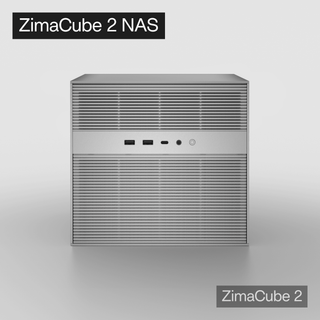
If the project has outgrown email attachments and personal folders, ZimaCube 2 can provide a common local place for the source data, notebooks, derived results and project documentation. Organize these by project and evidence layer, with separate contribution and approved-release areas. The benefit is a consistent working record that can stay available when an individual contributor’s laptop is away.
Its drive and expansion options let you plan the retained dataset separately from active application storage. Choose capacity for the actual data and choose compute for the services you intend to run. Storing a research collection does not require reproducing a frontier model, and installing an analysis service does not establish that a particular scientific workload will fit. A small pilot is a better sizing input than the most demanding project the group can imagine.
Use ZimaOS to Support the Workflow You Have Defined
The server is most useful after the team agrees on the folder model and responsibilities. Use the file-sharing and application workflow appropriate to the installed ZimaOS version and selected apps, then verify access with separate contributor and reviewer accounts. The person uploading observations should not need to alter an accepted public release. Document how a correction moves from a working proposal into the project record.
If you add notebooks, search or local AI tools, give them a defined working area rather than unrestricted access to unrelated household files. Keep credentials outside the project export. Record the environment needed to understand important analyses, and test that another participant can open the project without relying on one person’s undocumented workstation setup. The hardware helps retain and serve the record; the team still decides what counts as acceptable evidence.
Turn the Observance Into a Small Reproduction Exercise
Choose one result and ask a collaborator to rebuild it from the documented inputs. They should locate the source version, follow the method and identify the same qualifications, even if the presentation looks different. Record where the instructions were incomplete. If the analysis depends on an unavailable external service, explain that dependency instead of claiming a fully reproducible local workflow.
Back up the project outside the main device and restore a sample into a separate workspace. The restored package should include enough context to distinguish the raw observations from the shared result. For ZimaSpace, the most useful outcome of World Science Day is a habit the team keeps: making knowledge easier to question, explain and build on, with a local data foundation that supports that work.
A Practical Activity for World Science Day for Peace and Development
- Choose a bounded question and public, synthetic or appropriately authorized data.
- Write the field definitions, units, method and limitations before combining inputs.
- Preserve the source version; keep transformations and interpretations in separate areas.
- Have a second participant follow one result from input to conclusion.
- Create an approved release package with attribution and appropriate reuse terms.
- Back up and restore the project record, including documentation and analysis requirements.
FAQ
When is World Science Day for Peace and Development?
It is observed on November 10. The International Science Council’s 2026 invitation emphasizes science diplomacy and cooperation.
Does this activity need specialist research hardware?
A documentation or public-data exercise can begin on an existing computer. A shared server becomes useful when retained data, collaboration and active services justify it.
Does shared storage make a result scientifically valid?
No. Validity depends on the question, evidence, method and appropriate examination. Storage can keep those materials accessible without resolving the scientific interpretation.
Should all working data be public?
Decide what may be released for the particular project. Prepare an approved package with context and permissions instead of exposing the entire working area.
What is the role of ZimaCube 2?
It can retain project data and documentation and support compatible shared services. Verify the resource requirements of the actual analysis and keep an independent backup.
Related ZimaSpace Guides
- Local RAG for Researchers: How Evidence Packages Change Claim Review
- Computer Science Education Week: Build a Student Homelab for Coding and AI
- How to Keep Recoverable Copies of Files Used by Your AI Agent
Sources and Further Reading
- World Science Day 2026 — International Science Council
- World Science Day — UNESCO
- Open science — UNESCO
- ZimaCube 2 official product information
Event information checked on October 28, 2026. The project ideas are ZimaSpace editorial suggestions. No partnership with the observance organizers or new hardware benchmark is implied.

Recommended products
Zima Campaign Hub
More to Read
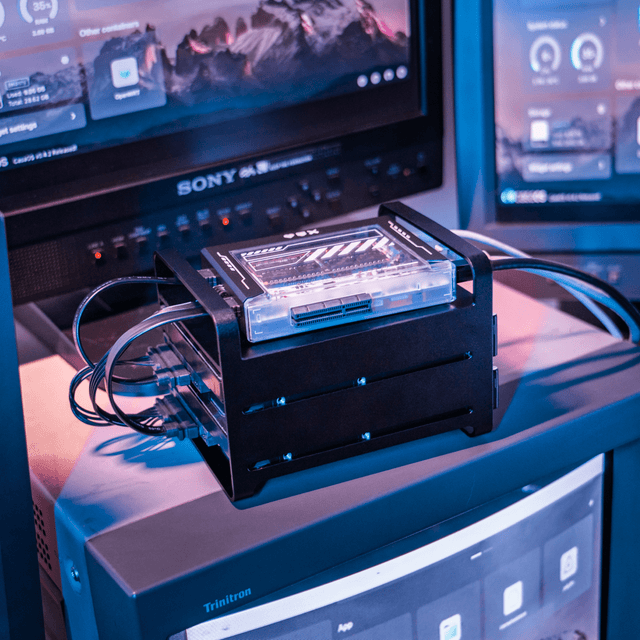
From a Patchwork ARM Homelab to Three x86 Servers: Julien’s Migration
Julien moved a varied ARM homelab to three compact x86 hosts with Debian, Docker, ZFS, Borg and Caddy, migrating services one at a time.
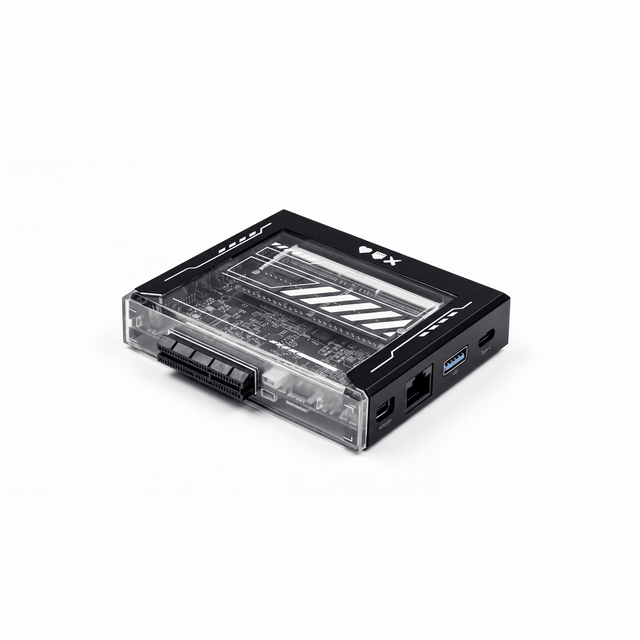
One Blade, Three Households: How a Tiny x86 Board Became My Family’s IT Department
Vladimir Penkin shares how two compact x86 servers became family infrastructure across countries, from a Tailscale exit node to Immich photo uploads.

Barely Works, but Getting There: Chris’s Mixed x86 and ARM Homelab
Chris pairs a dependable two-drive Debian NAS with a ZimaBoard 2 and Raspberry Pi cluster, experimenting with k3s, Ollama and a Pi Pico backup...


